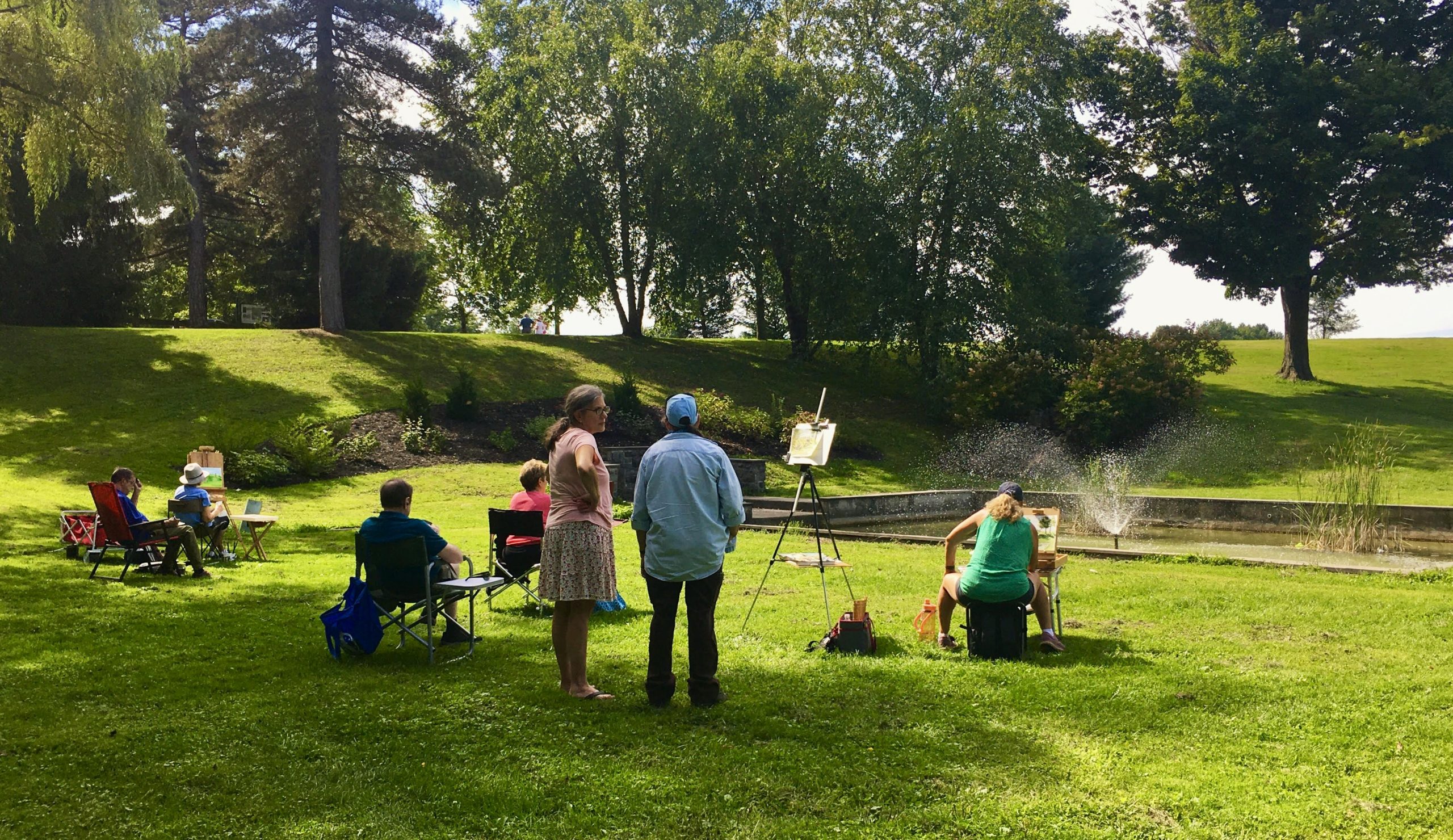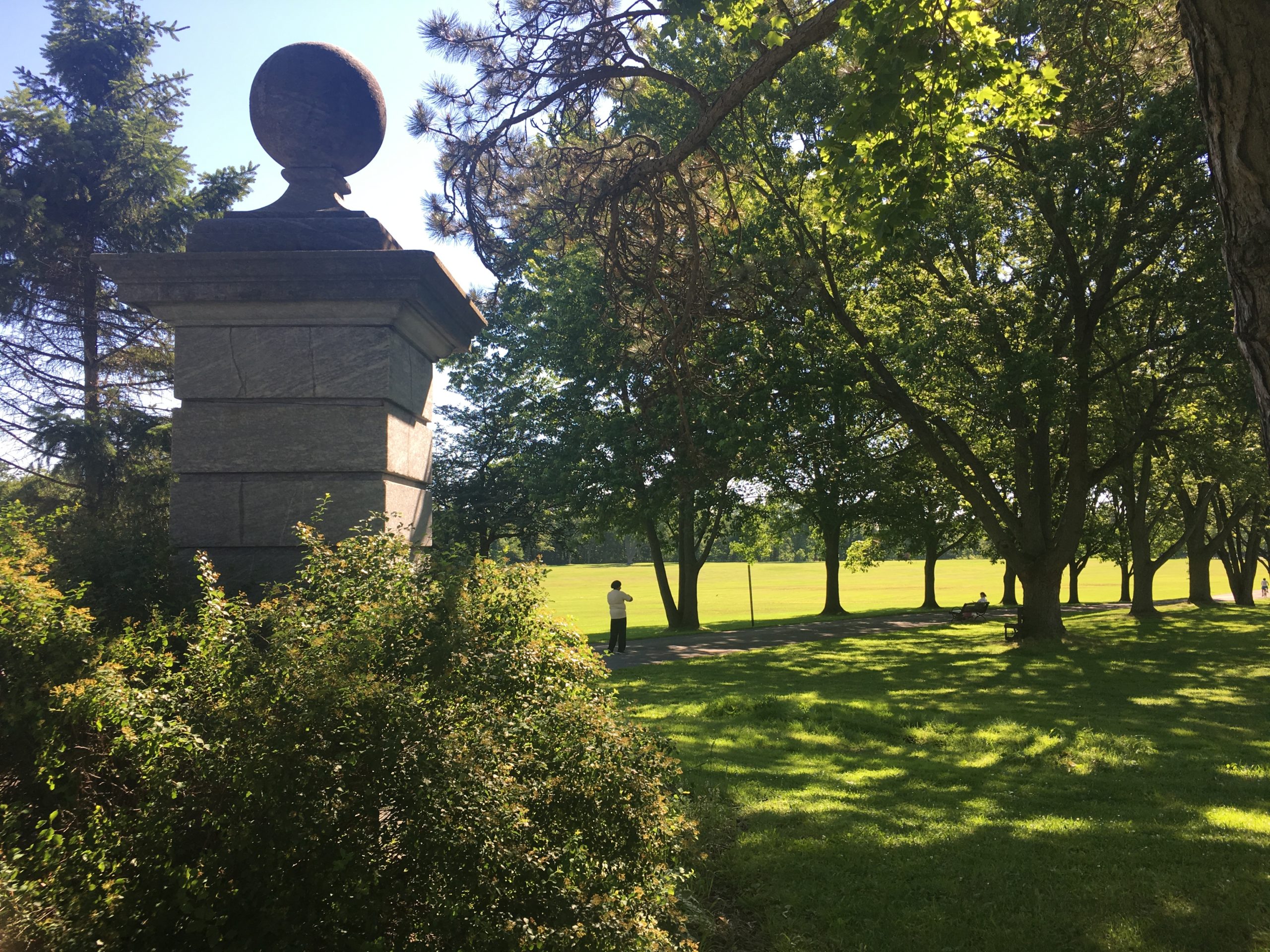


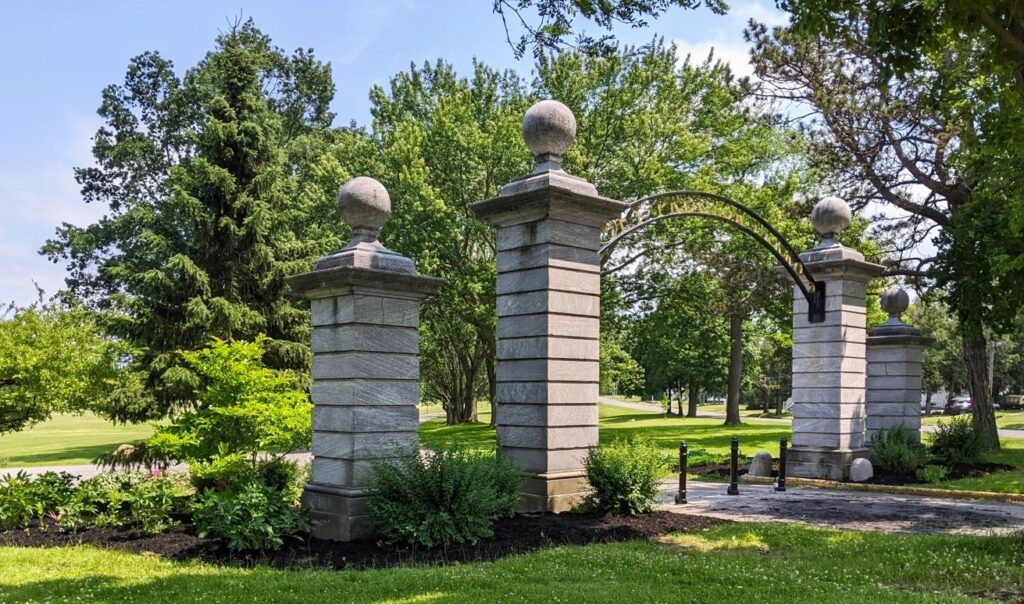
Olmsted City of Greater Utica is celebrating major progress in rehabilitating Frederick T. Proctor Park, a vibrant 62-acre landscape, listed on the National Register, that was the “gem” of Utica’s 620-acre parks and parkway system Olmsted Brothers designed in 1906-26. With the support of donors, volunteers, and the City of Utica, as well as a USDA/Forest Service Urban Forestry Grant, the park is again becoming a premier greenspace where a broad cross-section of this city of 65,000—among whose residents are speakers of over 40 languages—can connect, relax and engage in healthful exercise.
Rebuilding the Ravine Pathway
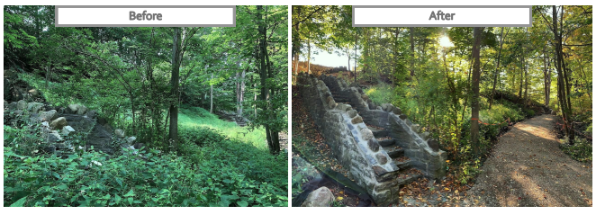
The stone staircases in the park’s ravine finally lead somewhere again. Years ago, poor drainage had made the trail at the base of those staircases an impassable quagmire. A gift from the Bank of Utica financed a successful water management experiment in 2024 that laid the groundwork for the pathway’s recent reconstruction. Volunteers have removed invasive and dead trees, reopened vistas, and planted ferns and shrubs. Next year, they will do still more planting to diminish soil erosion and enhance the park’s natural beauty.
Preserving Historic Stonework
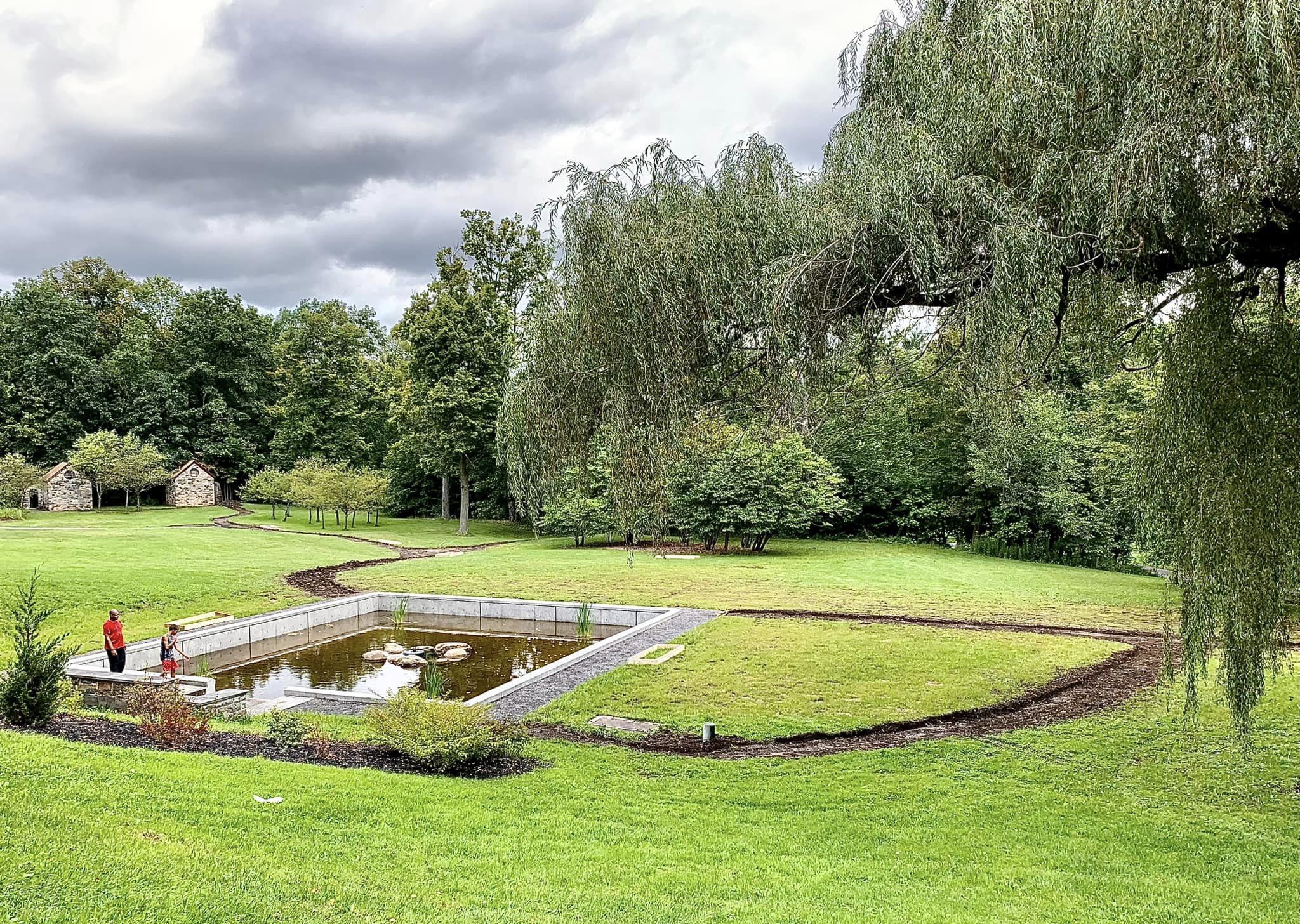
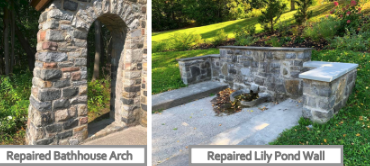
Donor generosity also fueled further stonework restoration—repairing the Lily Pond wall, reinforcing a bathhouse arch, and rebuilding a ravine staircase that was in danger of collapse. These efforts not only preserve the park’s historic charm but also ensure visitor safety for many years to come.
Growing Greener: Tree Plantings and Forest Renewal
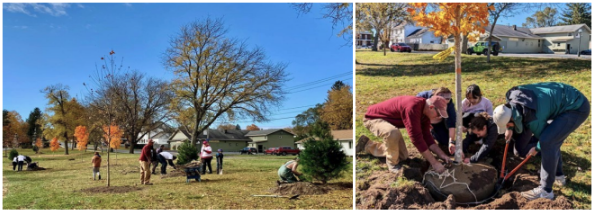
Over the past year, volunteers and partners have planted more than 100 trees and 40 large shrubs using the 1913-14 Olmsted planting lists, all part of an effort to recreate the “green screen” that was an important element of the Olmsted Brothers’ effort to reinforce the park’s pastoral illusion. New plantings will also enhance shade, improve cooling, and sequester runoff.
Olmsted City also commissioned arborists to rehabilitate a 4-acre section of the park that was abandoned fifty years ago. This will set the groundwork for further forestry work, invasive control efforts, and the recreation of walking loops that were an important part of the 1913 Olmsted design.
Signs of Inclusion and Education
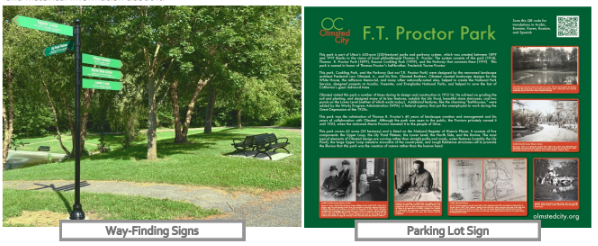
One dozen new wayfinding signs, printed in six of Utica’s most widely spoken languages, are helping visitors explore the park more easily. Interactive events like the “Bioblitz,” in which participants use the iNaturalist app to help catalog plant and insect species, are also deepening community engagement with the park’s living ecosystem.
Looking Ahead
Architectural studies are underway to rehabilitate the park’s lower level, once home to a spring-fed pond. While planning and fundraising lie ahead, Olmsted City’s vision of restoring more of F.T. Proctor Park’s original design continues to inspire this community and has fostered an increasingly close and productive relationship between this still-new nonprofit and local government.