
About Woodland Park
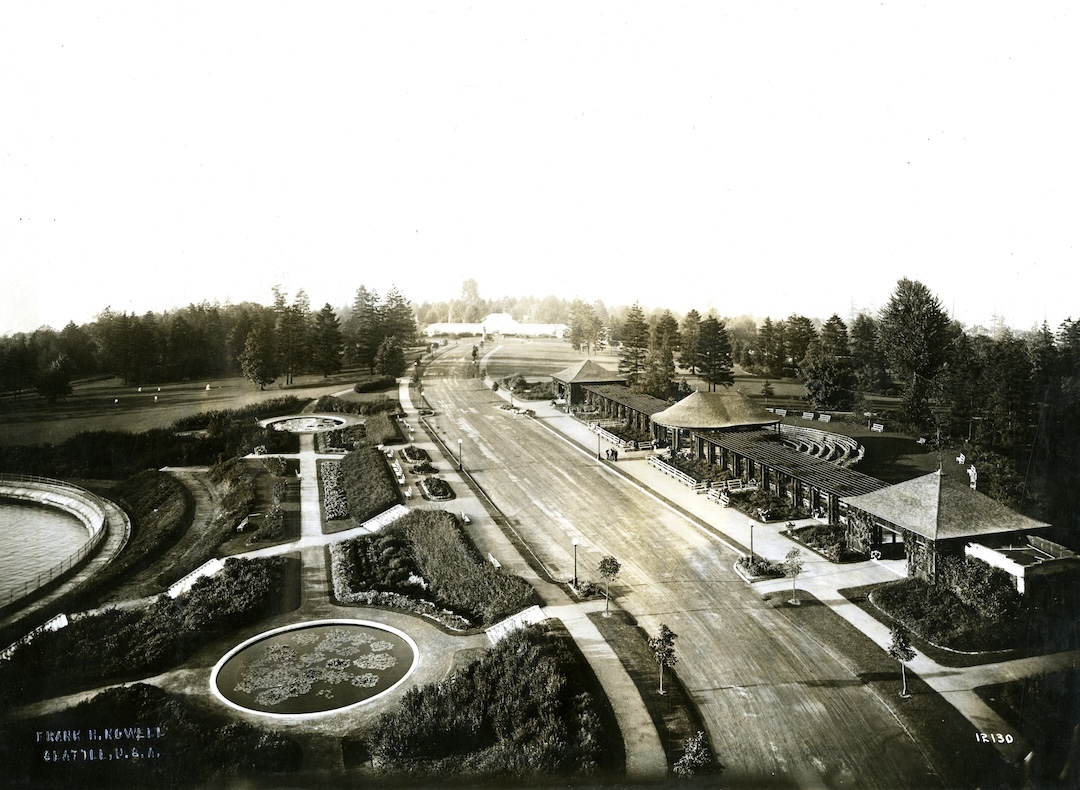
The Olmsted firm was hired to create a plan for 196-acre Woodland Park, Seattle’s largest park. Believing that native forests are vital to urban areas, J.C. Olmsted retained the natural woods on the slope from Green Lake. The Preliminary Plan shows the formal gardens of the old Phinney estate while adding new pathways, roadways, and “Ballard Boulevard” (57th Street). The zoo was to be retained and typical of zoo design of the day, several great spaces with animal quarters were placed on the periphery of the upper Woodland Park property.
Woodland Park was the largest park in Seattle in 1903, having been purchased 3 years earlier from the estate of Guy Phinney for $100,000. The purchase created quite a furor due to the fact that it was, at the time, 6 miles out of town. Woodland Park extended then as today from the east at Green Lake Way, up a steeply wooded slope to the flat upper level that by 1893 had been largely cleared of forest, and to Phinney Avenue on the west.
Guy Phinney was English by birth and had invested $40,000 in his estate to develop a traditional English park. He built a large house, a formal garden, erected an impressive stone entrance at 50th and Fremont Avenues, and installed an electric trolley line along Fremont Avenue to encourage people to visit. The aristocratic tradition also demanded a deer park and by 1893, the year he died, a small herd had been established in the park.
The Olmsted Brothers had included Woodland Park with its zoo in their 1903 Seattle Parks and Boulevards Report, writing “There being less natural beauty in the upper portion of the park, since it is flat and has no view and has been mainly cleared of the original forest, it would be comparatively unobjectionable, if it thought desirable, to devote part of this portion of the park largely to a collection of hardy wild animals. They also advocated for a place for field sports and a formal garden (when this can be afforded). In 1908 the Board of Parks Commissioners hired the Olmsted Brothers to create a plan for Woodland Park as a whole, including a zoo.
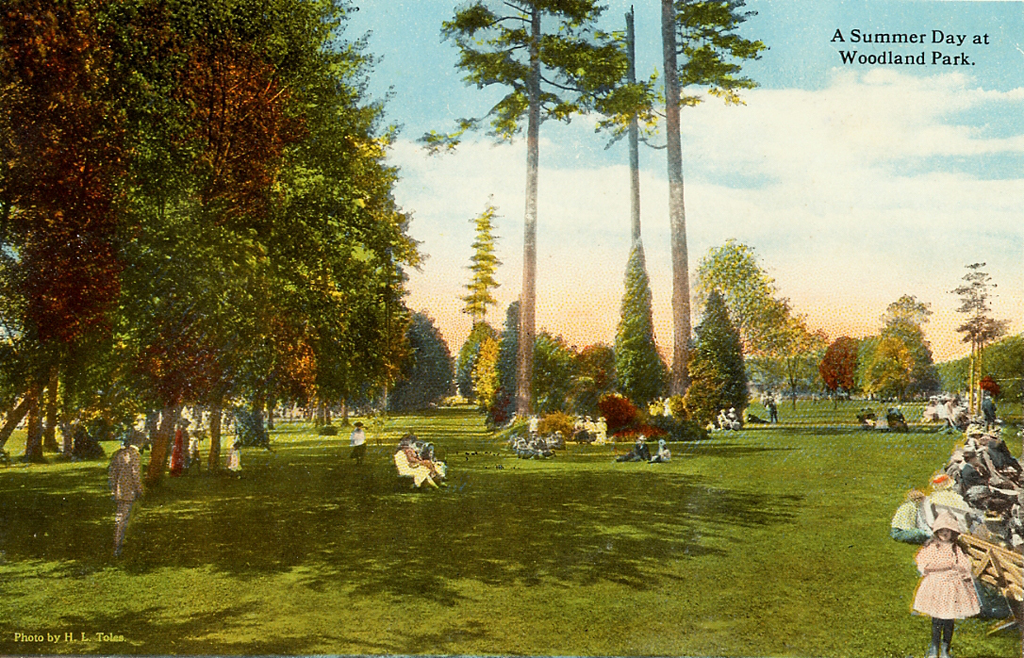
The natural woodland to the east of the Zoo was an important aspect of the park from John Charles Olmsted’s perspective. He wrote, “about the value of preserving the “wild beauty of the woods”, saying that woodlands are often the most difficult to retain in an urban area, but he also valued the active recreation areas of the park which included baseball games held on the Zoo’s great lawn and a large area for active play, including a wading pool and swings on what is now the south parking lot and south part of the Family Farm.
The Great Lawn was the major focus of the Preliminary Plan. Olmsted worked to provide vistas around the Great Lawn into its center. This has been steadily shrunk over the years as the Zoo animal collection and exhibits have expanded, though a number of pathways still in use originated from the Olmsted plan. Today the Great Lawn is a remnant of its former self, enjoyed by picnickers and concert goers in the North Meadow, and the giraffes and zebras in the African Savanna.
Though the Olmsted Brothers did extensive design of the zoo’s site, we only know of two buildings for which the firm provided drawings – a shelter house near the wading pool and the extensive preliminary drawings for the Monkey and Aviary house, eventually termed The Primate House. The shelter house disappeared decades ago while the Primate House remained until 2005 when it was demolished to build the Zoomasium.