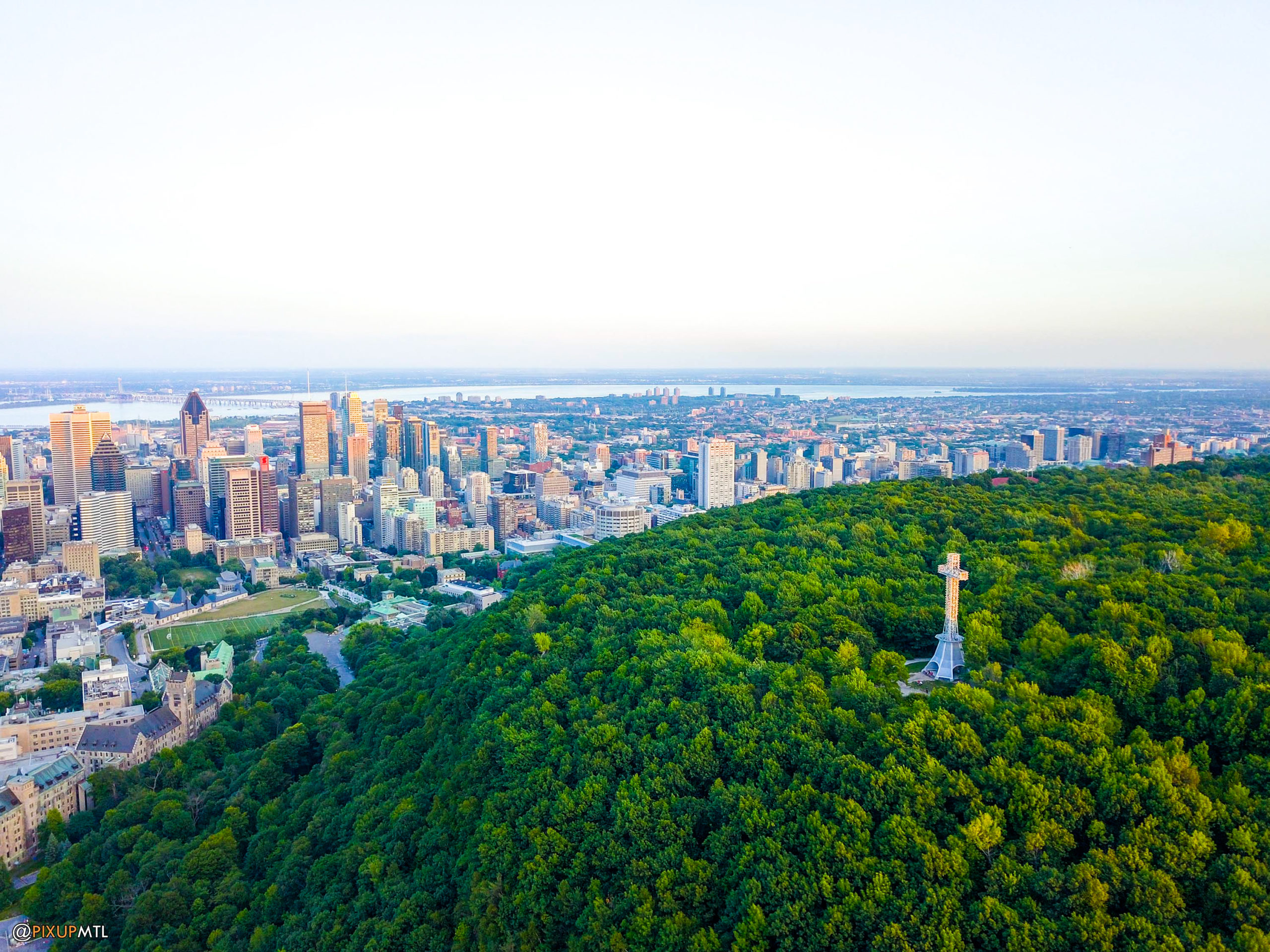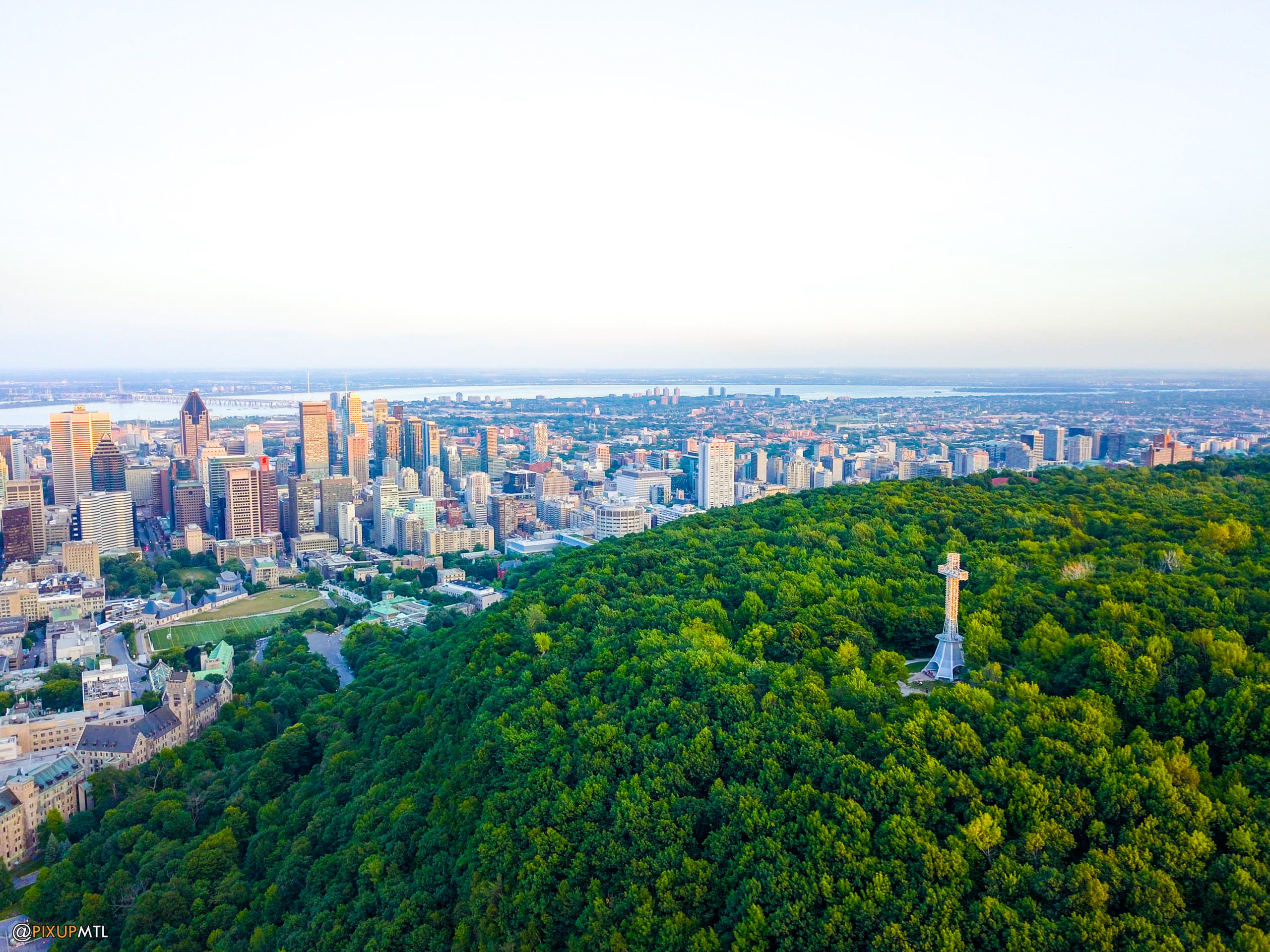



In Montreal, Frederick Law Olmsted gave the city one of its most beloved landmarks in Mount Royal—a sprawling, nearly 700-acre park with a lake, miles of trails, and a gradual climb up the eponymous mountain for some of the city’s most breathtaking vistas. Though Olmsted’s full vision for the park was never fully executed, his 1874 Master Plan nevertheless had a profound influence on its development, and his emphasis on pedestrian circulation can still be felt. Today, Mount Royal remains a visually and historically rich landscape that draws millions of annual visitors.
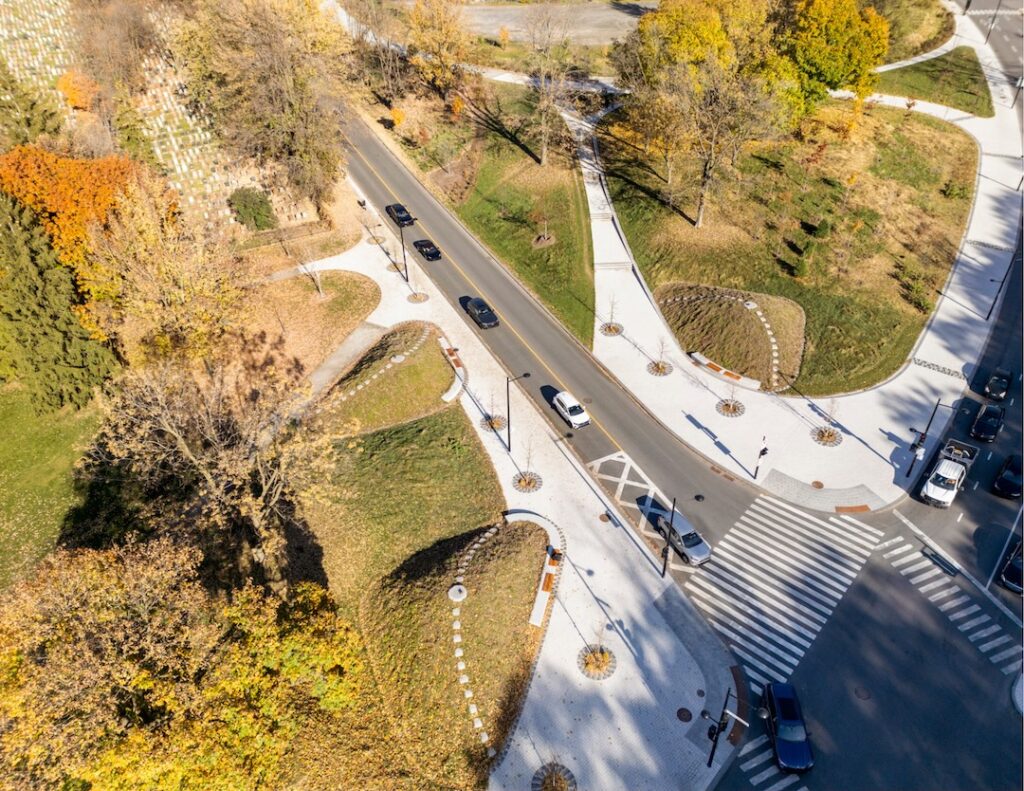
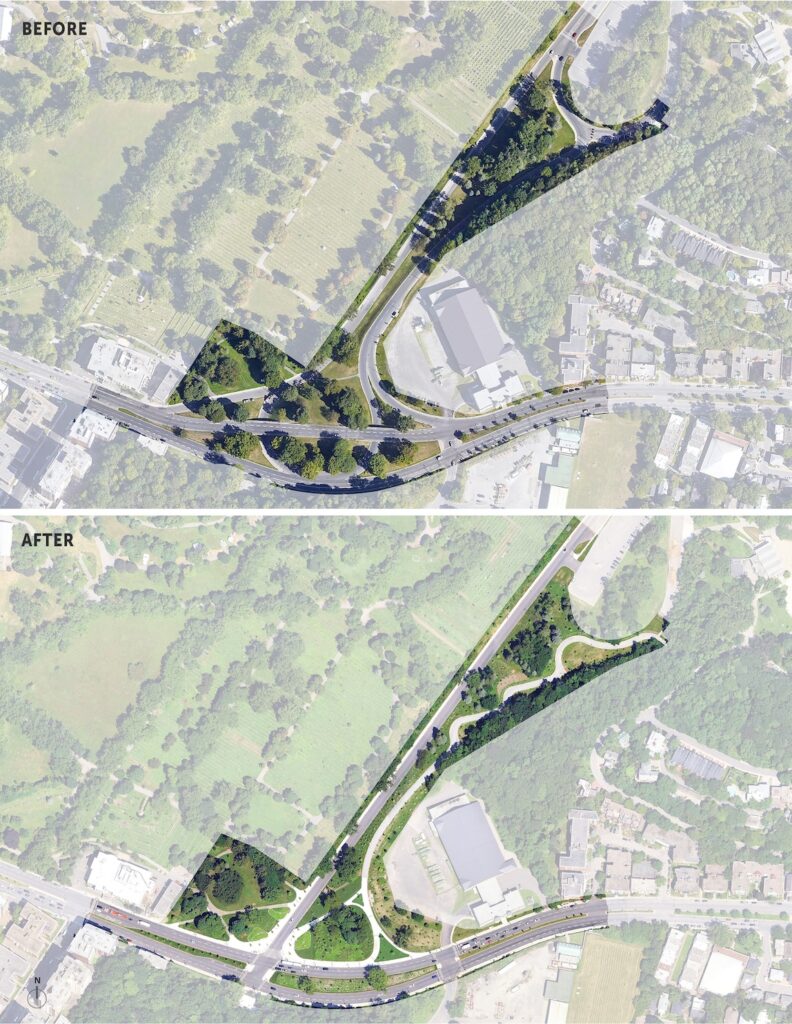
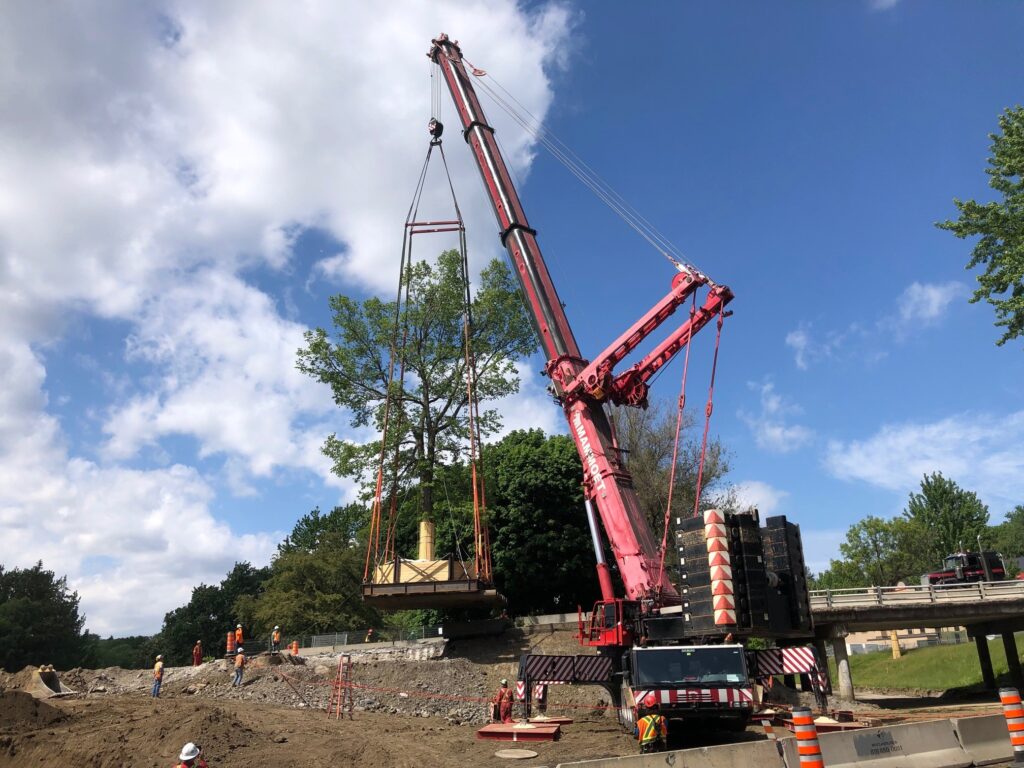
The Remembrance Côte-des-Neiges intersection, located at the western edge of the park, is one of the four main entrances to the Mount Royal Heritage Site, which for many years was designed to accommodate car traffic first and foremost. The previous design from 1958 featured an elevated interchange and separate roadways, at the expense of access for pedestrians and cyclists. For over two decades, the City of Montreal and the Ministry of Culture and Communications of Quebec have worked to improve accessibility and remove the elevated roadways, including a project to reimagine this site and restore its natural character. Civiliti, a Montreal-based urban design and landscape architecture firm, in collaboration with Vlan paysages, was tapped to redesign the intersection to make it safer and more accessible for all modes of transportation.
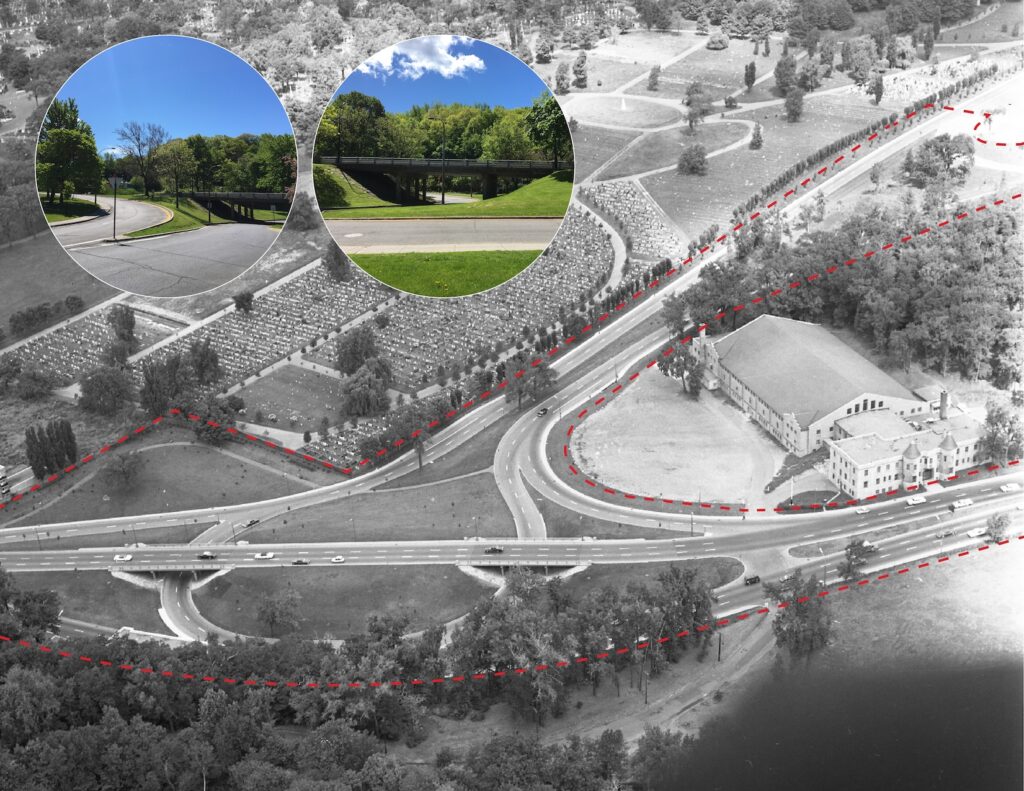
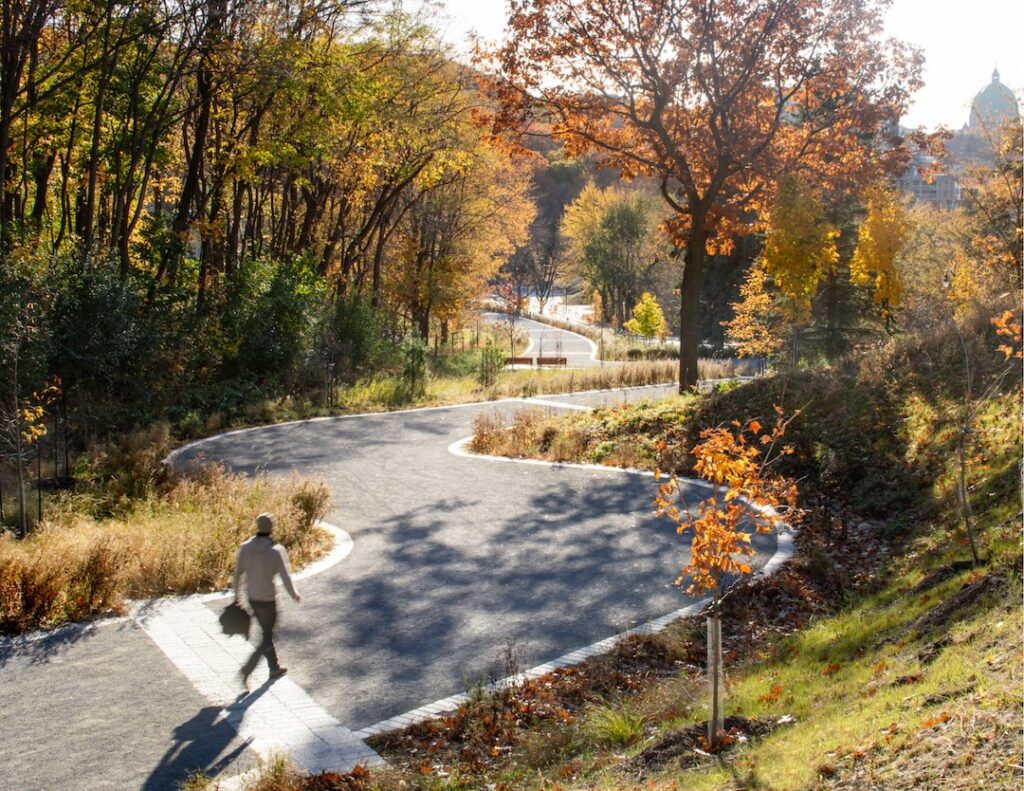
The results have opened up the area for the first time in decades. Where before there were two separate two-lane auto roads, the restored intersection replaces the southern right-of-way with a pedestrian and bicycle path, weaving along the site’s topography to follow Olmsted’s intent for a slow, meandering climb up from the surrounding neighborhoods to the mountain’s peaks. According to Peter Soland, founding partner at Civiliti, “The new, lightly winding section of the mountain loop path echoes the historic Olmsted road that laces up the eastern slope of Mount Royal Park. Both in its material expression and in the sensory experience of ascent, the path reflects this legacy. Its curving trajectory reveals glimpses of the surrounding woodland, frames the rugged silhouette of Westmount Summit, and, in the distance, draws the eye toward the dome of Saint-Joseph’s Oratory, a Montreal landmark.”
A wooded median now separates vehicular traffic from the trailhead. Historic trees were preserved, and hundreds of native trees and shrubs were planted, echoing Olmsted’s practice of integrating existing vegetation and selecting plantings to reinforce the naturalistic character of the landscape. The reimagined entrance also features a series of gentle knolls, inspired by the three peaks of Mount Royal, with stone steps and benches to create a comfortable, Olmstedian space for rest and gathering. The new Remembrance Gateway, though not an Olmsted design, brings Mount Royal closer to his vision for the historic green space, inviting visitors to experience his design principles at a site he called “the best opportunity […] that had ever been presented to my profession.”