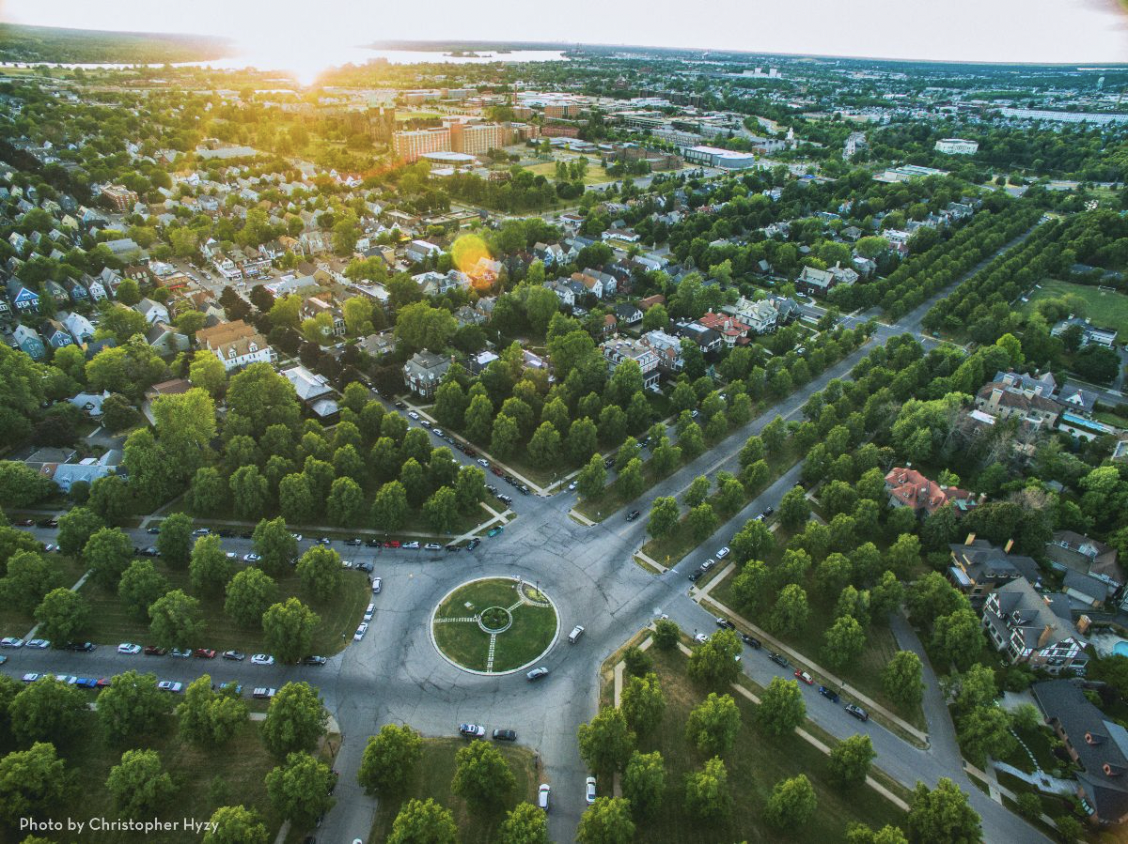


150 years ago, Frederick Law Olmsted hailed Buffalo, NY, as “the best planned city… in the United States, if not the world.” His legacy of community-connecting landscapes is still felt across the city and the region—and at Buffalo Public School No. 64, the “Frederick Law Olmsted School,” where a group of third and fourth-grade students developed a nine-mural showcase illustrating Olmsted’s work in Buffalo and beyond.
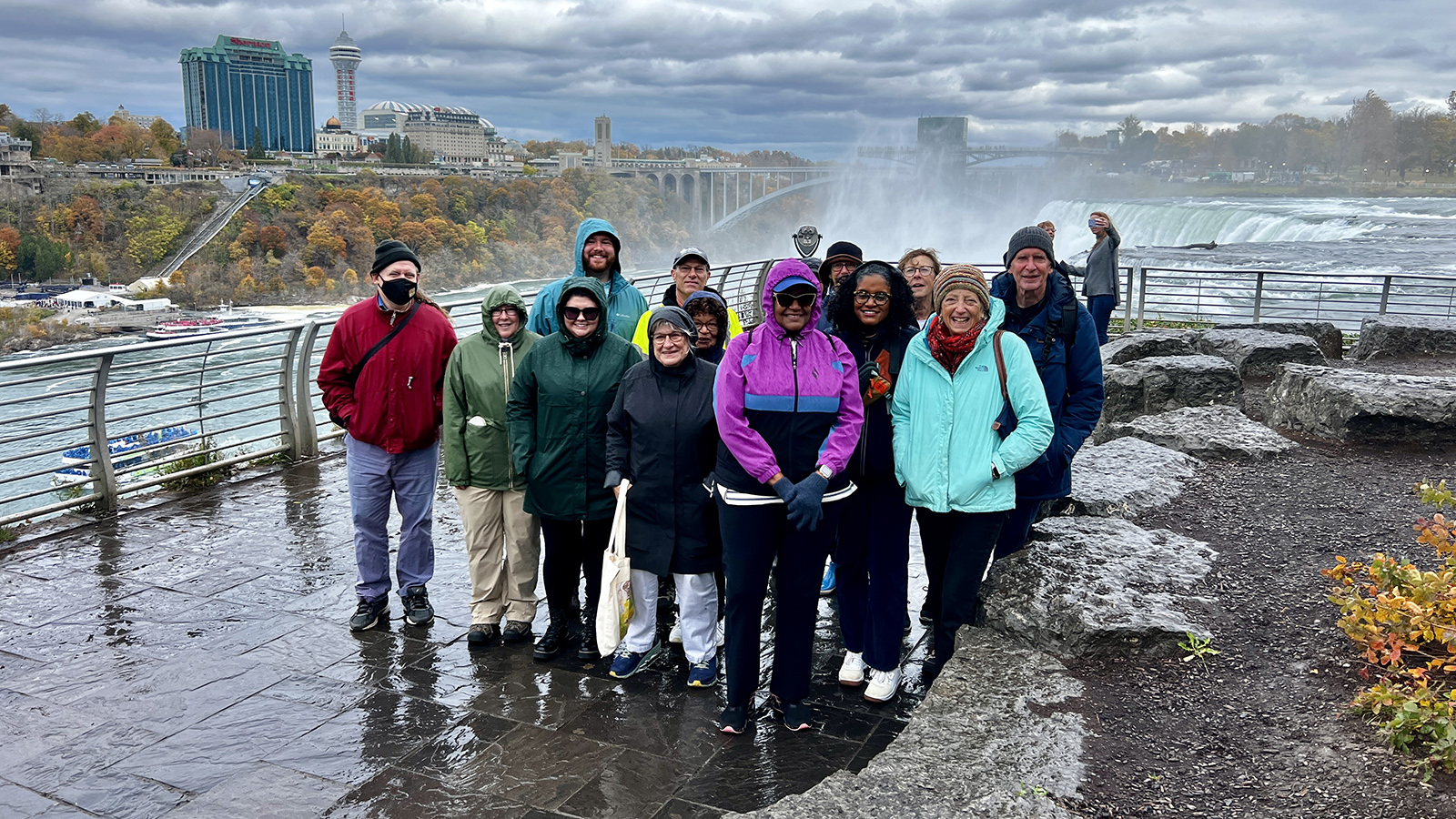
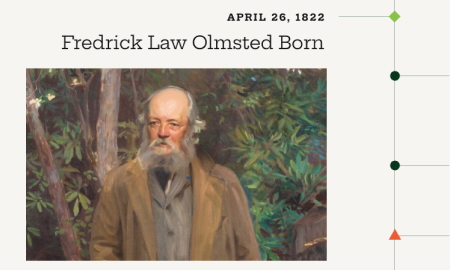
The project explores his impact on the Buffalo area, his influence on the Pan American Exposition, and further expands into his influences around the United States and within the Nation’s Capital and National Park System. Select panels illustrate Olmsted’s biography, a modified version of the Seven S’s of Olmsted Design, parks in Buffalo and across the country, and other Olmsted projects like the Pan American Exposition and Niagara Falls.
The Olmsted Network heard from Mary Benchley and Dana Pepe, educators at the school, about the origins and significance of the project for the students.
Mary Benchley: To truly honor a place, we must first understand the history and intention behind it. By uncovering why our surroundings are the way they are, we cultivate a deeper appreciation for the present and consciously shape how future generations will interact, connect, and live within them.
The students of Frederick Law Olmsted Buffalo Public School No. 64 walk each day through a place connected to two remarkable stories—the vision of Frederick Law Olmsted and the legacy of the Pan-American Exposition. This project gave them the opportunity to explore both, while becoming active contributors to that legacy themselves. Starting with an idea and no defined path forward, they used creativity, perseverance, and collaboration to create something that will be enjoyed by our school community for years to come.
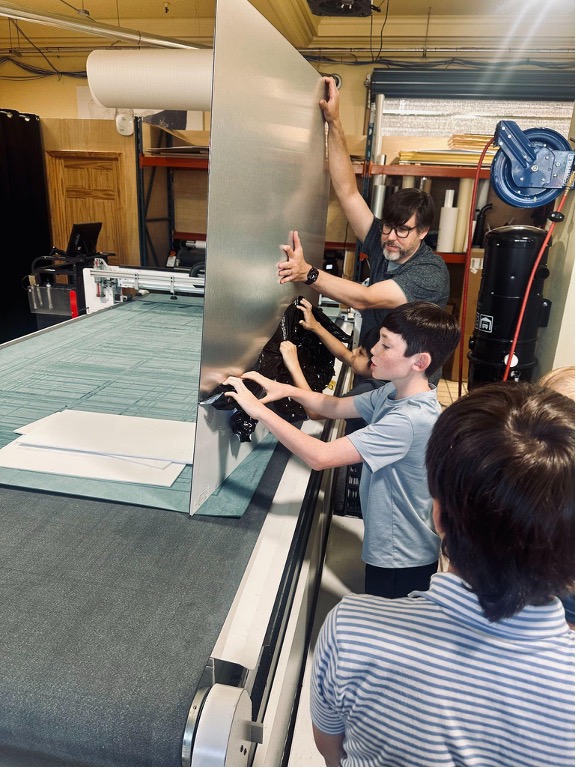
Students assist in the production of the Olmsted murals they designed. Photo by Mary Benchley. 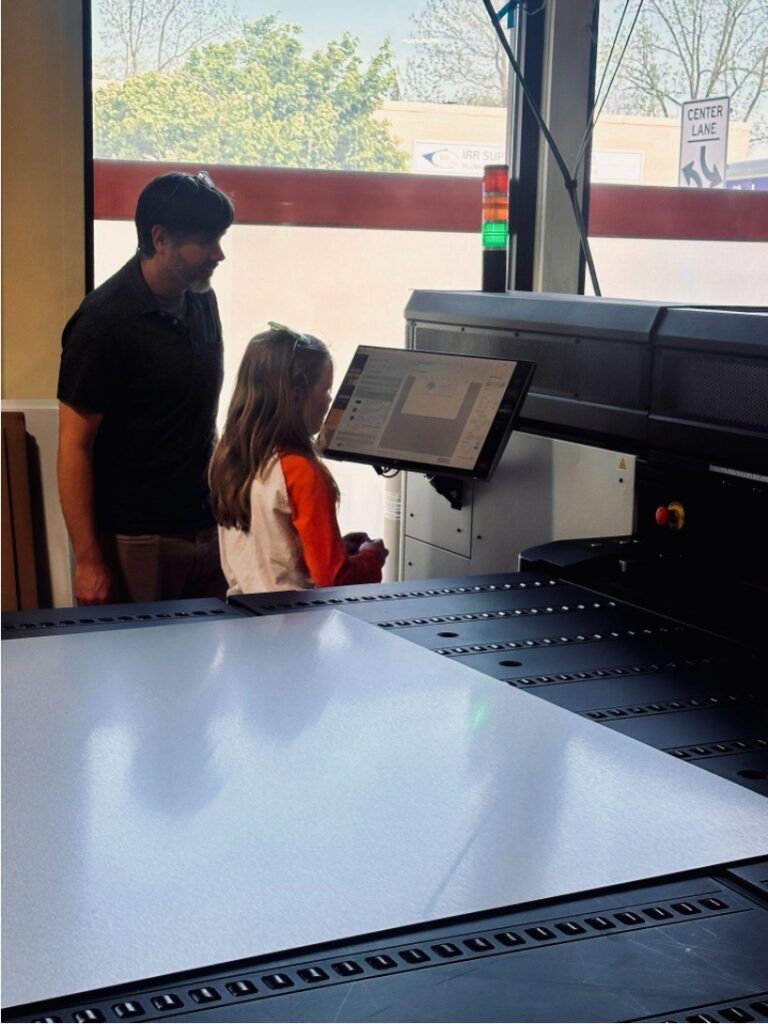
Students assist in the production of the Olmsted murals they designed. Photo by Mary Benchley. 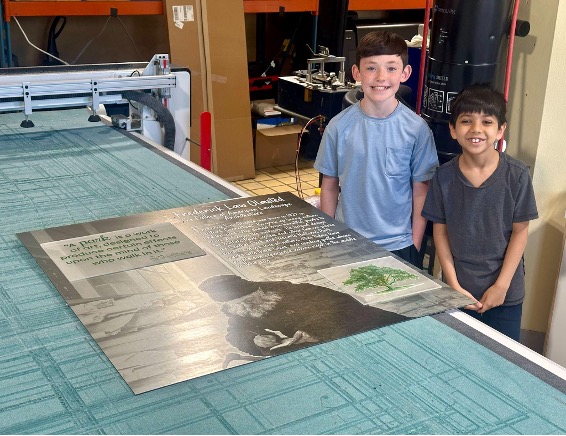
Students assist in the production of the Olmsted murals they designed. Photo by Mary Benchley. 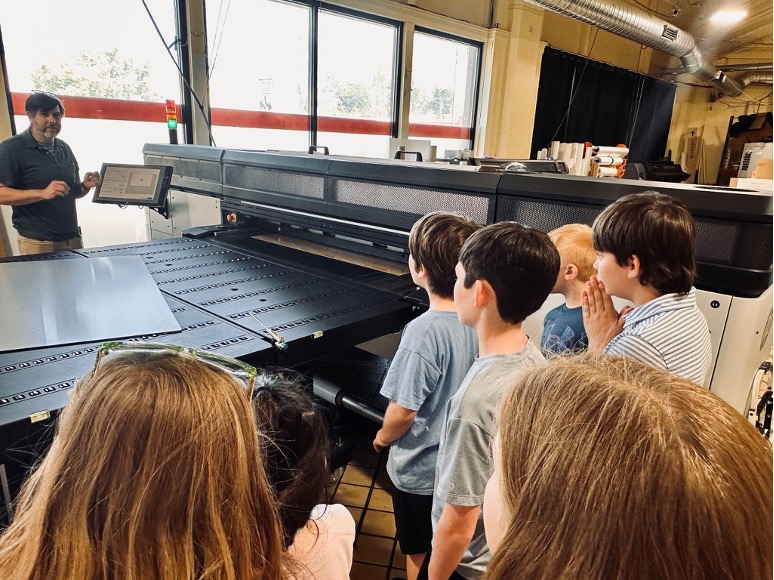
Students assist in the production of the Olmsted murals they designed. Photo by Mary Benchley.
Watching their confidence, pride, and sense of ownership grow throughout the process reminded me why I became a teacher. The skills they developed and the lessons they learned extend far beyond the classroom. Just as Olmsted believed that thoughtful spaces can shape people, this experience helped shape our students. They took their ideas and transformed them into meaningful designs that honor the legacy of Frederick Law Olmsted and the history of the site on which our school stands. Throughout the project, Dana and I learned right alongside them, stretching ourselves in new ways as we developed the skills needed to bring those visions to life. Seeing their work come to life was incredibly rewarding, and I am grateful to have shared that journey of learning, creativity, and growth with both the students and my colleague, Dana.
Dana Pepe: This project gave students the opportunity to see our school and the city of Buffalo in a new light which allowed for a deeper understanding of Buffalo’s rich history. Buffalo was selected to be an international stage during the Pan American Exposition of 1901 due to its economic and industrial growth. At the time of the Exposition, Buffalo was a prominent manufacturing and transportation hub because of the railroads and Erie Canal. More than eight million visitors witnessed advances in technology, industry, art, and culture.
One of the Exposition’s most memorable highlights was its spectacular use of electricity. Known as the “Rainbow City,” the fair featured thousands of electric lights powered by hydroelectric energy generated at nearby Niagara Falls. Visitors were awed by the illuminated buildings, fountains, and the 375-foot Electric Tower, something that the students chose to feature in one of their mural panels. Although the event is often remembered as the site of President William McKinley’s assassination, its broader legacy was to showcase Buffalo as a modern, forward-looking city at the dawn of the twentieth century.
Throughout this project, students made connections with historical landmarks scattered around the school grounds and nearby locations that would otherwise go unnoticed. They, as well as I, can now appreciate the importance of preserving historical sites, parks, and stories to help maintain Buffalo’s rich legacy. This has been a rewarding experience for me as I learned new things about our history alongside the students. Moving forward, the hallway gallery will now become a showcase for student ambassadors on their guided tours of our school.
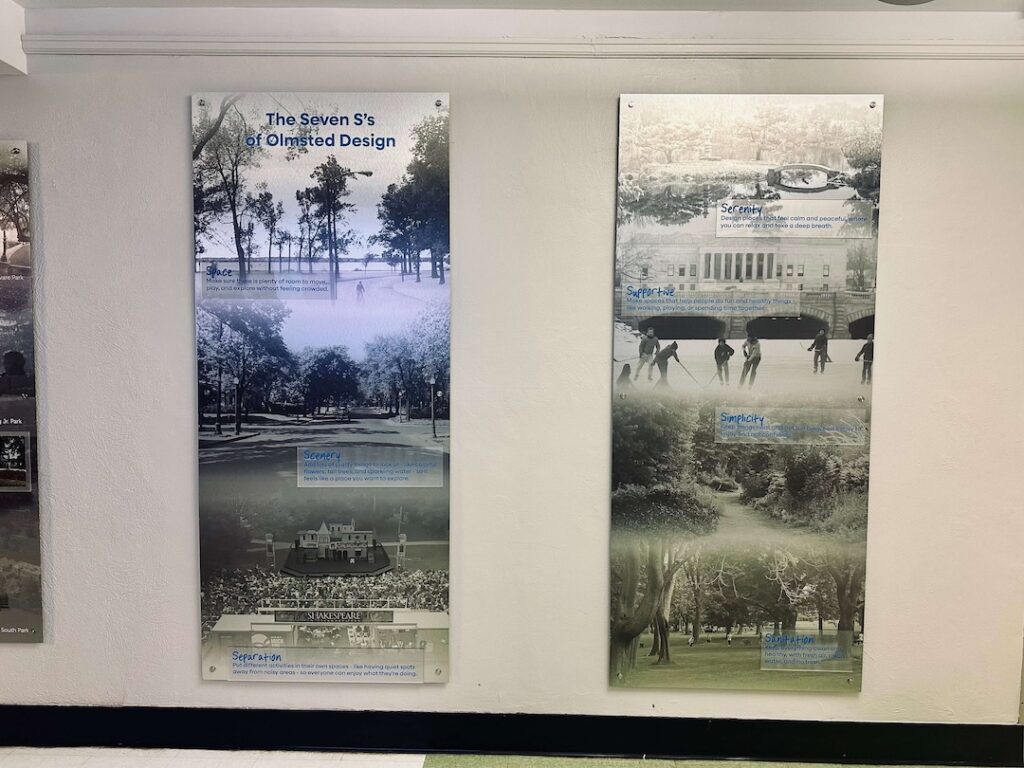
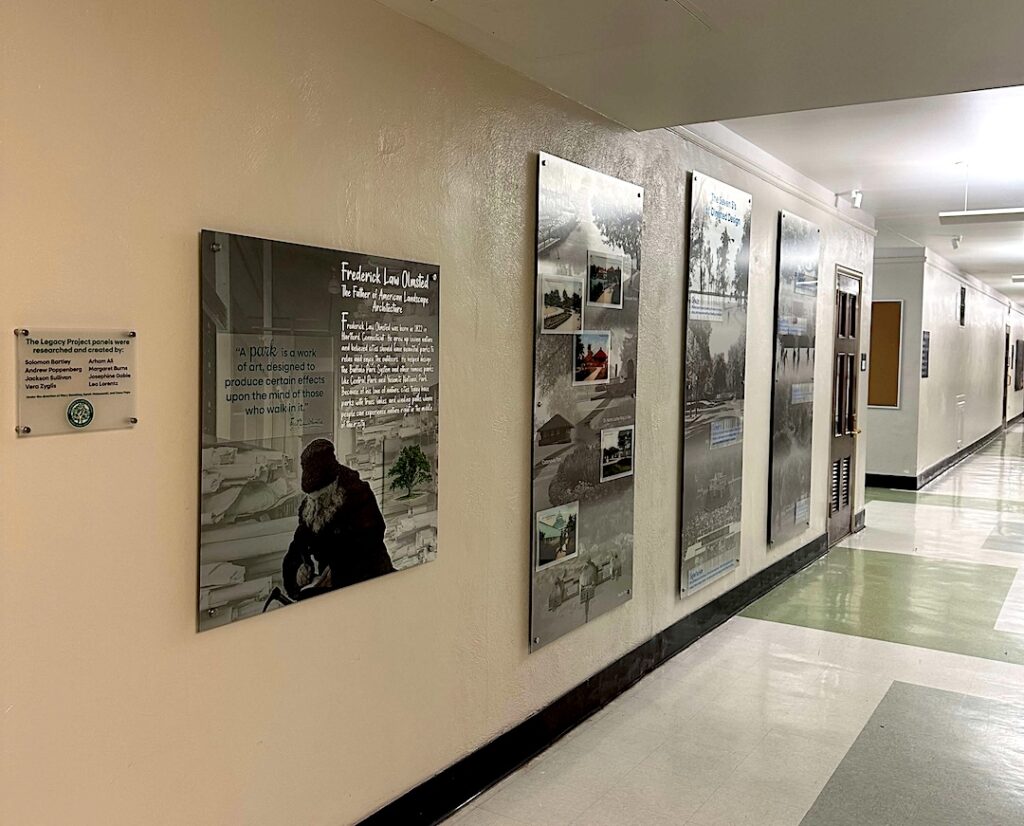
The finished murals installed in the hallway—featuring panels on Olmsted, his design principles, and his projects in Buffalo and beyond. Photo by Mary Benchley. 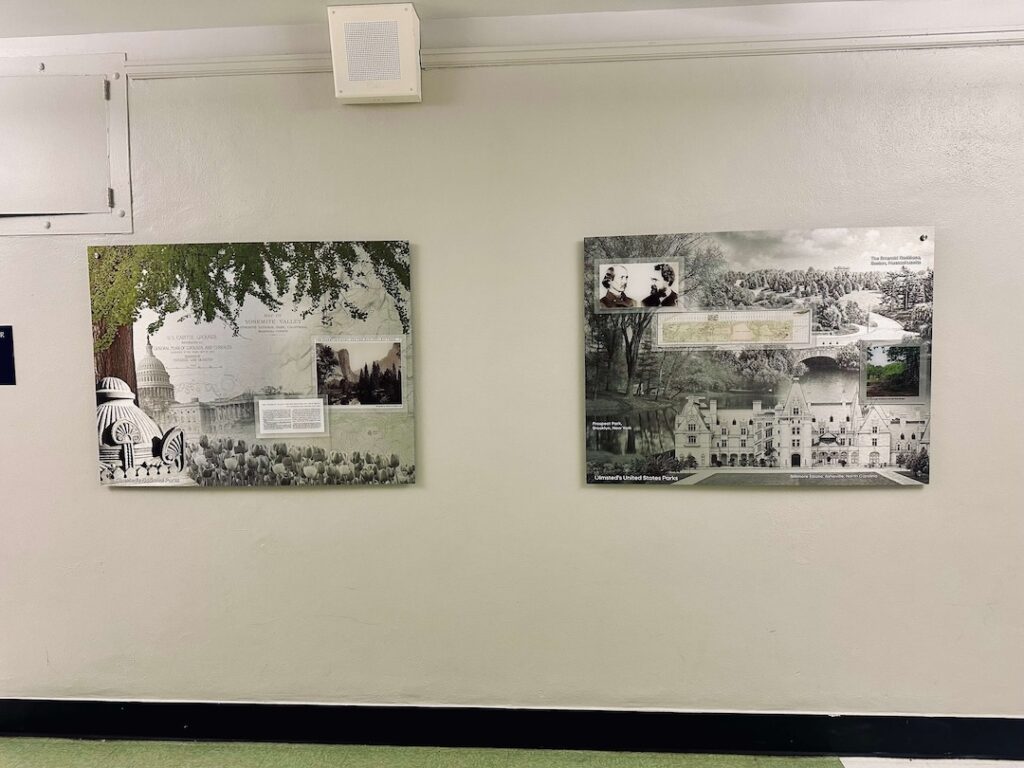
The finished murals installed in the hallway—featuring panels on Olmsted, his design principles, and his projects in Buffalo and beyond. Photo by Mary Benchley. 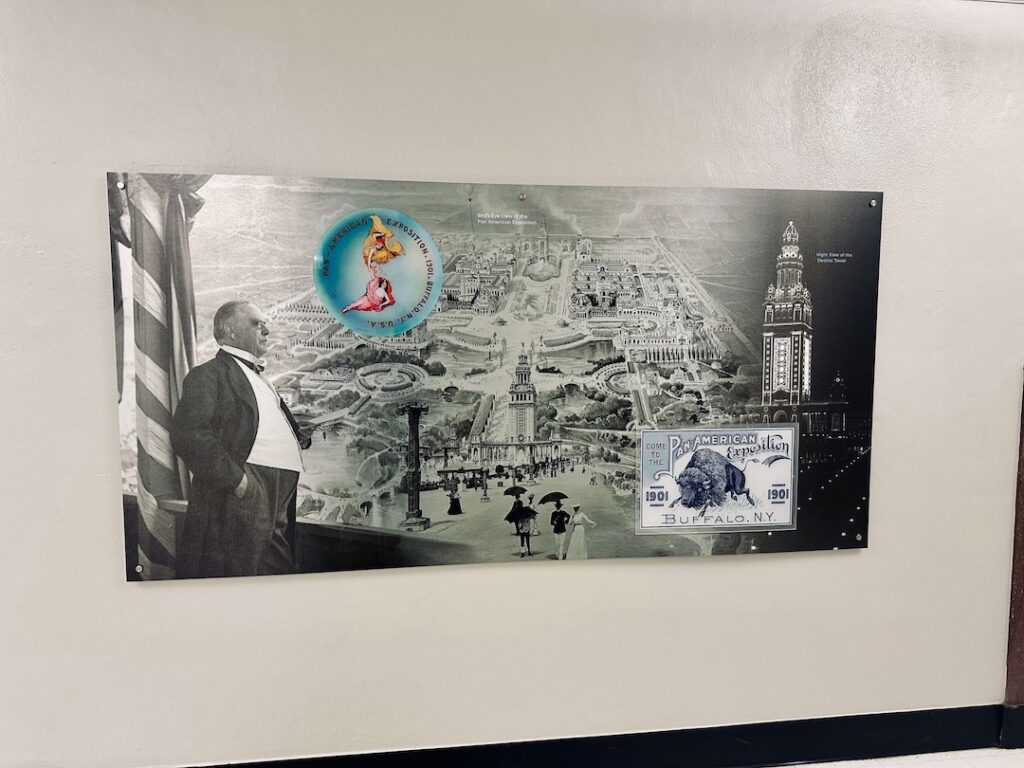
The finished murals installed in the hallway—featuring panels on Olmsted, his design principles, and his projects in Buffalo and beyond. Photo by Mary Benchley. 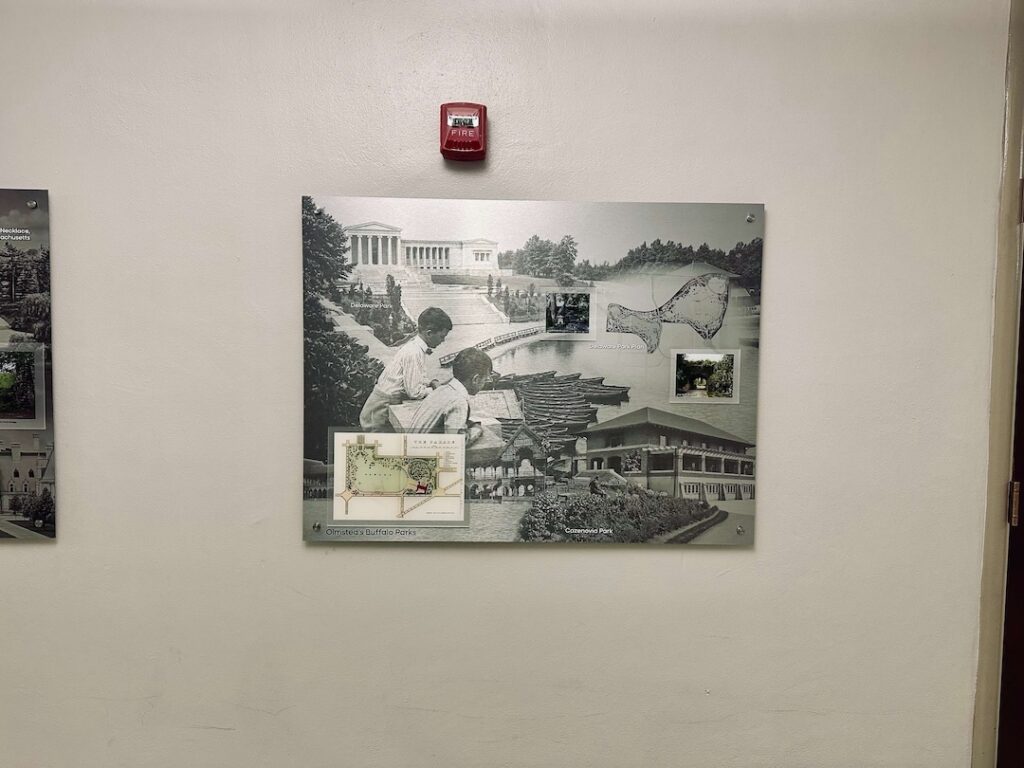
The finished murals installed in the hallway—featuring panels on Olmsted, his design principles, and his projects in Buffalo and beyond. Photo by Mary Benchley. 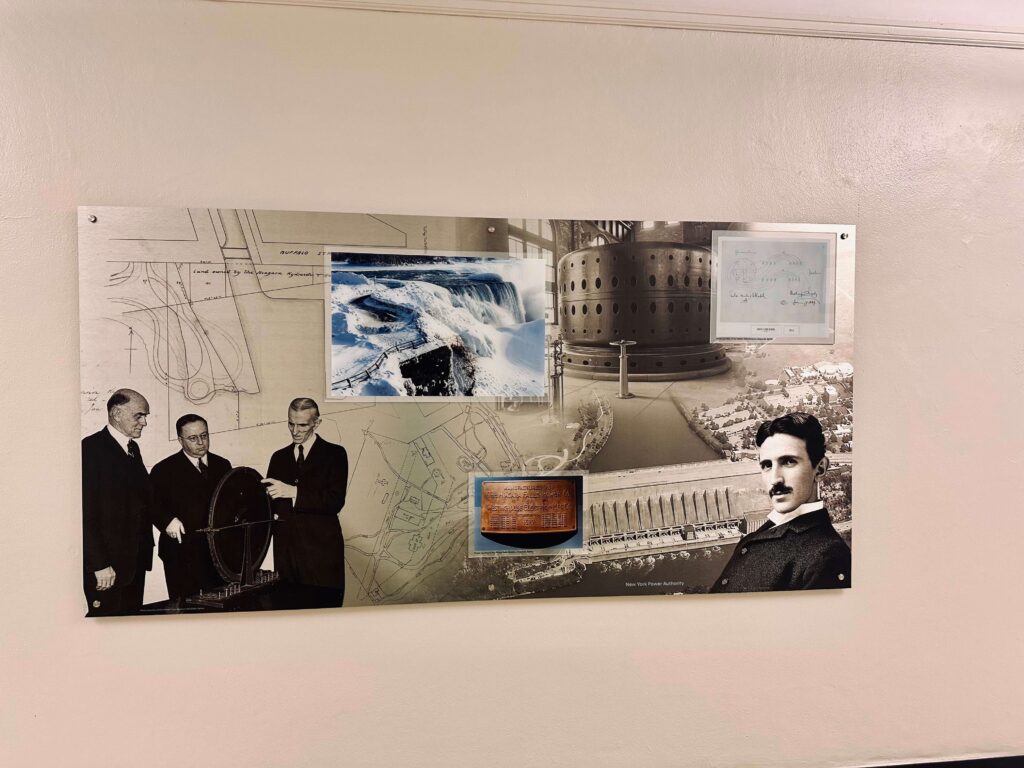
The finished murals installed in the hallway—featuring panels on Olmsted, his design principles, and his projects in Buffalo and beyond. Photo by Mary Benchley. 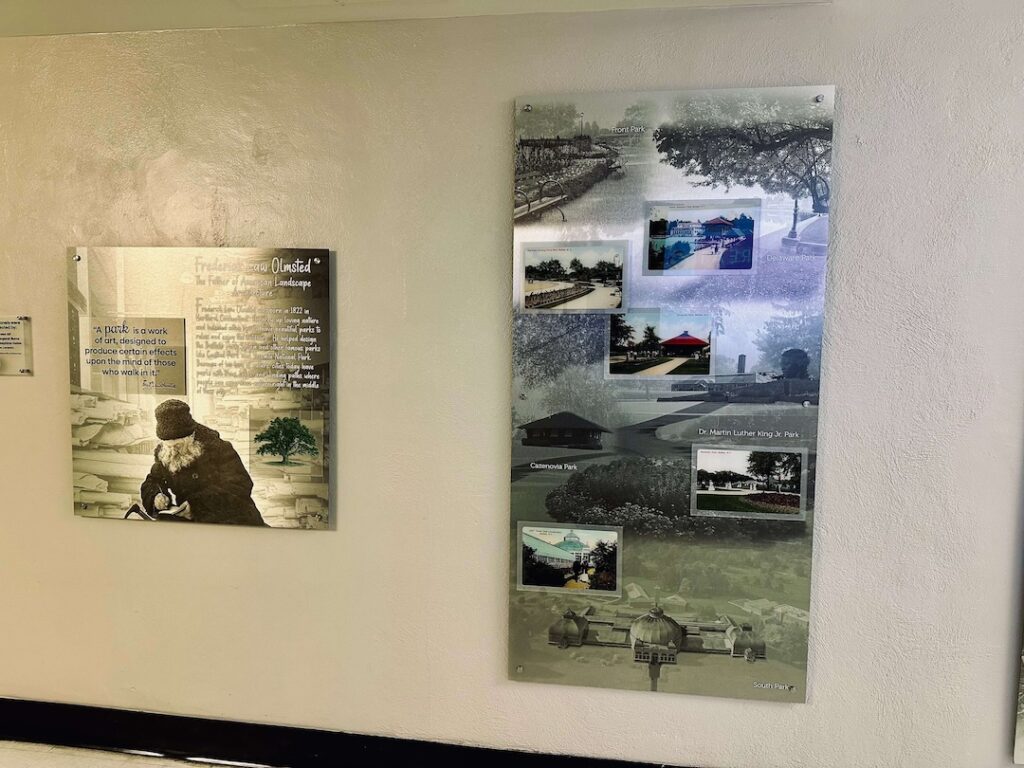
The finished murals installed in the hallway—featuring panels on Olmsted, his design principles, and his projects in Buffalo and beyond. Photo by Mary Benchley.
Furthermore, collaborating with Mary allowed for a more well-rounded experience for the students as our strengths reside in different areas. Mary’s artistic talent and my deep interest in the Pan American Exposition motivated students’ creative talents and hopefully left a lasting impression on their experiences at Olmsted School.
Looking ahead, the school intends to hold an official unveiling at the start of the next school year, during a community or family engagement evening. In the next school year, students will research and design placards to go along with the murals, providing information for viewers to learn more about Olmsted’s work. The exhibition stands as a constant reminder of his profound impact on Buffalo, NY, and the United States as a whole, and as more young minds learn about this legacy—and see it around them in places like the Buffalo Park System and Niagara Falls Reservation—a new generation of thoughtful green leadership just might emerge.