
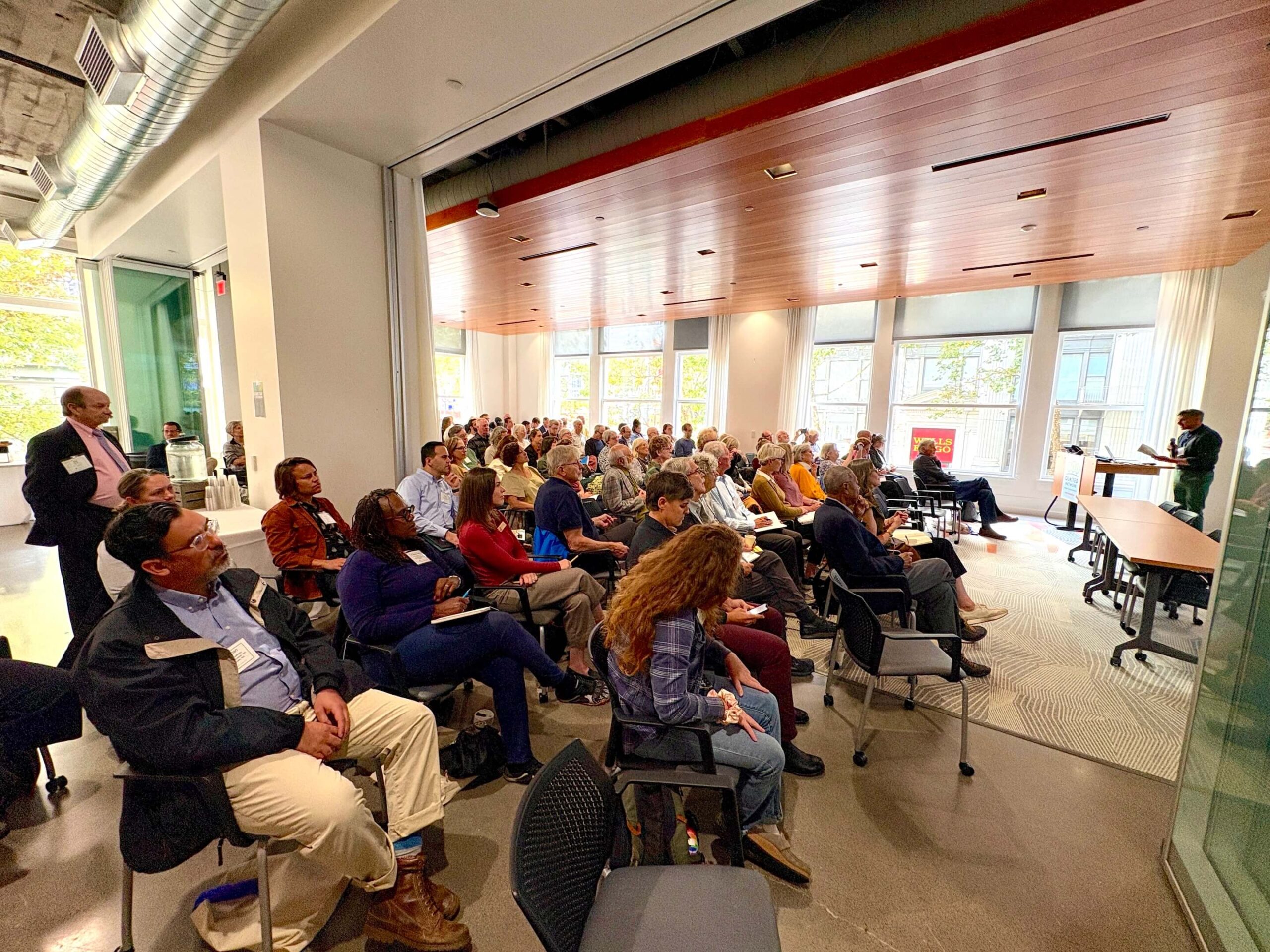
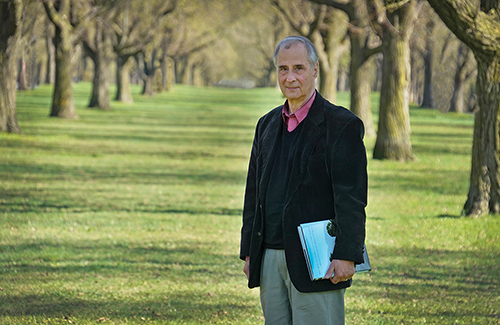
This year, the Library of American Landscape History published a new book on Calvert Vaux—best known as Frederick Law Olmsted’s partner on Central Park and Prospect Park. While he is most widely recognized as an architect of built structures, the new work by historian Francis. R. Kowksy explores Vaux’s career as a landscape architect, and the considerable influence he had on the field. The Olmsted Network recently sat down with Frank to discuss his work.
1. This is not your first book on Calvert Vaux—in the past, you have written about his architectural career and his work with Olmsted in Buffalo. What drew you to return to this subject and explore his landscape architecture career?
I believed it was important to focus more fully on Calvert Vaux’s career as a landscape architect because historians and the public too often overlooked his achievements in favor of those of his friend and colleague, Frederick Law Olmsted. This project provided an opportunity to present several of Vaux’s most significant landscape works independently of his distinguished career as a leading figure in late nineteenth-century American architecture. I also sought to remind readers that Vaux had established a substantial career in landscape design before his partnership with Olmsted, particularly through his role as the chosen associate of Andrew Jackson Downing, and that he was the person who encouraged Olmsted to pursue landscape architecture.
In addition, I wanted to emphasize that Vaux’s aesthetic vision drew upon both the British Romantic tradition and the American Transcendentalist movement, especially as expressed through his close friendships with artists of the Hudson River School. I also hoped to produce a book that did visual justice to the landscapes he helped create. In that respect, I believe LALH accomplished that goal splendidly.
Researching and writing the book also gave me new perspectives on Vaux’s career. I came to appreciate more fully the extent to which, in his later years, he fought to preserve the principles that he and Olmsted had established for Central Park. He continued to defend those ideals long after Olmsted had left New York for the less contentious environment of Brookline and Boston.
I also gained a deeper appreciation for the importance of Vaux’s later work designing small parks in underserved neighborhoods of Manhattan. These projects made a significant contribution to urban life during a challenging period and deserve far greater recognition. Finally, I have come to view Vaux’s long association with Andrew Haswell Green—whom Olmsted disliked and refused to work with—in a new light. Likewise, writing a book on Jacob Wrey Mould has deepened my understanding of Vaux’s relationship with Mould and its significance.
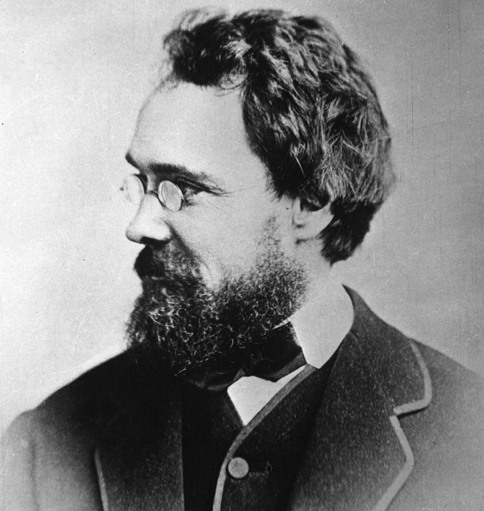
2. What is it about Vaux’s influence that is essential for a modern audience to understand?
Vaux served as the critical link between the early popularization of “landscape gardening”—particularly among the expanding class of American homeowners—by his first American associate, Andrew Jackson Downing, and the emergence of “landscape architecture” as a distinct professional discipline, which Vaux and Olmsted established. Vaux also played a pivotal role in advancing the American park movement. He championed the competition to design Central Park, persuaded Olmsted to join him in preparing the winning Greensward Plan, and collaborated closely with him in creating the nation’s first great “country park” landscape.
As urbanization accelerated, Central Park—to which Vaux devoted much of his career after 1858—and the many other public parks that benefited from his vision became influential models for municipalities throughout the United States. As a landscape designer, Vaux grounded his work in the aesthetic values he shared with the leading landscape painters of his era, many of whom counted among his closest friends.
3. This year marks the bicentennial of Frederic Church, who collaborated with Vaux on his famous Olana estate. Could you talk a little about the connection between Olmsted, Vaux, and Church?
Vaux’s close friendships with leading landscape painters of his era—including his brother-in-law Jervis McEntee, Worthington Whittredge, Sanford Robinson Gifford, William Kensett, and Frederic Church—profoundly influenced his artistic vision. Indeed, Vaux regarded himself as an artist. Although he shared Olmsted’s views on society and urbanism, he consistently maintained that landscape architecture was, above all, an art. Like the painters with whom he associated, Vaux retained a lifelong admiration for the scenery of the Hudson River Valley. Unfortunately, none of the sketches he is known to have produced during sketching excursions in the Catskills has survived.
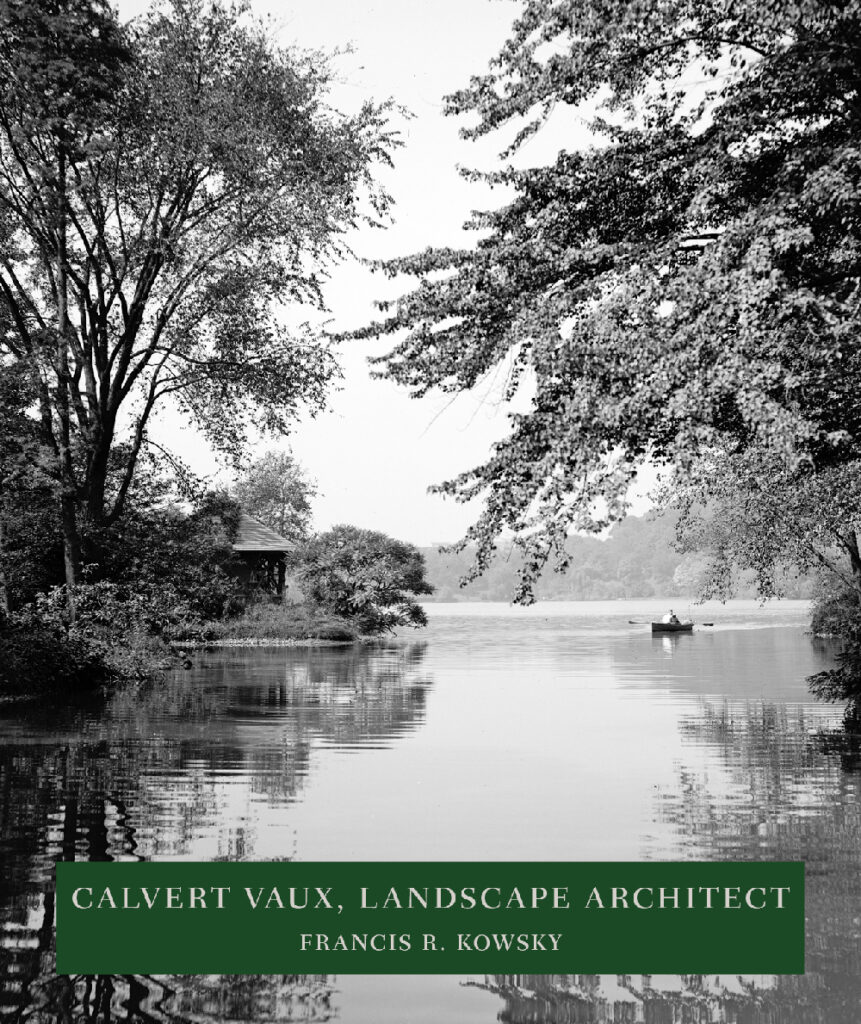
Calvert Vaux, Landscape Architect is available from the Library of American Landscape History.