

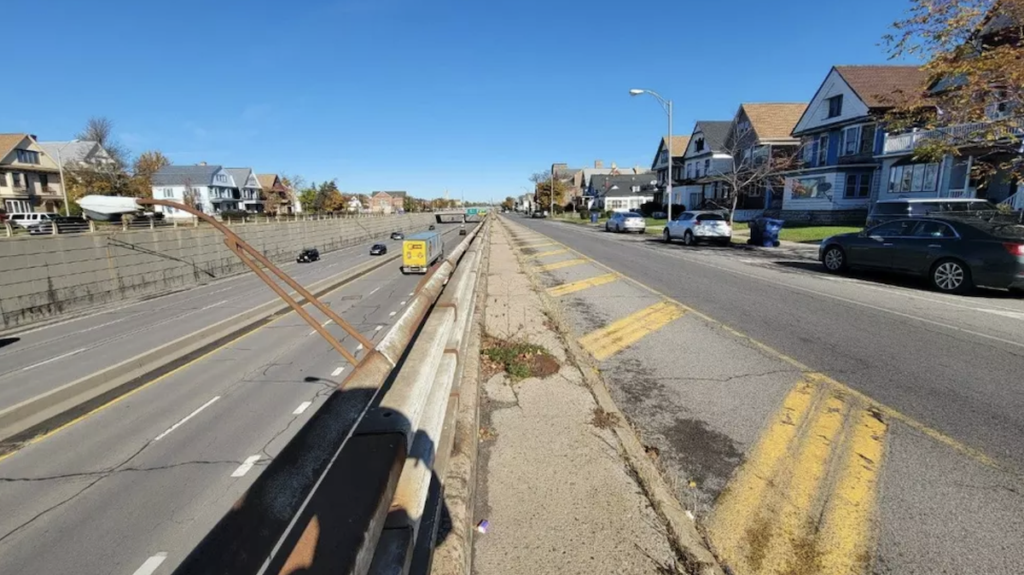
This summer, Buffalo’s Olmsted Park System made a significant step in legal efforts to restore Humboldt Parkway—an original Olmsted-designed landscape that was lost over half a century ago. The Olmsted Network is proud to have helped make that case, filing a legal brief in support of a community-led lawsuit.
The NY Appellate Division court recently ruled that legal claims over the Kensington Expressway—built through Humboldt Parkway in the 1950s/60s—can proceed on two fronts: violation of the public trust doctrine—the legal principle that dedicated parkland can’t be converted to non-park use, like a highway, without direct approval from the state legislature— and violation of New York’s Green Amendment (the state constitutional right to clean air, water, and a healthful environment).
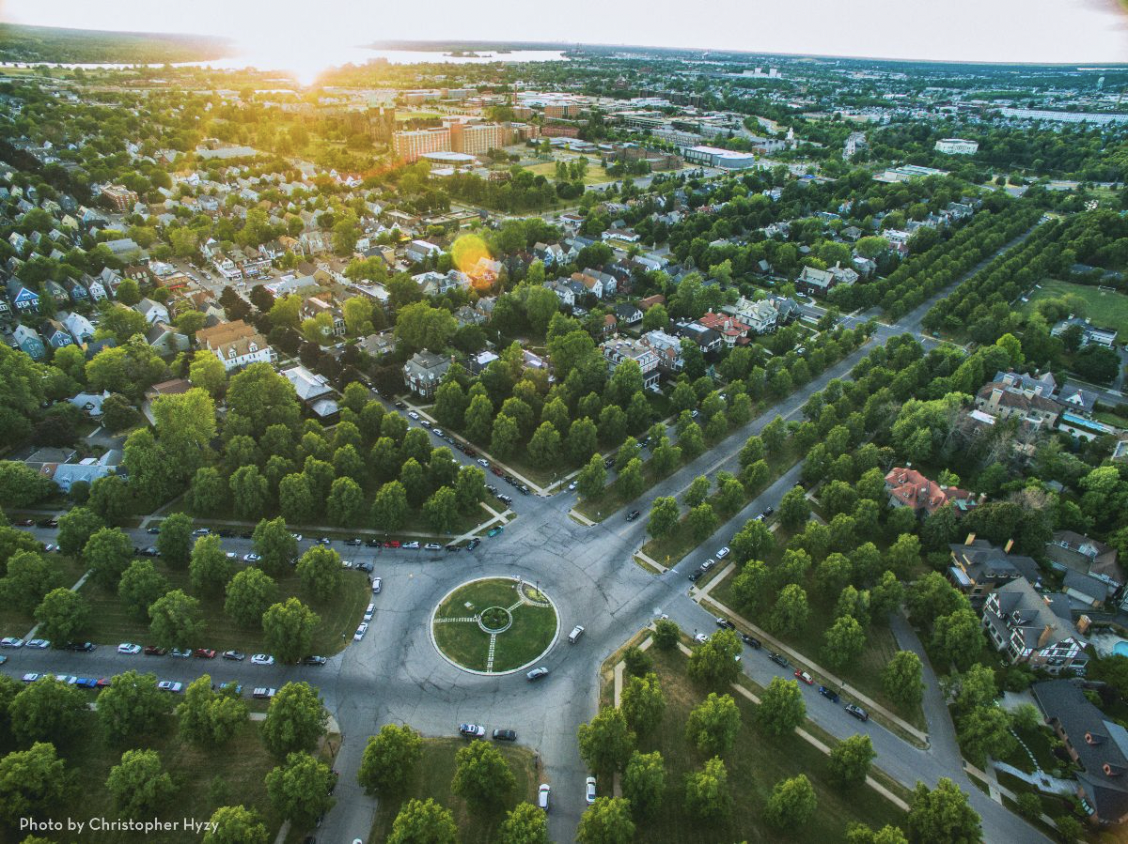
Of particular note, the court found unresolved factual questions about whether a parkway counts as protected parkland. They pointed to Humboldt Parkway’s identical design, function, and history with Bidwell, Chapin, and Lincoln Parkways—Olmsted parkways already recognized as parkland by the U.S. Department of the Interior—and to 80+ years of park-style public use (games, picnics, horseback riding) as evidence the parkway was not just a street.
While the legal battle is far from over, this is a crucial win to allow advocacy for Humboldt Parkway to proceed. This ruling reinstated pivotal arguments that had been dismissed by a lower court in 2025, and the case can now return there to be heard again.
The impacts of this case will extend far beyond Buffalo. Parkways are core to Olmsted’s vision of connected park systems nationwide, and this ruling pushes back on efforts to treat them as second-class open space. More than simple thoroughfares or roads, they are as much places for recreation and restoration as any park or public green space.
As this case progresses, the Olmsted Network will continue to work with our partners on the ground in Buffalo, and we look forward to supporting their efforts restoring essential open space.