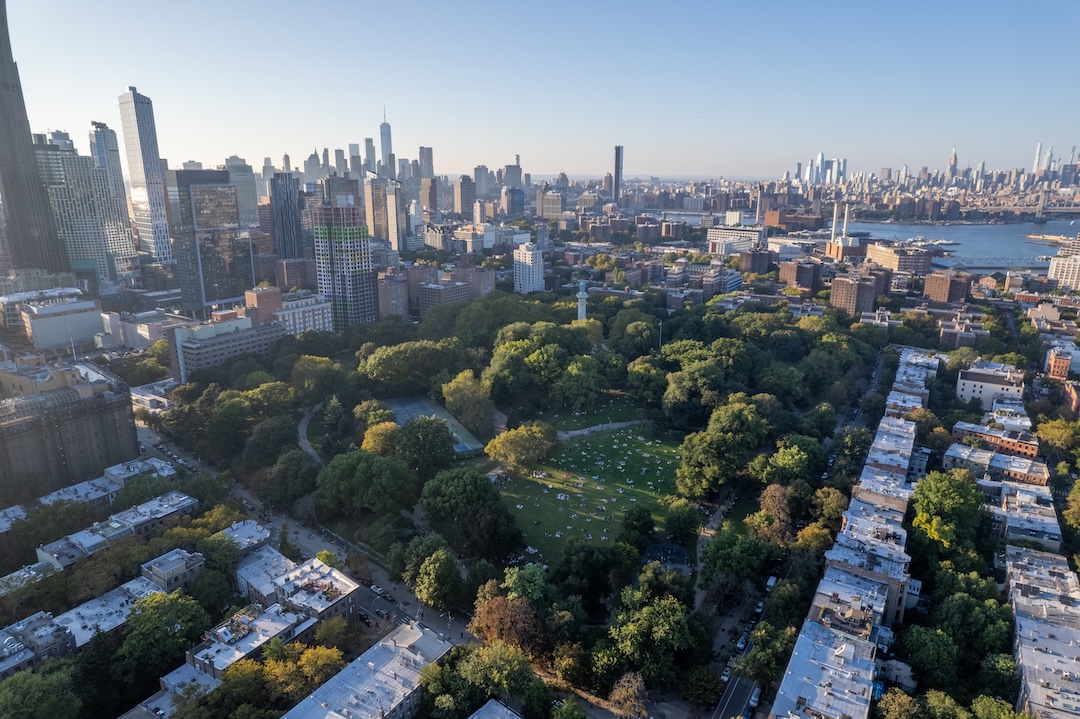
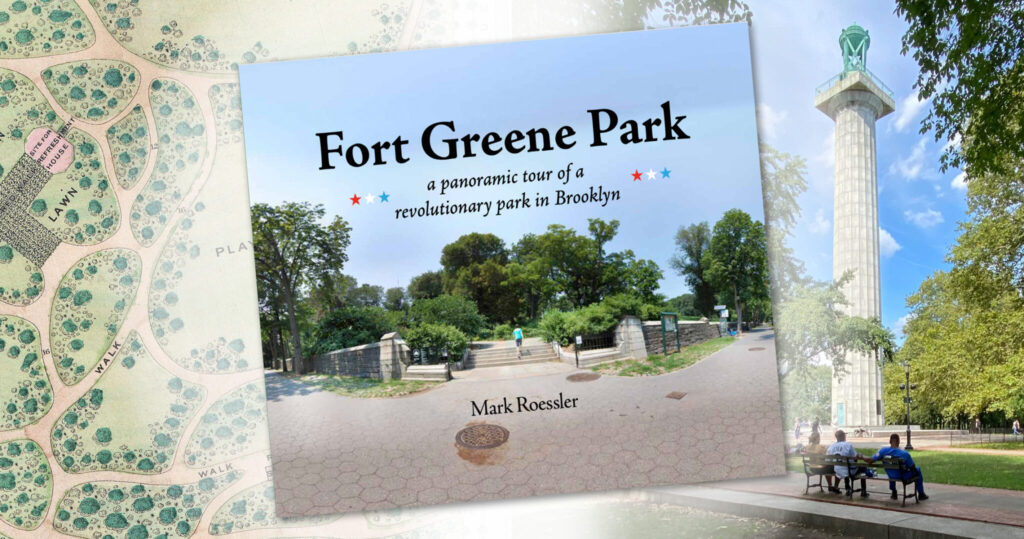
Fort Greene Park: A Panoramic Tour of a Revolutionary Park in Brooklyn is the new book from Levellers Press, taking readers on a photographic tour of an often-overlooked Olmsted landscape. Author Mark Roessler offers an immersive, annotated look at the park, allowing readers to explore its 30 acres from the comfort of their own homes. The Olmsted Network recently sat down with Roessler to discuss his work.
1. Fort Greene Park is the third collaboration between Frederick Law Olmsted and Calvert Vaux. How do you think it shows a stylistic evolution from their earlier work on Central Park and Prospect Park?
While it was the third park they worked on together, it was a first for them in a few key ways. When they took on the Fort Greene Park job in 1867, it was the first park project they worked on as equal, fully-engaged partners from inception.
Being a small park—only around thirty acres—it also was the first park they completed. Prospect and Central Parks took decades before they were declared done. To my mind, because it has been so well preserved by its conservancy, this makes Fort Greene Park a kind of snapshot of the two men’s work at the start of their mission to introduce public parks to all major American cities.
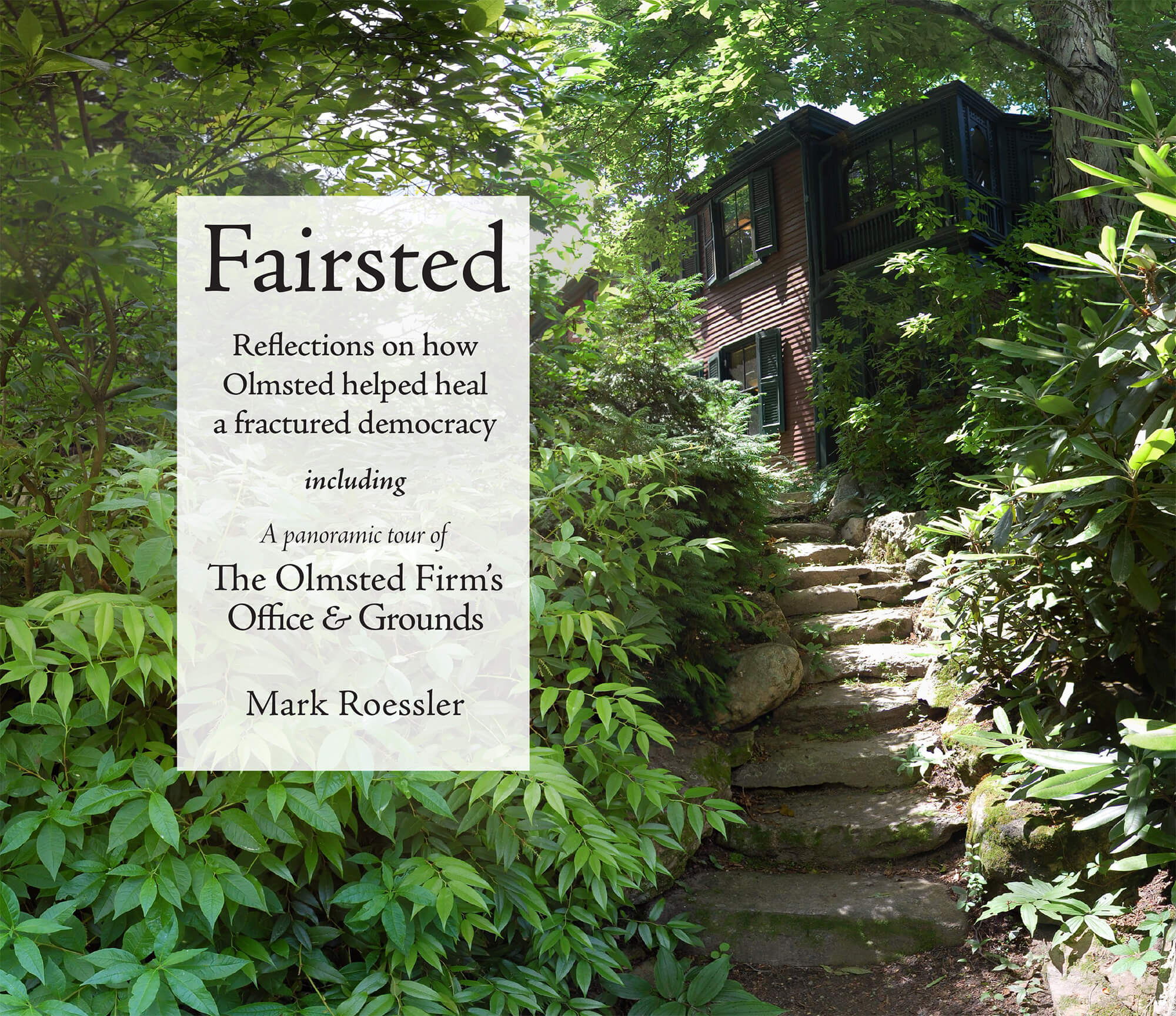
As I discuss in my previous book, Fairsted, there was a seismic shift in Olmsted’s understanding of how public parks worked between when he quit Central Park before the Civil War and when he returned to co-design Prospect Park. After the war, Olmsted and Vaux were united in the belief that cities needed outdoor common ground to help heal the divisions still obvious everywhere. When he started work on Central Park, Olmsted thought he might have a job for life, managing that one park. Working on Fort Greene Park, instead of being an administrator, he understood he was an artist. He and Vaux intended to take what they’d learned in Manhattan and apply it everywhere.
To realize this plan—a park in every city—they knew many of these future parks, if not most, would need to be on a significantly smaller scale than the mega-parks they were working on in Manhattan and Brooklyn. The designers knew they would need a more affordable, compact option, and in many ways, Fort Greene Park acts as the show model for the majority of the park work that they would collaborate on later.
2. Your latest book is more visually-oriented, with panoramic images offering a “choose-your-own” journey through the park. Can you discuss your process?
I’ve always wanted to design a book that works like one of Olmsted and Vaux’s parks—multiple options for how you enter, and once inside, you’re free to wander in whichever direction you choose. For this book, if you want to start outside the park and work your way inward, you read it in one direction. If you want to start with the memorial in the center of the park and work your way outward, flip it over and start reading from the other cover. I’ve been saying the book reads sort of like a non-fiction graphic novel.
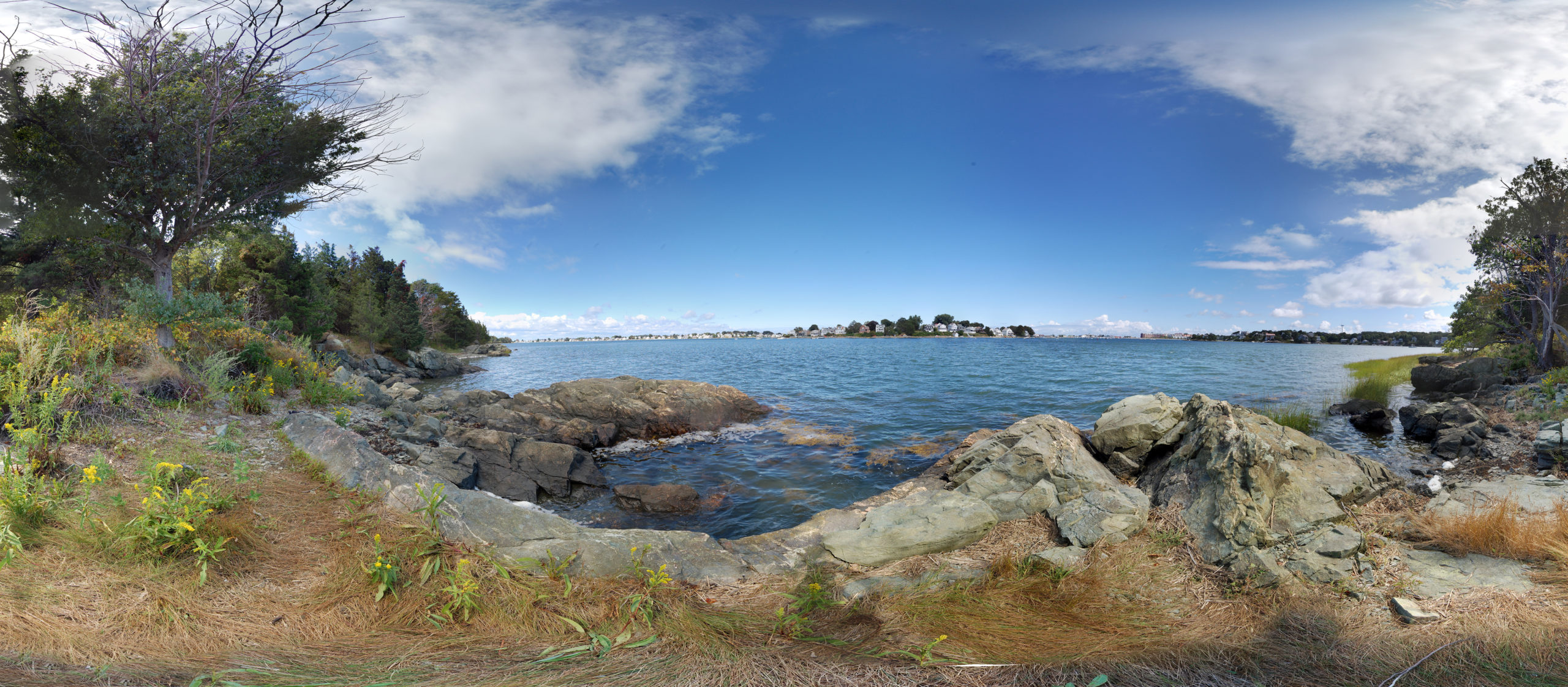
The best way to understand what Olmsted accomplished is to visit the landscapes themselves. Given the immense canvas he worked with, seeing them all is impossible for most of us. To overcome this obstacle and help everyone better appreciate his work, I’ve made it my personal goal to document all of Olmsted’s more than forty parks with panoramic tours. I’m about a third done.
As I assemble my digital tours for the web, I often find that seeing whole panoramas is both informative and visually striking. This is what prompted me to turn select parks into non-linear books featuring each full expanse.
3. How does Fort Greene Park exemplify Olmsted’s belief that parks were spaces to foster democracy?
Many of Olmsted’s parks were built in open space near cities, with the idea that development would eventually surround the parks. From the start, Fort Greene Park was surrounded on all sides by a well established and diverse neighborhood. Then, as now, one side of the park faces housing projects, and another has single-family brownstones. Famous authors, filmmakers, and musicians have lived in the neighborhood.
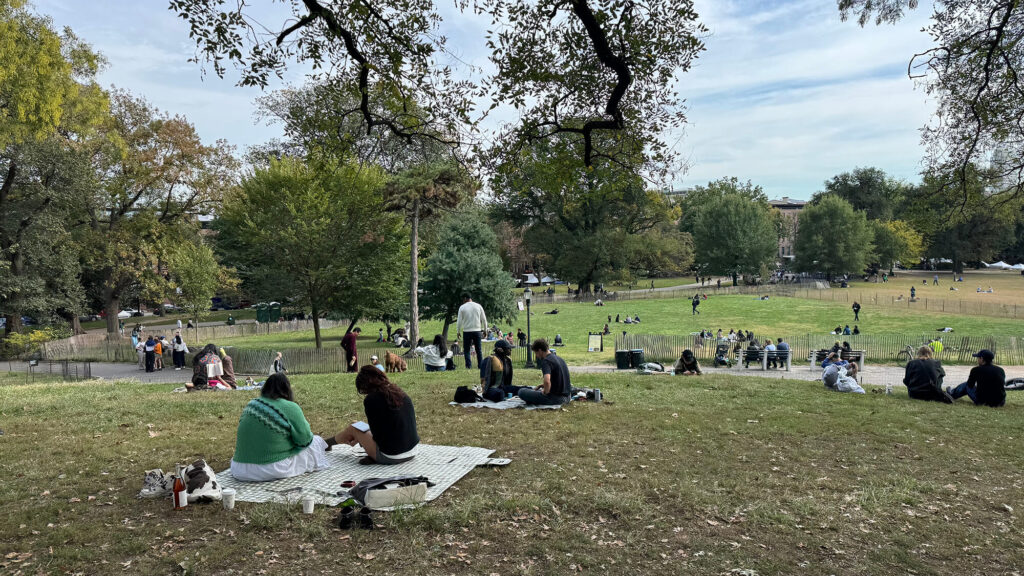
No matter who you are and where you come from, though, the park treats everyone with the same dignity. On all sides there are grand, stone entrances welcoming everyone from whatever direction they are coming. Once inside, all visitors are offered options—different, intriguing directions to explore. No matter which path they take, arrayed throughout the park are many gathering spots to choose from. There are several lawns and a large plaza around the memorial at the top of the hill. At all points—entrance, paths, destinations—nestled under the trees, there are hundreds of benches available to insure everyone’s visit is full of opportunities for relaxation and social interaction.
4. Your book points to Fort Greene Park as a distinct influence on later works by Olmsted Sr. and the Olmsted Brothers. Expand on that point.
Fort Greene Park marked the start of three innovations.
First, key to Olmsted and Vaux’s park design philosophy was that the parks they create appear as wilderness. They wanted visitors to feel they’d left the city far behind and were close to nature. Fort Greene Park shows how this wilderness approach could be achieved even in a much more condensed layout. While there were more large parks to come, the bulk of the park commissions between father and sons were all closer in size (and budget) to Fort Greene Park.
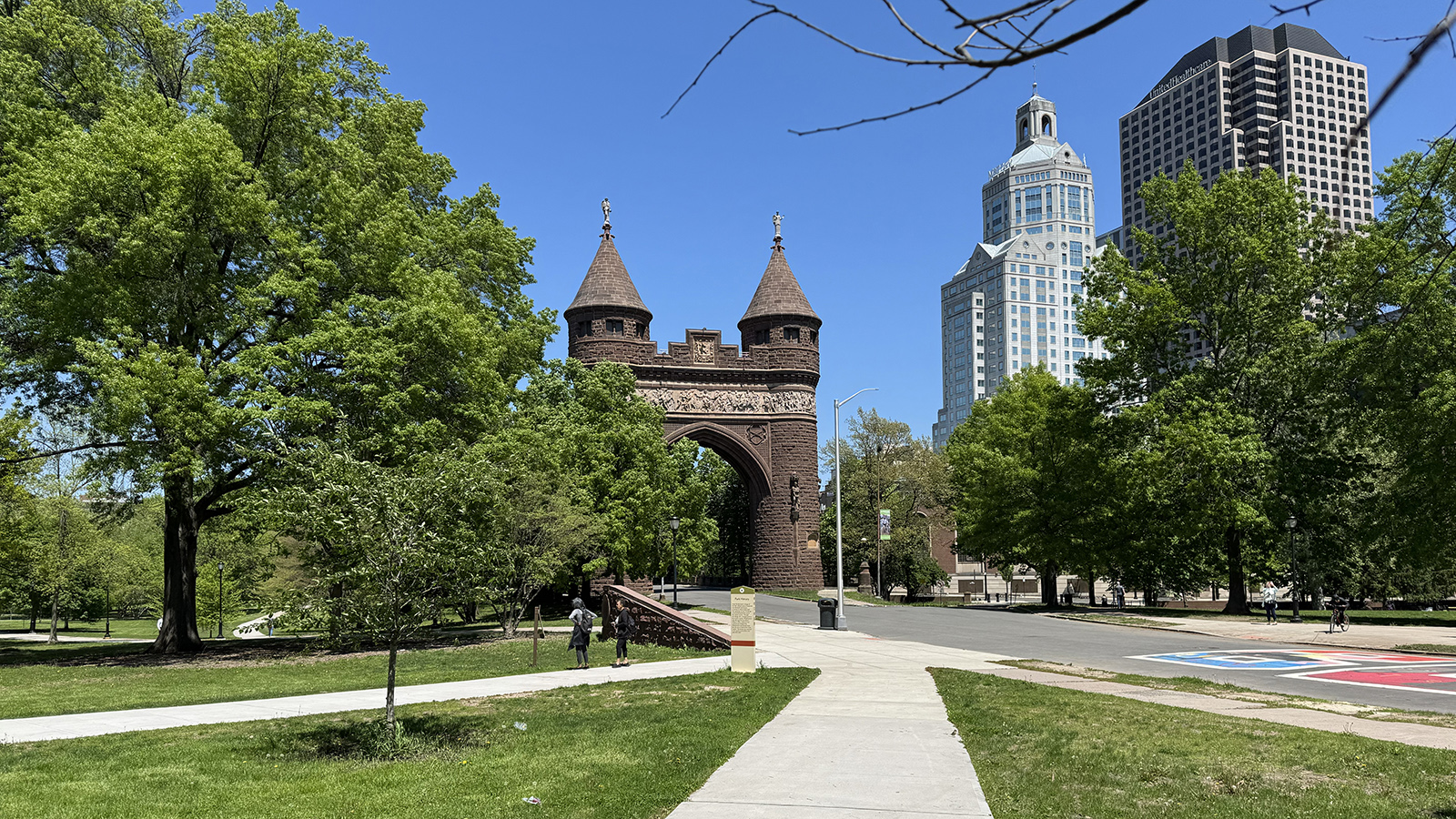
Especially right after the Civil War, the designers were often asked by the small cities they worked for to devote a significant portion of their park designs to memorials. Fort Greene Park with its Prison Ship Martyrs Memorial was the first of many parks that integrated elaborate statuary as a center point.
Finally, while working in Brooklyn on multiple unconnected parks, Olmsted and Vaux invented the concept of a parkway system—parks connected by greenways that would define the layout of a city. It was a model that would be woven into projects across the country in cities like Buffalo, Chicago, Atlanta, and Boston.
5. The book coincides with the 250th anniversary of the American Revolution and the 25th birthday of the Fort Greene Park Conservancy. How is the park’s history still relevant today to a larger audience?
I call Fort Greene Park a revolutionary park for two reasons.
At the center of the park is a giant column with a bronze lantern on top. Midway up the wide set of stairs leading to the column is a door leading to a crypt. This is the Prison Ship Martyrs Memorial.
During the Revolutionary War, the British occupied New York City. In the harbor, they grounded a fleet of old ships and used them to warehouse prisoners. Overcrowded and starving, many died. The crypt below the column contains the remains of approximately 11,500 prisoners, which is almost twice the number of American soldiers who died during the whole war.
As I described earlier, the park’s design was also revolutionary. Taking the design principles they’d honed in their giant parks, Olmsted and Vaux were making them work on a smaller, more affordable scale in Fort Greene Park.
The juxtaposition of the war memorial and the resilient park represents how America’s democracy was both born out of the sacrifice of ordinary people and is also nurtured and strengthened by the same community of strangers united in an extraordinary goal.
The Fort Greene Park Conservancy has played a central role in preserving this delicate balance of honoring our past and celebrating our present. They offer a full calendar of mostly free events—readings, concerts, and movie nights among them. Their stewardship of the park and cultivation of volunteers has transformed the neglect so many city parks have suffered into the space the designers dreamed of.
6. This is your third book on Olmsted. What do you have planned next?
Last summer, I spent a week in Buffalo with my panorama gear, and over the winter I will begin assembling four park tours I photographed there. They will all appear online. Eventually, one day, I would love to do a book taking readers through Buffalo’s landmark park system, but I will need repeat visits before that’s a reality. While I’ve been busy documenting Fort Greene Park over the last few years, though, I’ve also been making lots of trips across town to Prospect Park. At 526 acres, it’s by far the biggest park I’ve tried to capture, but in many ways, the most stunning. I’m about 70-percent done photographing the Brooklyn masterpiece. It will be a much bigger undertaking, but I would very much like my next book to be an annotated tour of Prospect Park.
Mark Roessler previously served in a communications role at the Olmsted Network, and now pursues independent writing and photography projects, including panoramic tours on Panorambles.com. His book “Fort Greene Park: A Panoramic Tour of a Revolutionary Park in Brooklyn” is available from Levellers Press.