
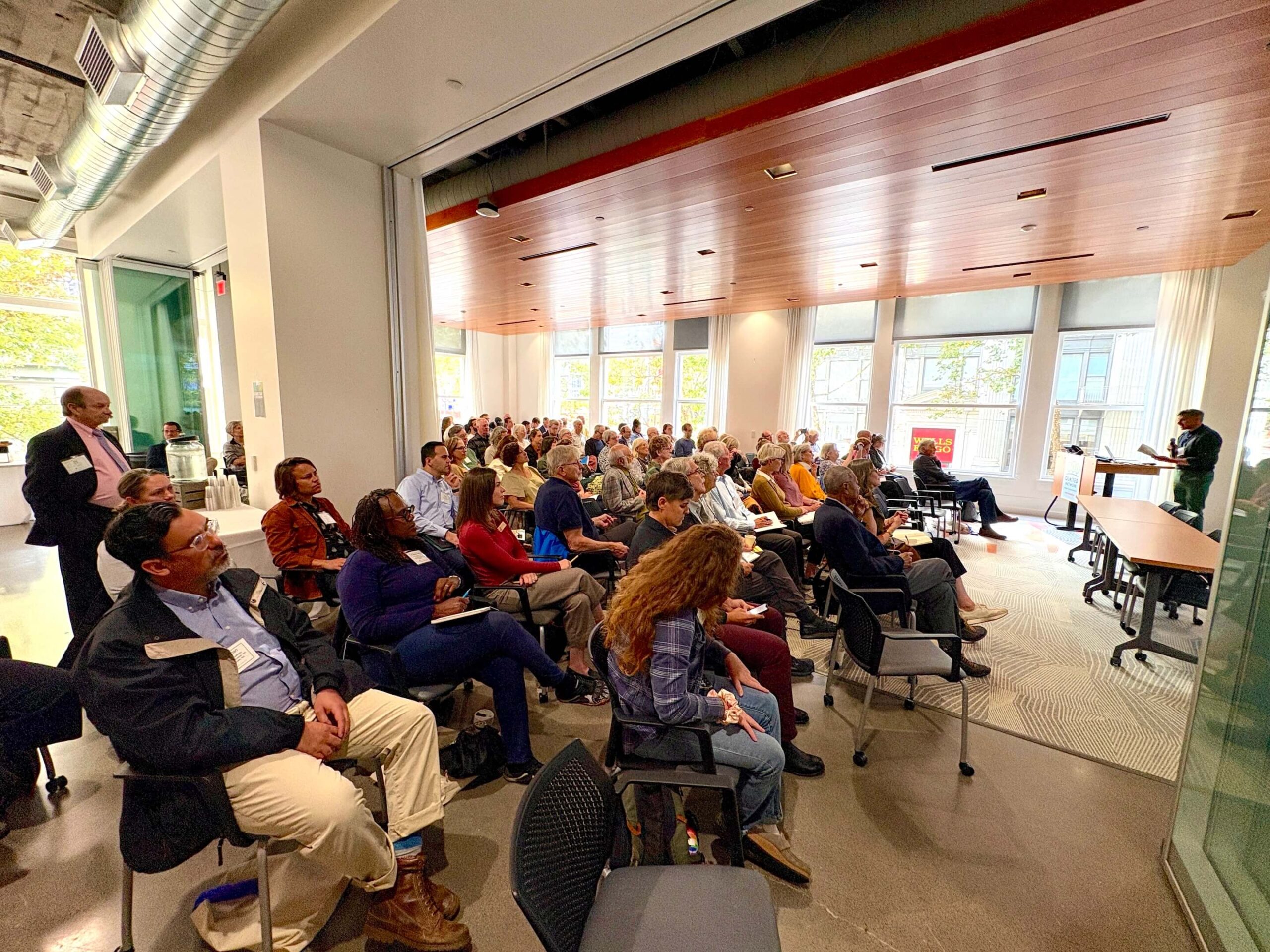
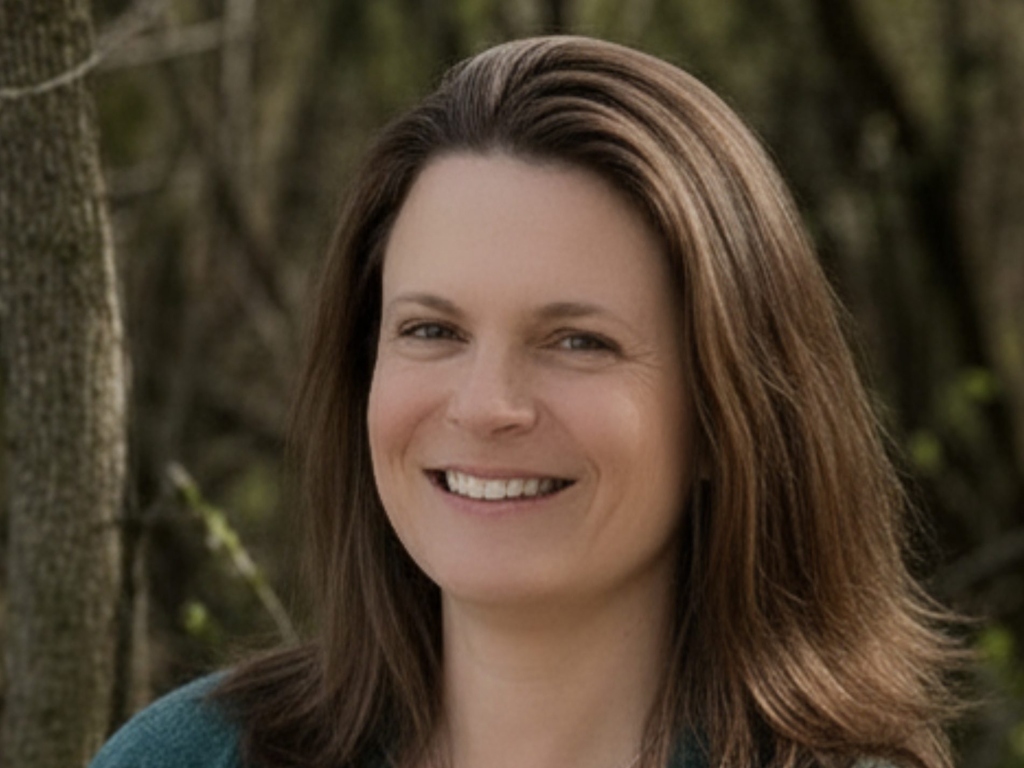
Lake Park Friends in Milwaukee, WI, has announced the arrival of Meagan Holman O’Reilly—a veteran consultant, leader in the nonprofit sector, and a longtime resident of Milwaukee County—as its first Executive Director in the organization’s 30-year history. In a new interview with the Olmsted Network, she discusses her new role at the Friends and some exciting projects underway in Lake Park.
(This interview was edited for clarity.)
As Lake Park Friends’ first Executive Director, you will be instrumental in shaping the park’s future. What is your vision for Lake Park?
One of the things I talked about with [the Lake Park Friends board] a lot is that while the board is mostly made up of folks that live in the immediate neighborhood—as is the donor and volunteer base to a certain degree—I live eight miles from the park, and I am there specifically because it’s an Olmsted park. [I also said] that I had never been a donor to the organization because nobody ever asked me—so I want to find the people like me who are connected to the park, moved by the park because of its uniqueness in our community, because of its history, and bring them into the activities of the park as well. Really, I want to take opportunities to connect our community with both what is happening in the park now and how it was developed. I heard from folks who said, “Oh, this one professor brings a class in here every semester,” and I said, “Great, who is he? Let’s talk about this! I want to meet them, I want to hear what they’re saying, I want to read the books on his syllabus. Are there other people out there saying ‘This Olmsted park is important to me?’”
How were you first introduced to the work of Frederick Law Olmsted and the Olmsted firm?
Well, I grew up about a quarter mile off the Muddy River [in Boston’s Emerald Necklace], and I was a kid in Brookline. I spent a lot of time on my bike along the river. On nights that I didn’t want to take a dollar out of my pocket to ride the T, I would walk until it was free where it came above ground. I can’t even tell you how many times in my 20s, working downtown, that I would walk from the Common to the Garden, and I’m even a fan of the Commonwealth Mall—I don’t know how many of those there are! I have a particular love of the Victory Gardens in the Fens; that whole area is very deeply inside of me. Part of the reason why I was willing to move to Milwaukee was that there were Olmsted parks here—I am that much of an Olmsted nerd—and I wasn’t even looking for a job when this opportunity was posted; everyone that knew me started saying, “This is what you’re supposed to do.”
I’ve never read a biography of the man, but for me, [I resonate with] the egalitarian idea that all people deserve beautiful public spaces.
You have a background in public policy and community engagement—how will that experience inform your work at the Friends?
It’s pretty rare to find an opportunity, when you’ve been in the nonprofit and advocacy space, where you get to work on those two things specifically, and then for something that has such personal significance for me. Our park is a Milwaukee County park, and Milwaukee County has been known for a really long time for its park system. But also—like I imagine is the case most American municipalities and county governments and things like that (county government is really strong in Wisconsin)—funding is a really significant issue. The County Parks workforce on the whole is about a quarter of what it was ten years ago, so there are fewer bodies in the park keeping it safe and clean and running; there’s deferred maintenance everywhere, which means that our maintenance is on that list, and it’s the first priority only to us. Being able to have conversations about the tensions of the nonprofit budget vs. the tensions that our local county government folks face on a daily basis—and being empathetic to that, but still making sure that Lake Park remains a priority amongst a million competing priorities—is something I’m good at. I know most of these actors from various offices that I’ve held and time I’ve spent here, so I think they’ll at least take a meeting with me [laughs]. I can speak to them with experience about managing public budgets in Wisconsin. I just happen to have a background personally and professionally that I think can help tell the story of the park very effectively.
Do you have a favorite spot in Lake Park?
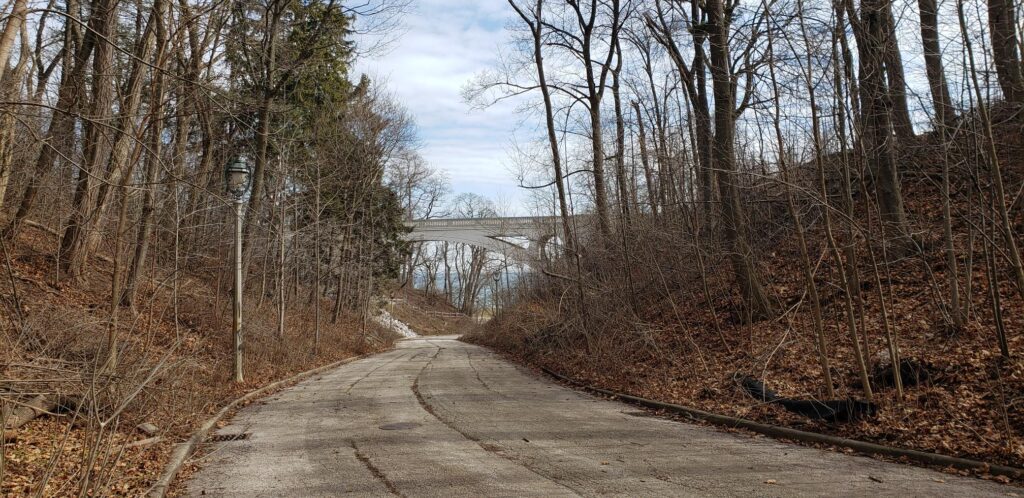
Of course! From the purely ornamental point of view, there are really beautiful yellow magnolias that bloom by the lighthouse. There aren’t a lot of yellow magnolias in Milwaukee, but there are a lot in Boston, so I just love them. I actually thought about planting one at my house—I’m such a fan. But really, for me, it’s the Ravine Trails—I grew up a hiker in the White Mountains, and when I’m in the moment and I’m standing on a trail that was very likely built in the original parks plan, that has a footbridge that has been restored by Lake Park Friends, I recall a lot of memories of sitting in the Boston Public Garden at night… you can kind of feel like you’re the only person in the city. That feeling of “I could be a person here a hundred years ago, or I could be a person a hundred years from now,” and this is a place that will endure. It’s tied to this idea that cities can be livable. City life can take a lot out of you, but through good governance, you can build these places of respite.
What are some of the exciting projects underway in the park?
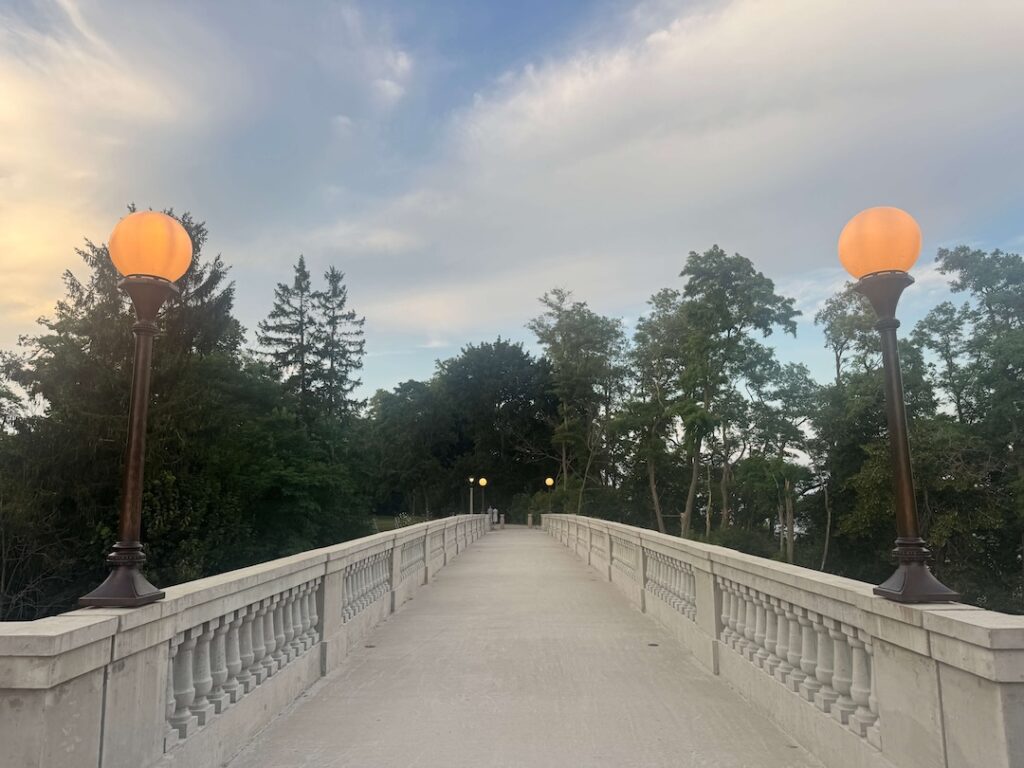
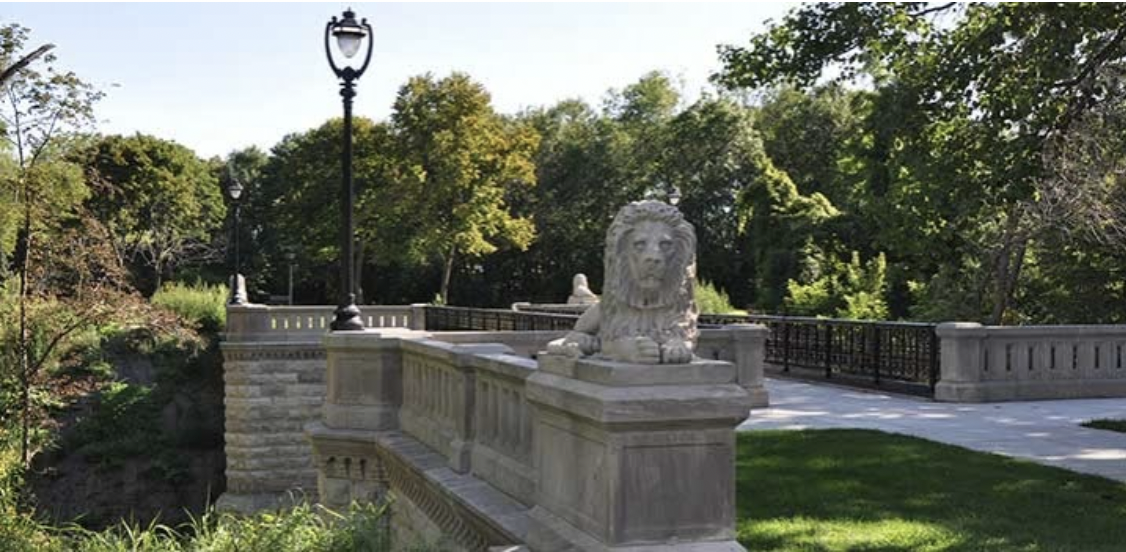
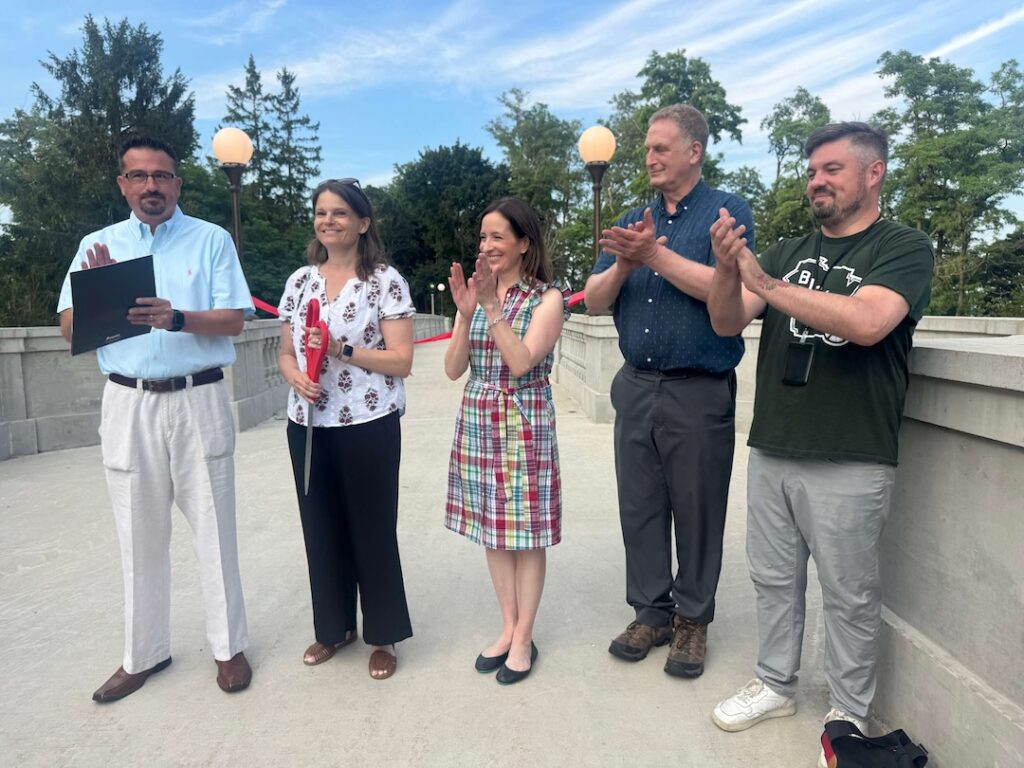
There is this concrete bridge across Ravine Road, which is one of Olmsted’s original carriage roads with all these vistas. The bridge was closed, and it took a long time for there to be the political/public will to reconstruct it, and it was something the organization was very adamant had to be rebuilt. It was the feature that was connecting the two halves of the park, it was in the original Olmsted designs, and then it was ultimately designed and erected by and architect who also built some of the most famous things in Milwaukee. It was rebuilt, finally, after a lot of fundraising and handshaking, and has been open since the fall of 2022, but it was another fundraising push by the Friends to put the restored light posts back in. The bridge, when it was reconstructed, had all the wiring, but it still had to come together; and as we’ve all learned since COVID, anything that involves materials, casting, etc. takes longer than it used to. So the lights are done and they’re installed, and we celebrated them on July 30. They’re incredible reproductions—you can see them when you’re standing at the lake, which is a distance away. You can see them at the beach, and it’s a really remarkable project that is now entirely complete.