


About Yerkes Observatory
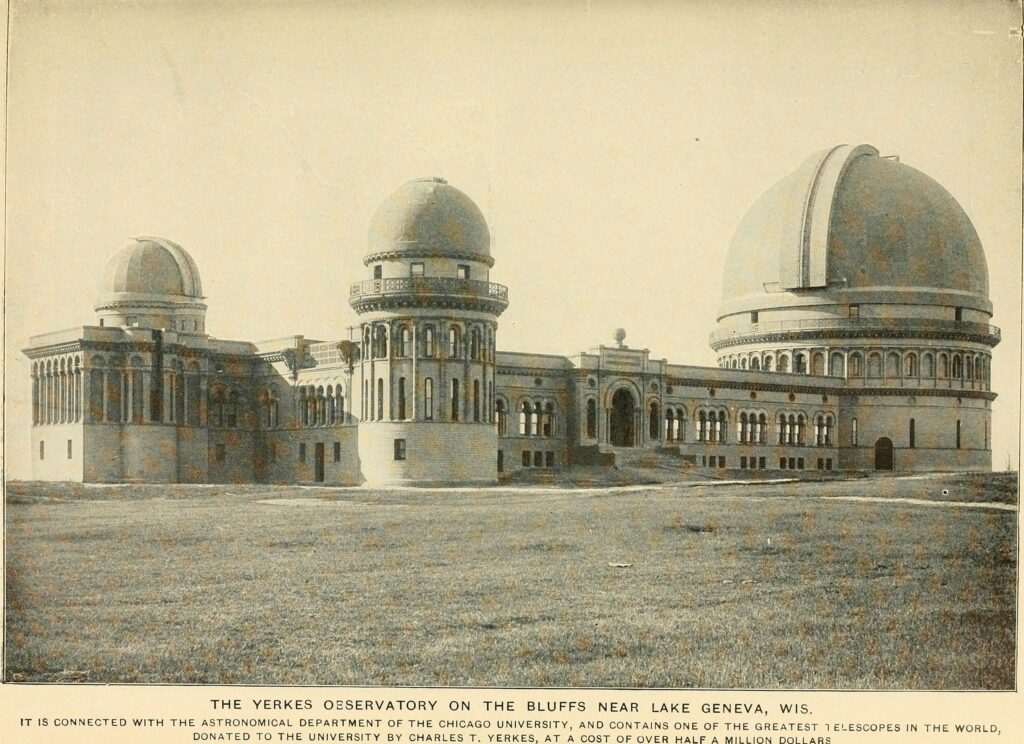
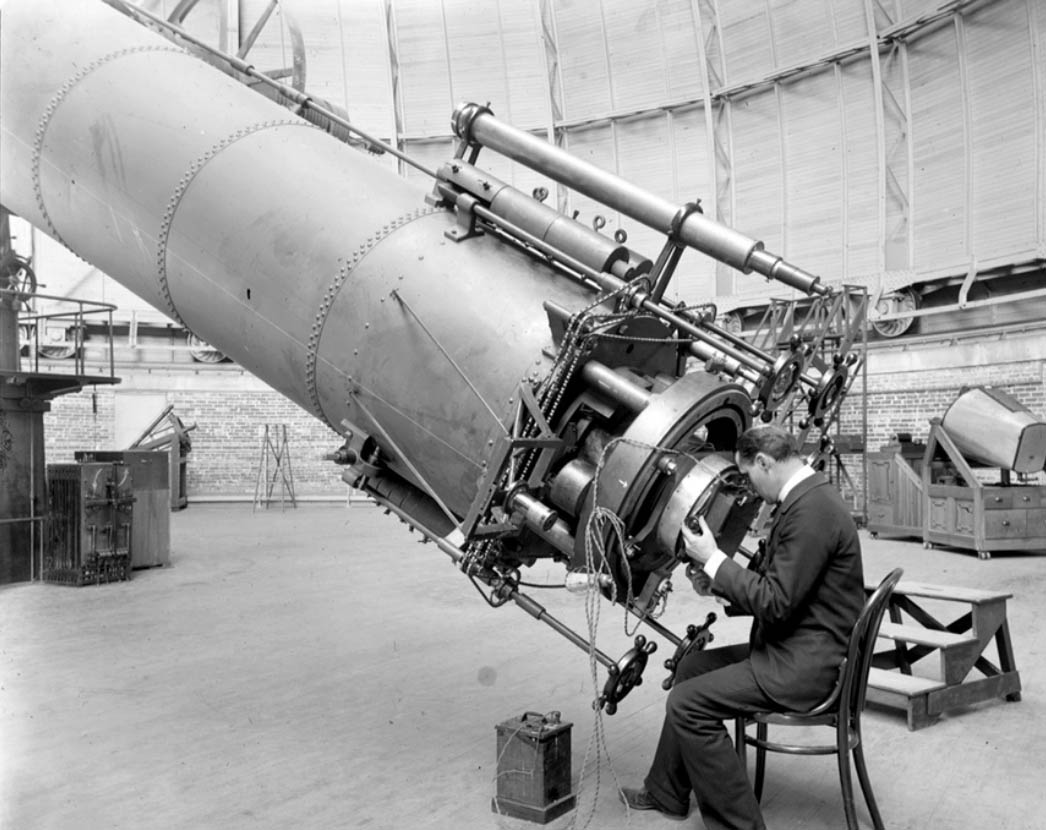
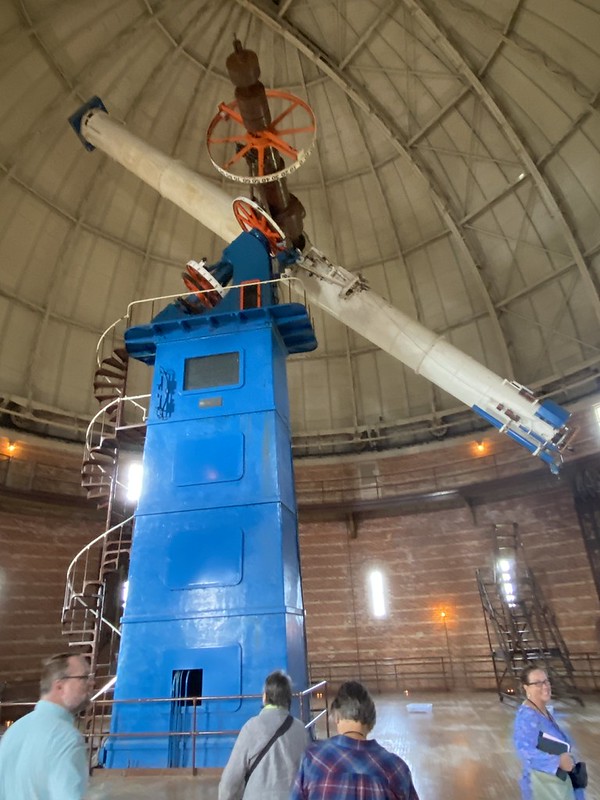
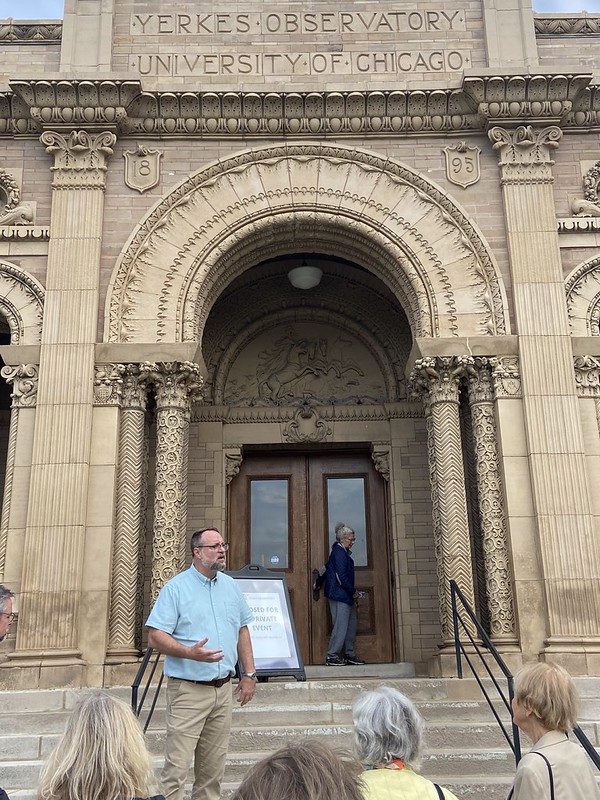
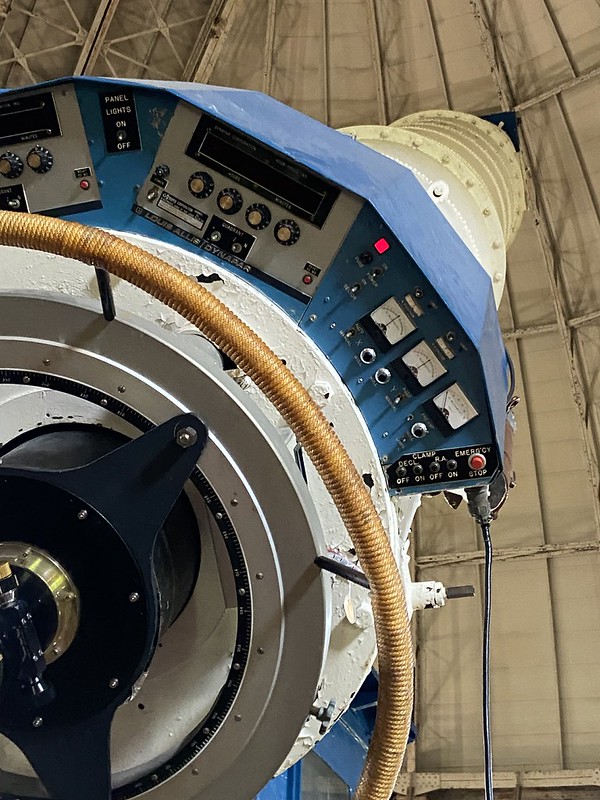
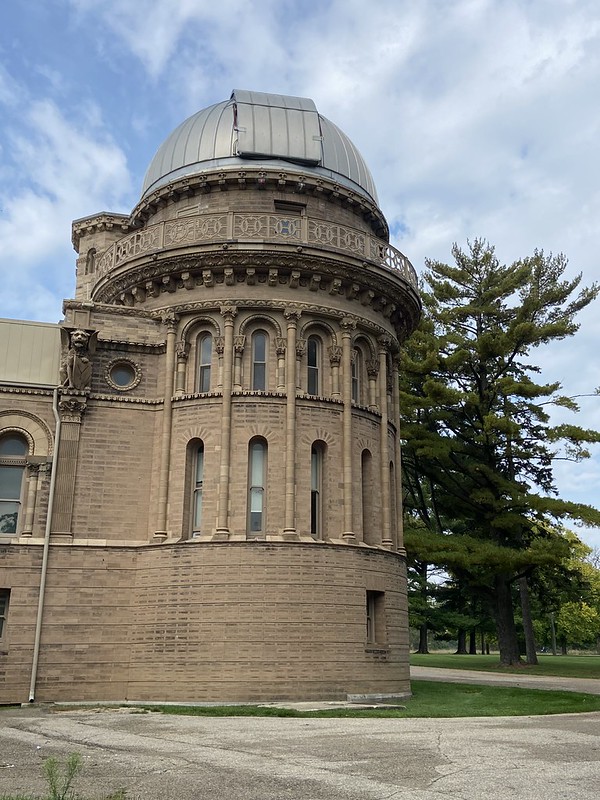
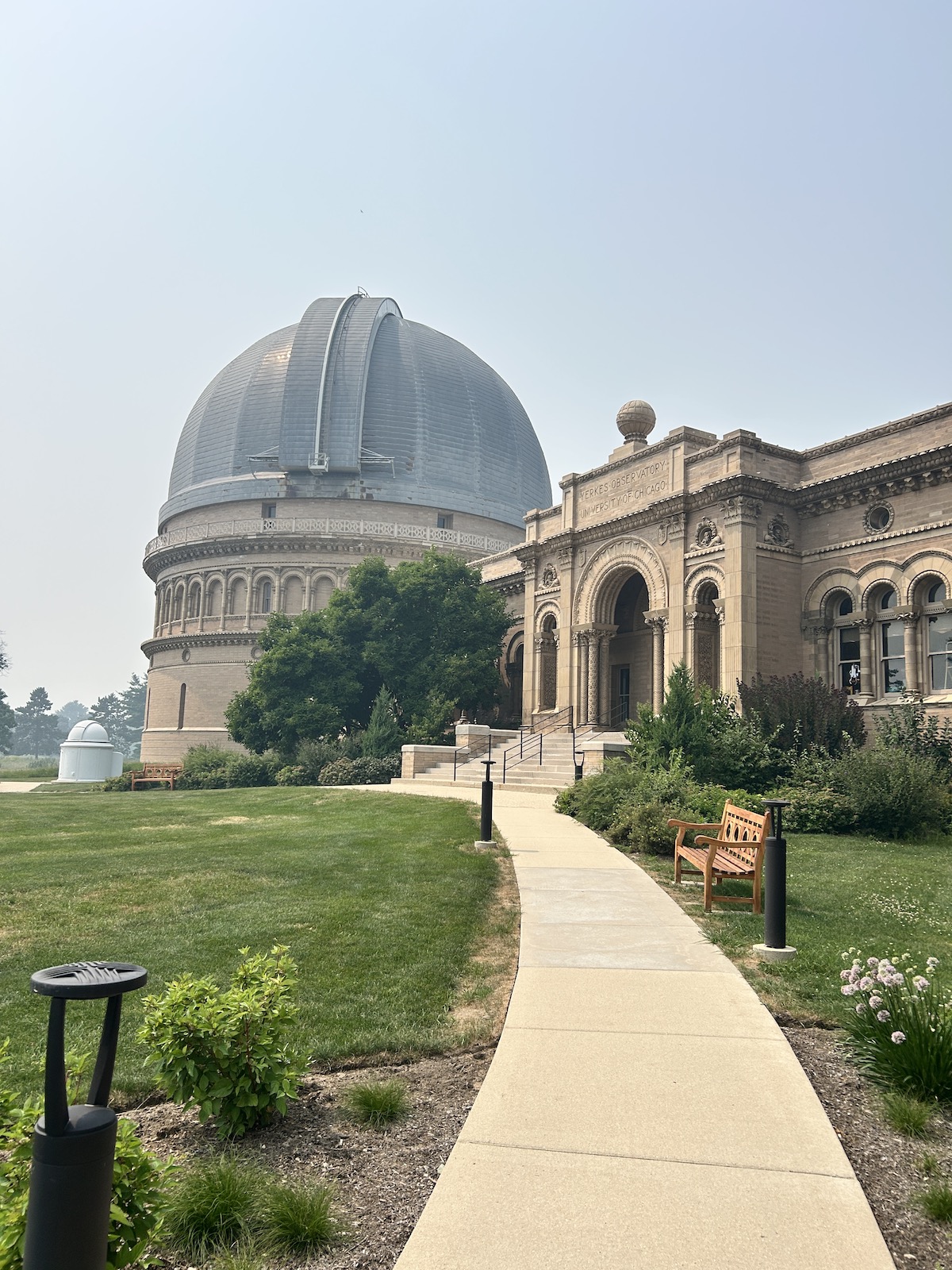
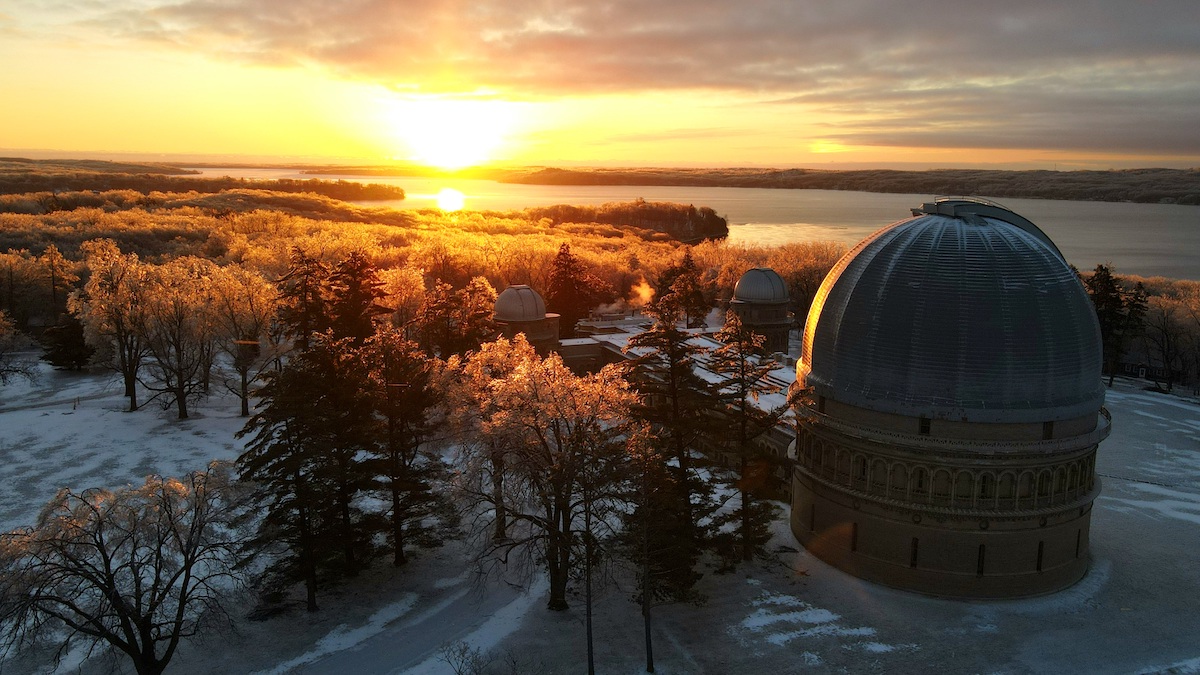
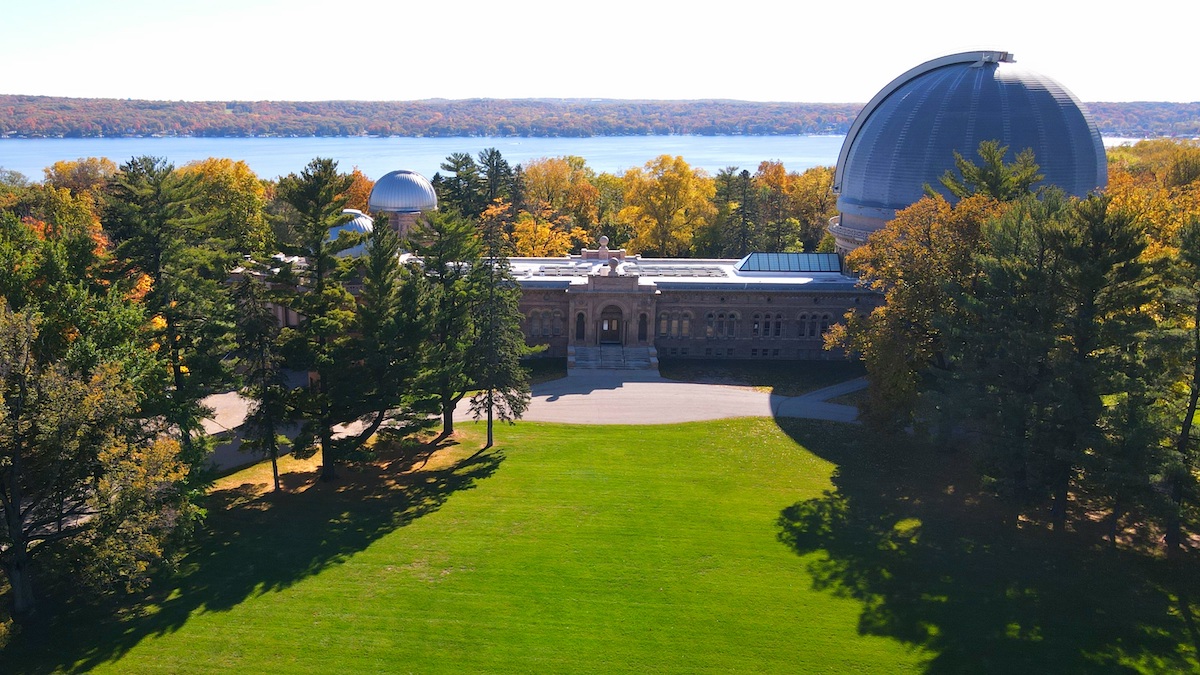
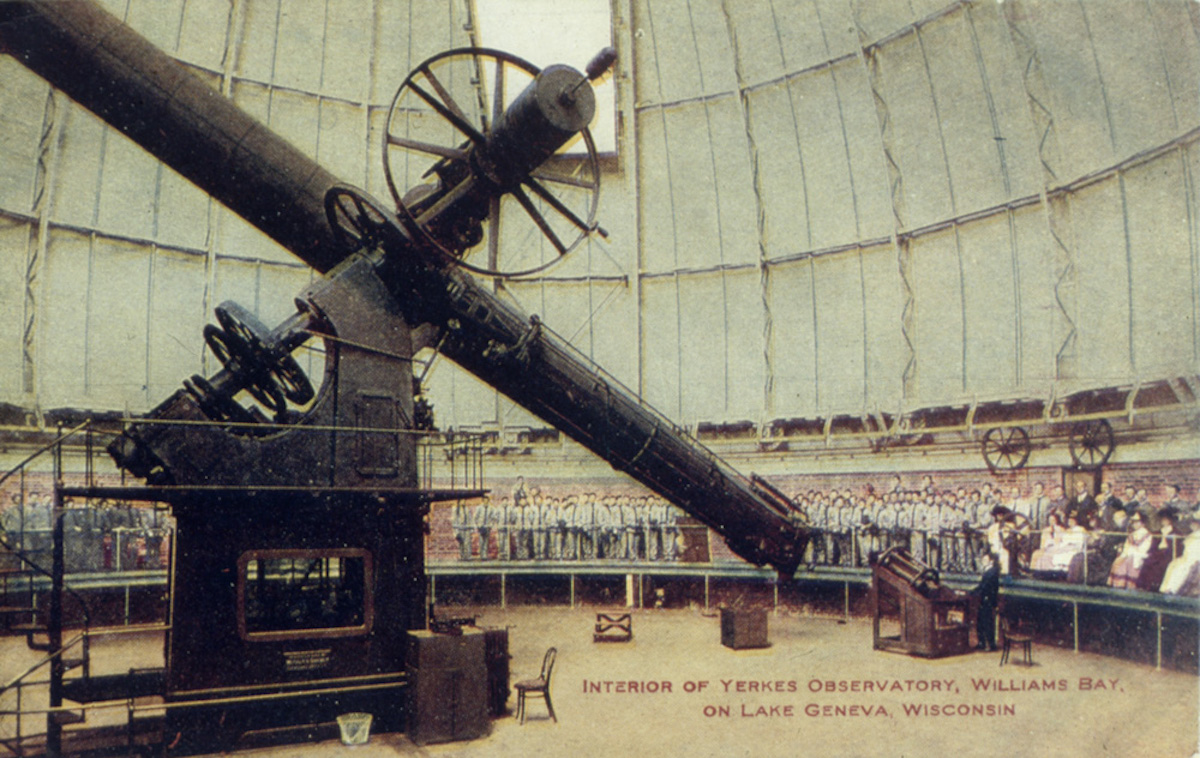
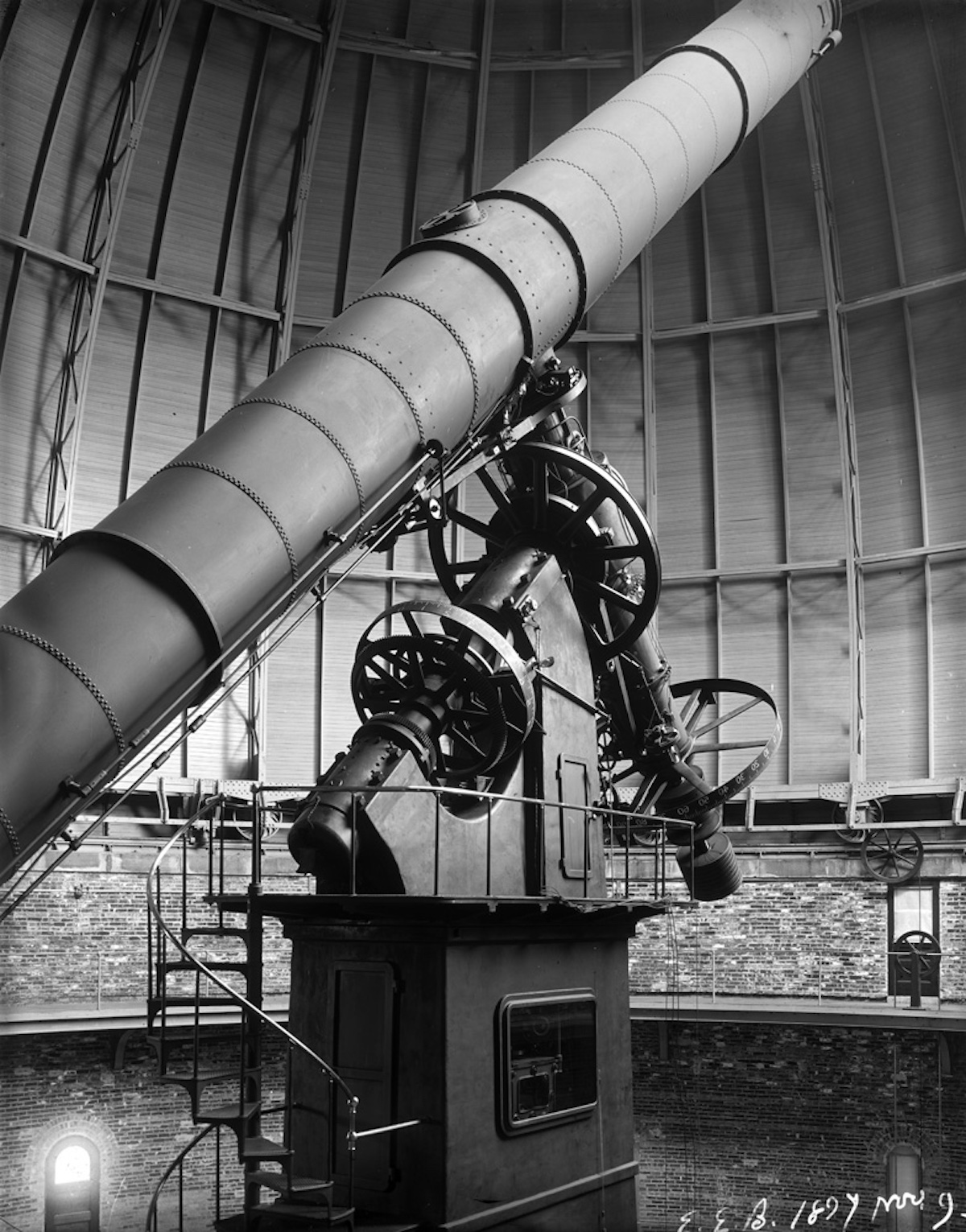
Yerkes Observatory, often called the “birthplace of modern astrophysics,” is located in Williams Bay, Wisconsin. The story of Yerkes Observatory began in 1892 when George Ellery Hale, a young professor of astrophysics at the then-new University of Chicago, learned of two unused 40-inch telescope lenses located in France. He convinced the university to acquire them and secured funding from Chicago railroad tycoon Charles Tyson Yerkes to build the grandest observatory in the world.
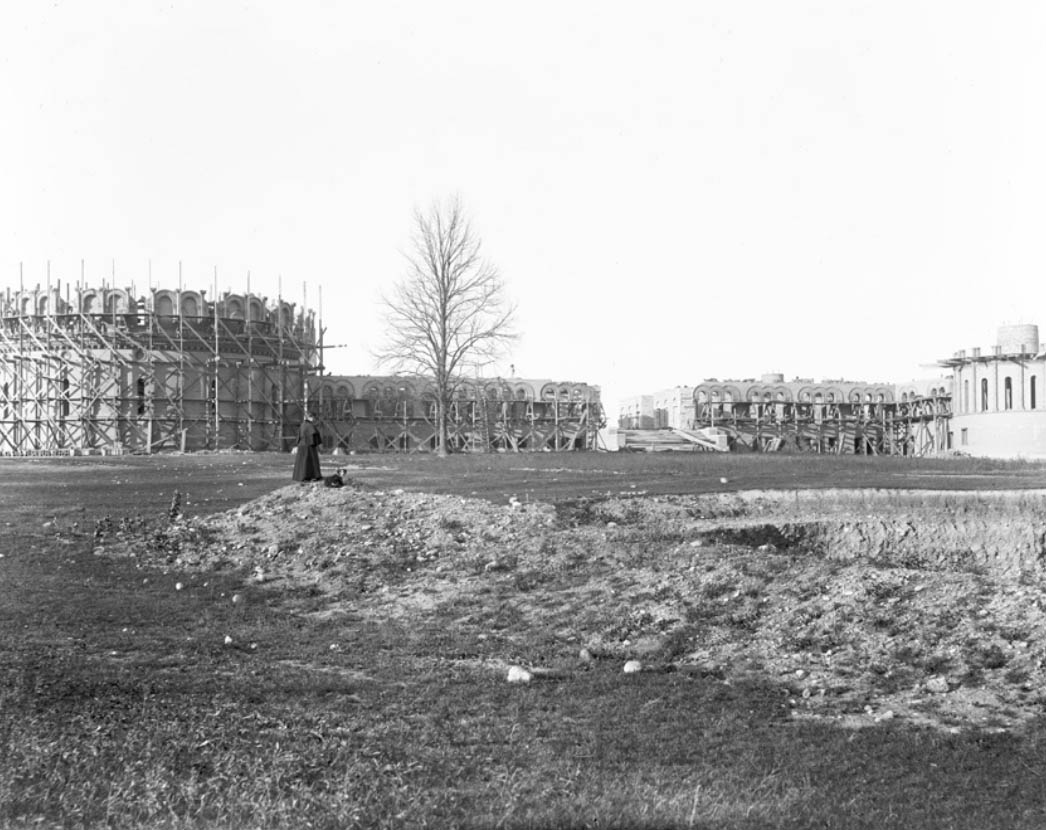
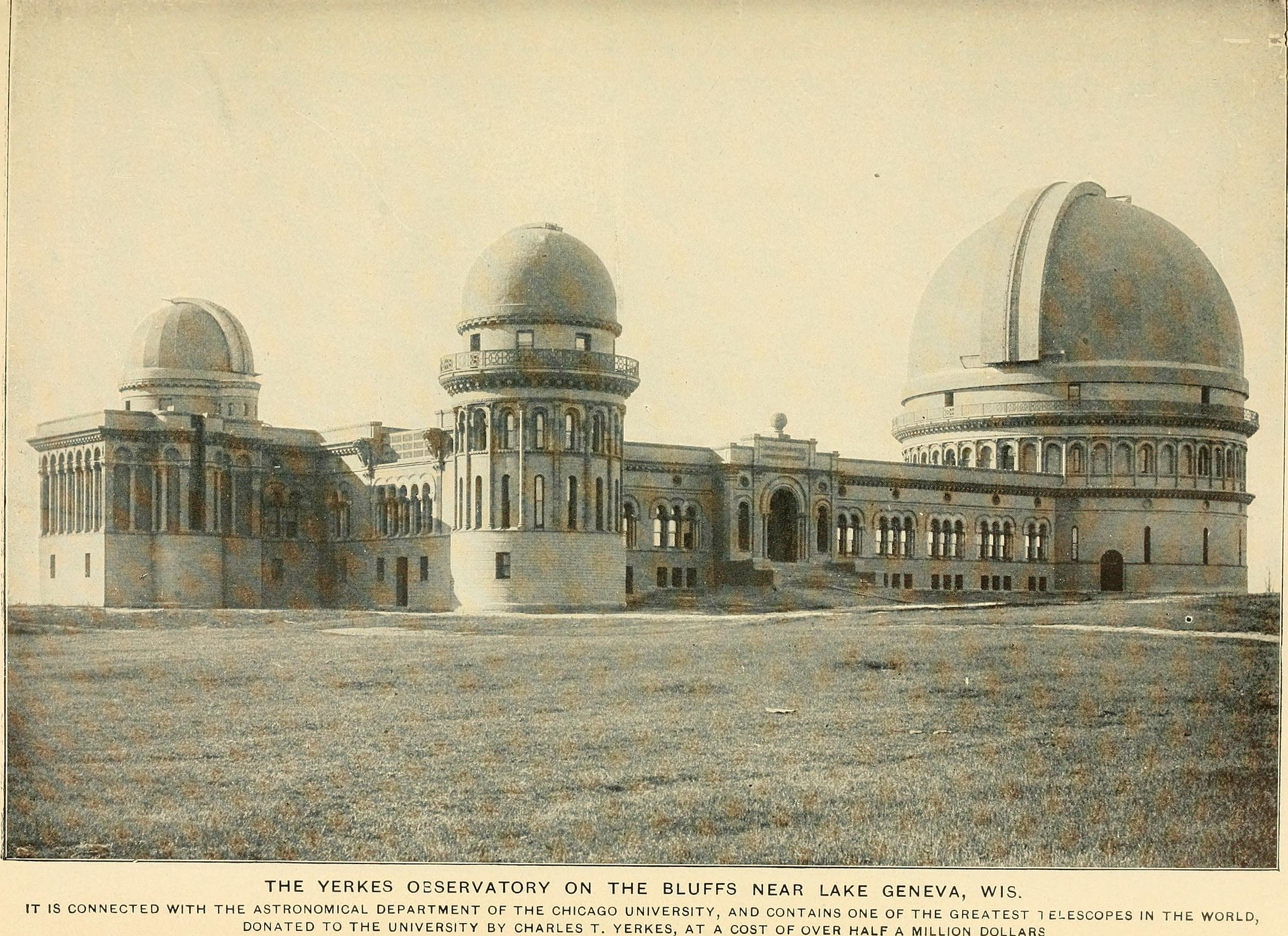
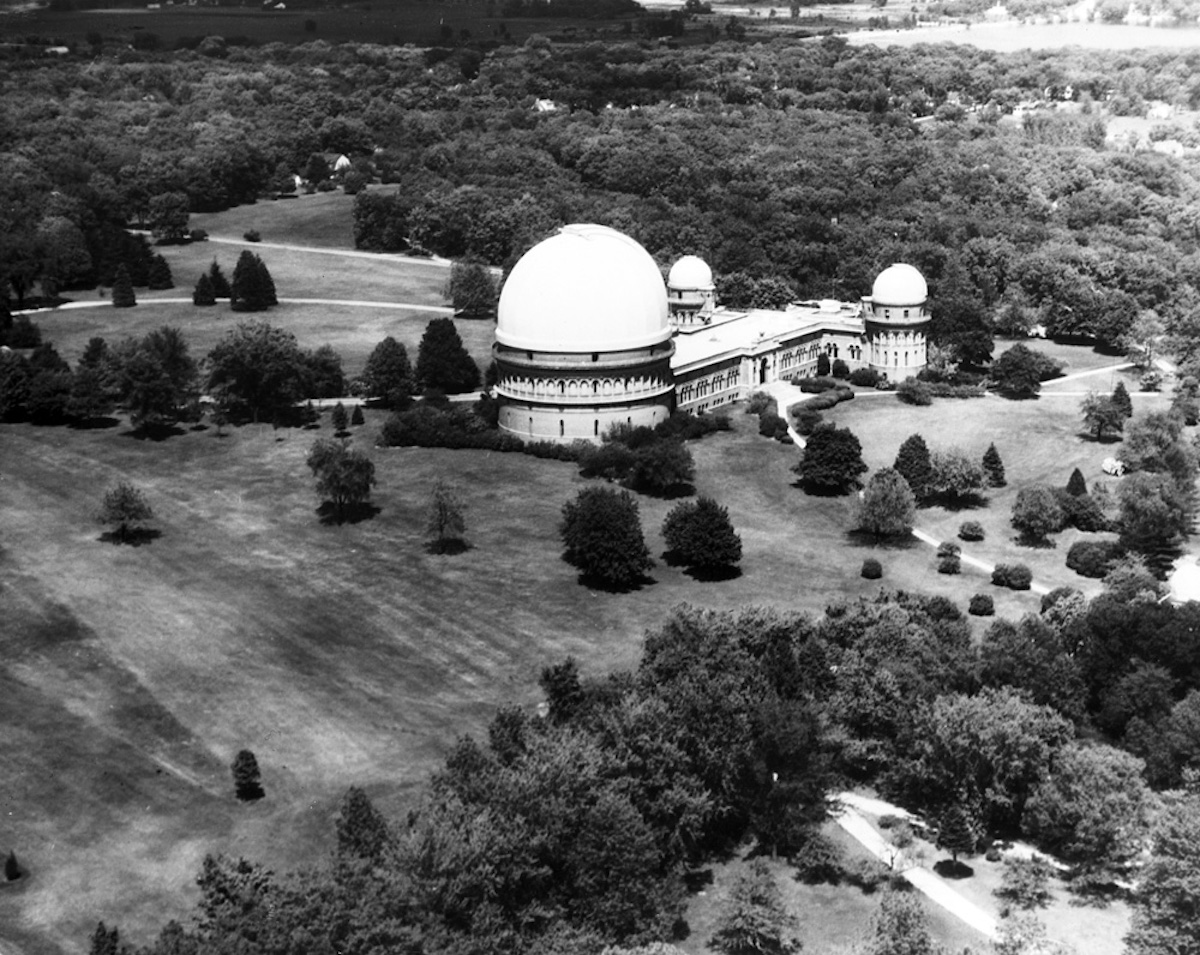
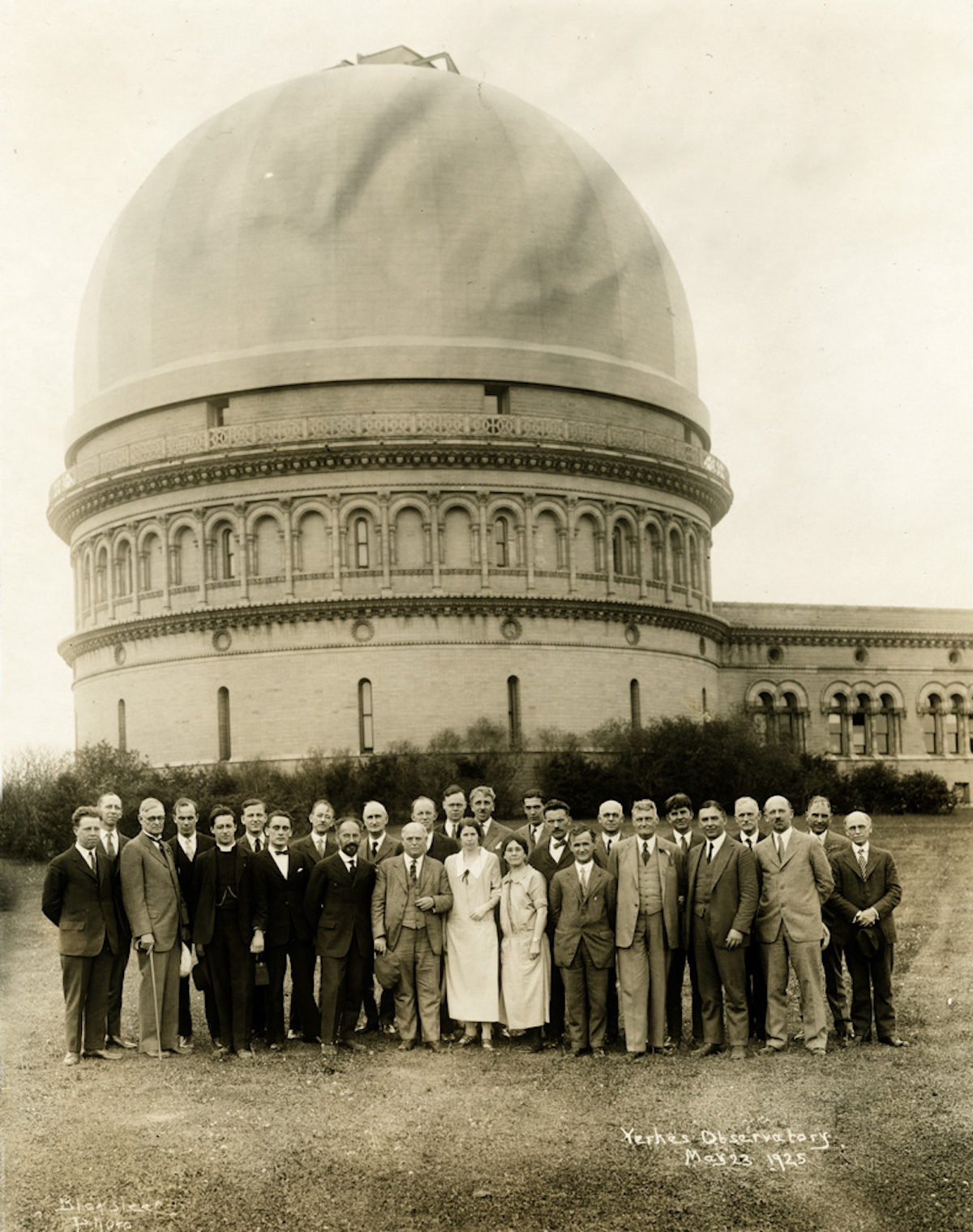
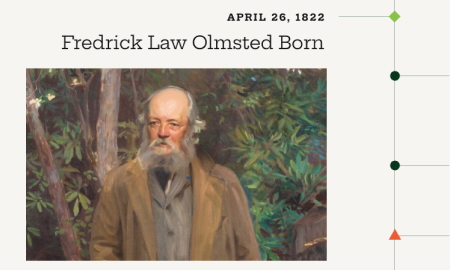
Before construction began on the observatory, the Great Refractor telescope— now named the Sharon and Charles Angell Historic Refractor — was exhibited at the 1893 Columbian Exposition in Chicago, where Frederick Law Olmsted designed the grounds. The Olmsted firm played a major role in shaping the Chicago landscape, emphasizing accessible green spaces that balanced the surrounding architecture. Construction of Yerkes Observatory began in 1895 and was promptly completed in 1897. In addition to housing what was at the time the world’s largest telescope, the observatory included laboratories, workshops, and libraries that supported research and education for the University of Chicago. Since opening its dome to the night sky in 1897, Yerkes has welcomed and employed many of the most influential figures in astronomy and physics, including E. E. Barnard, Edwin Hubble, Gerard Kuiper, Nancy Grace Roman, Carl Sagan, and even Albert Einstein.
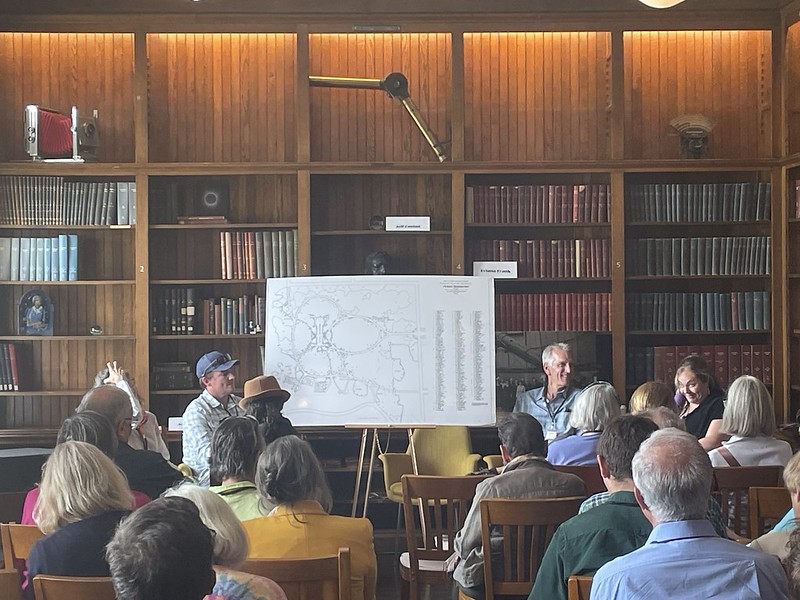
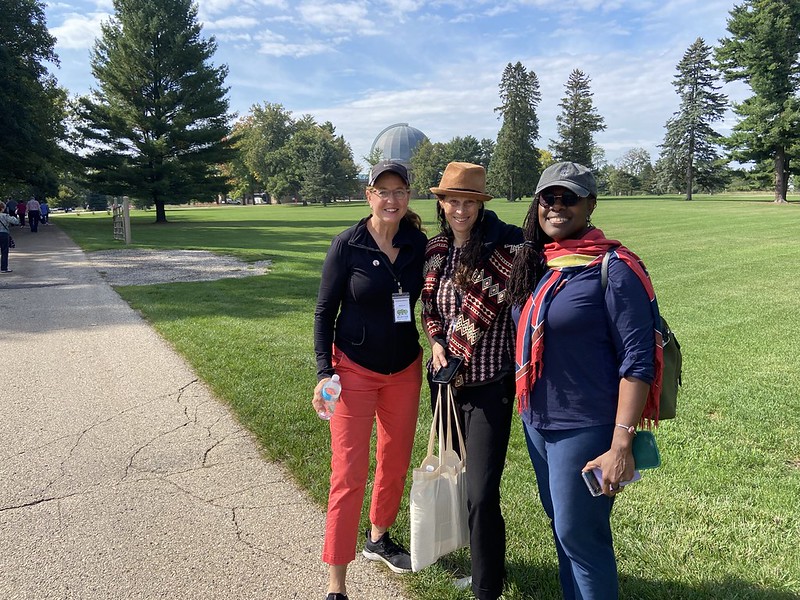
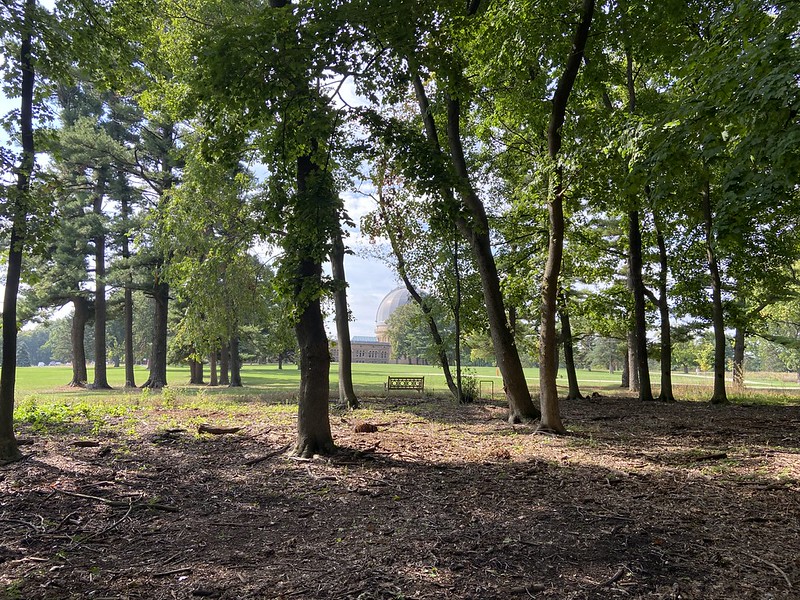
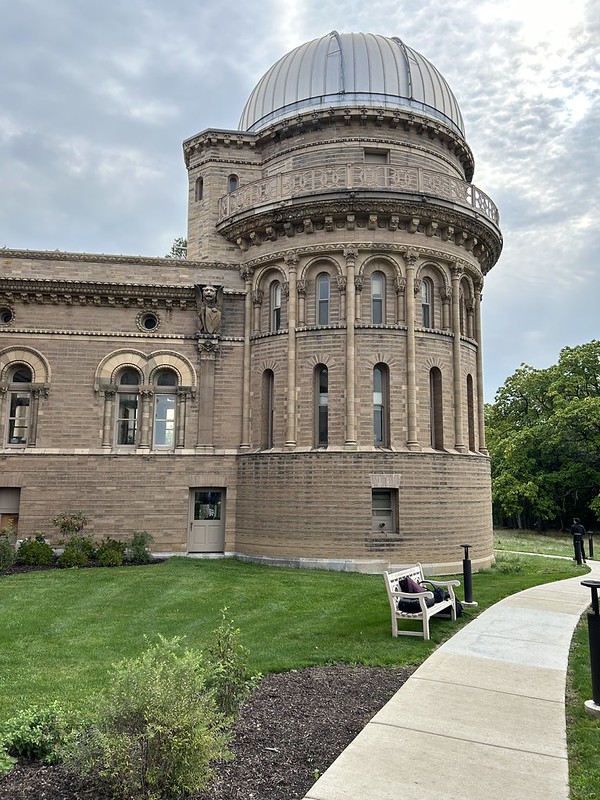
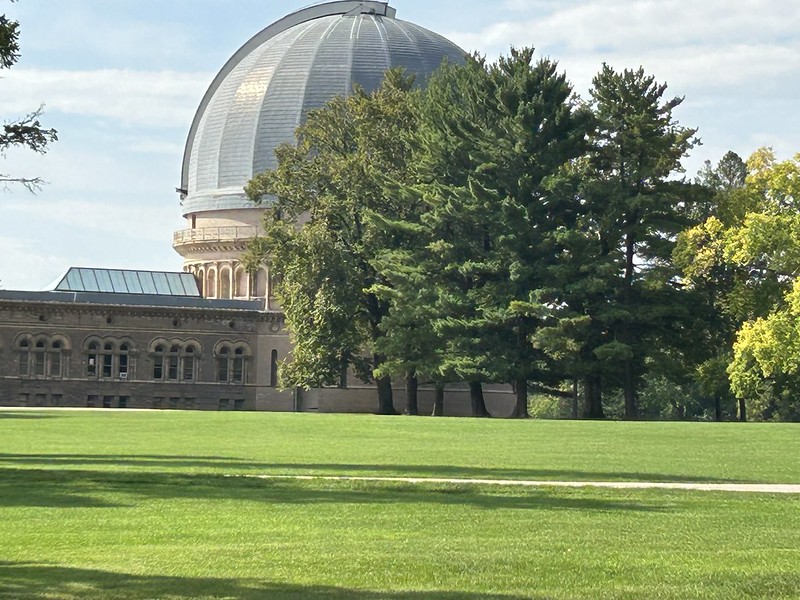
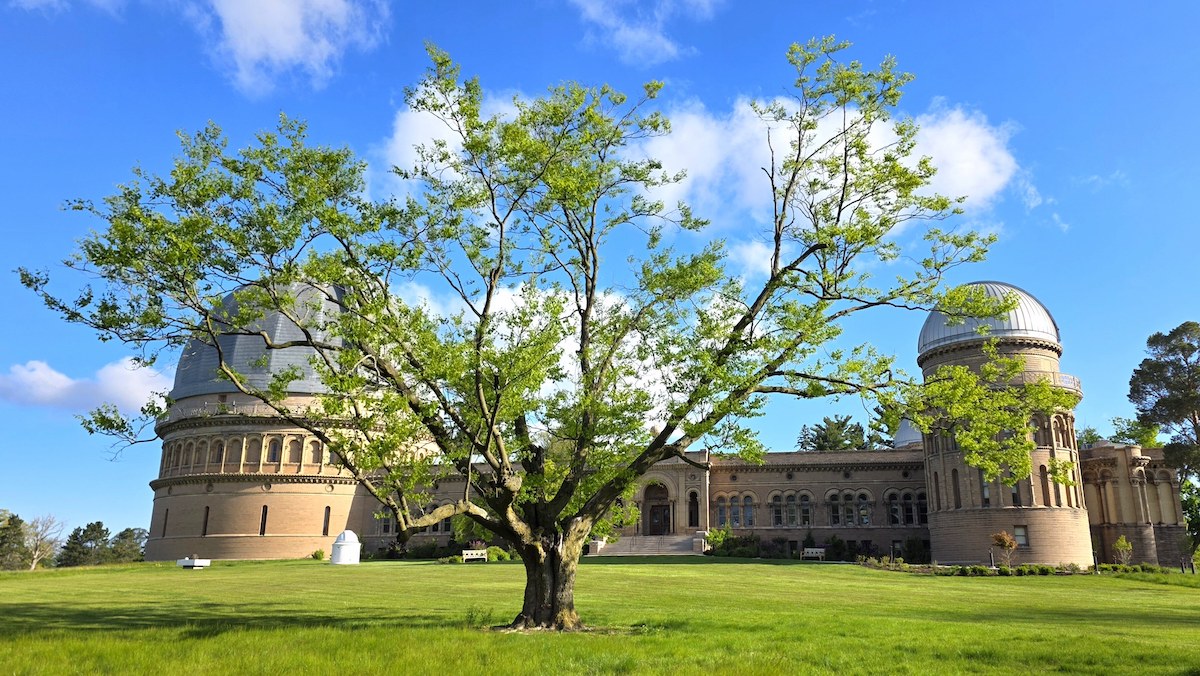
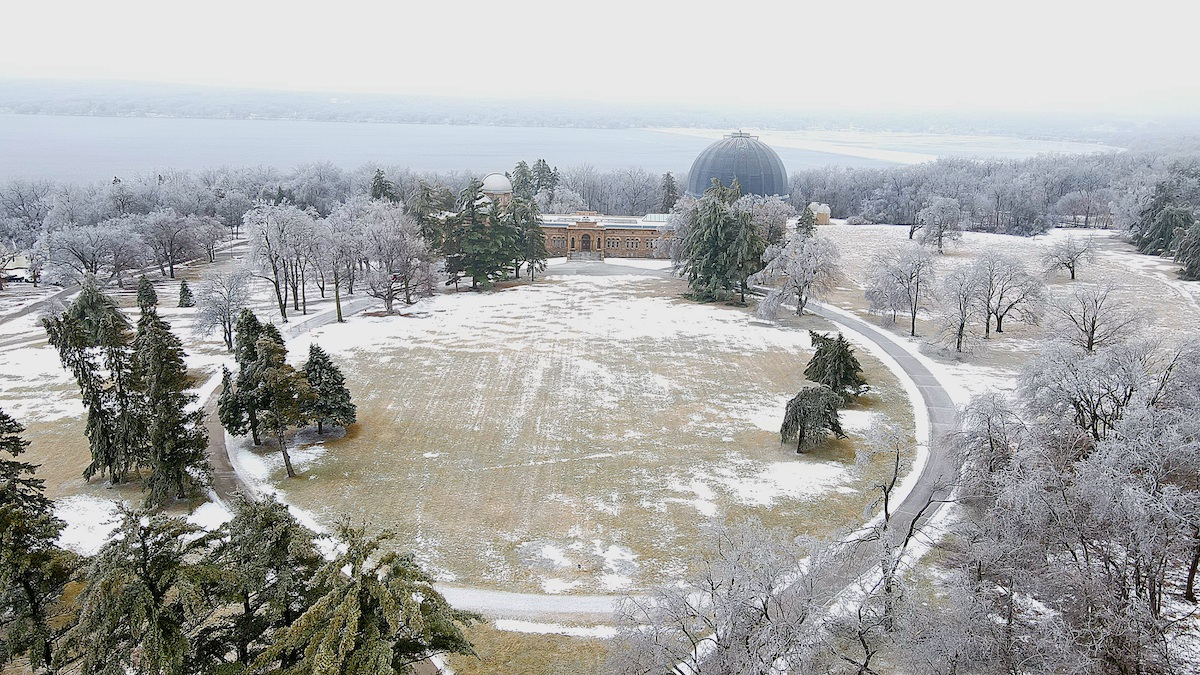
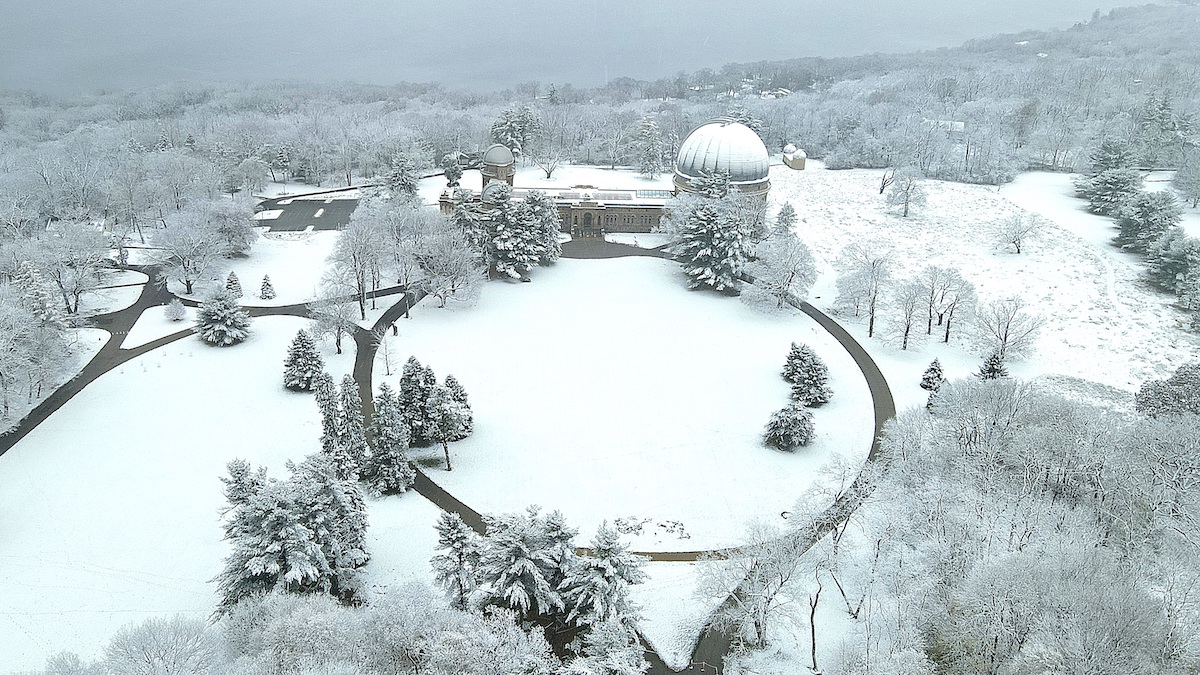
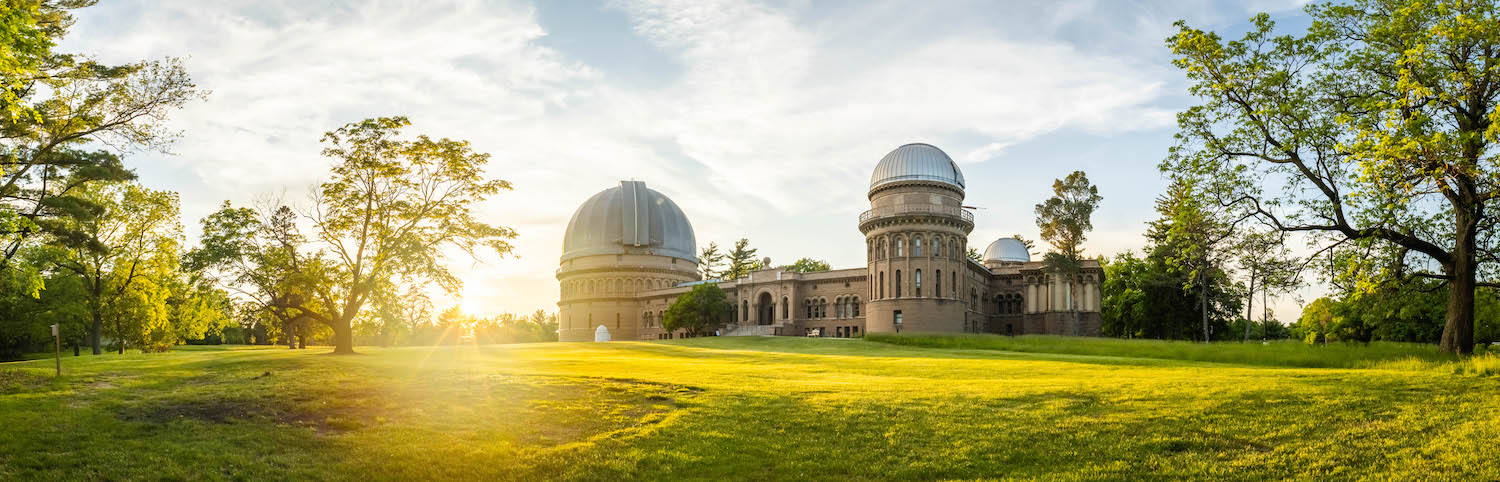
In 1906, the Olmsted firm began designing the grounds of Yerkes. Their design included an elliptical drive and expansive central lawn to frame the remarkable Beaux-Arts building designed by architect Henry Ives Cobb, gently curving roads, rolling lawns, and a variety of ornamental plantings that complemented the site’s natural lakefront beauty.
As astronomical technology advanced over the century, the observatory became outdated and increasingly expensive for the University of Chicago to maintain. Its remote location also made operations more difficult, and in 2018 the university closed the observatory, leaving it vacant for two years. During that time, visionary community leaders established the Yerkes Future Foundation (YFF) to save Yerkes Observatory.
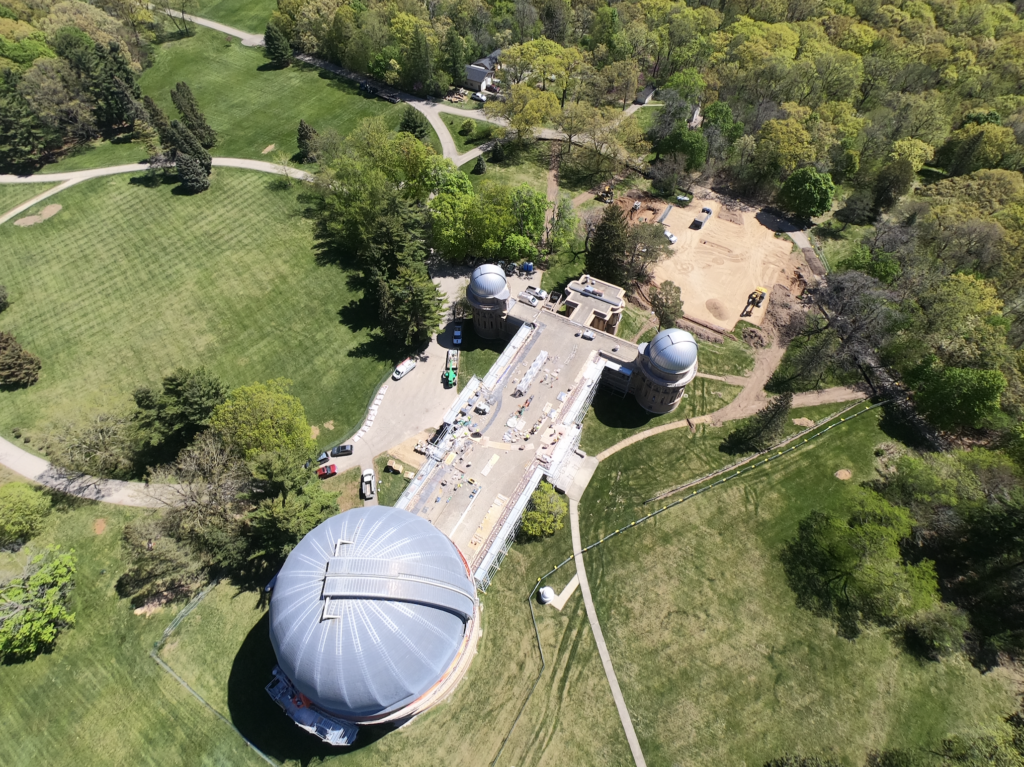
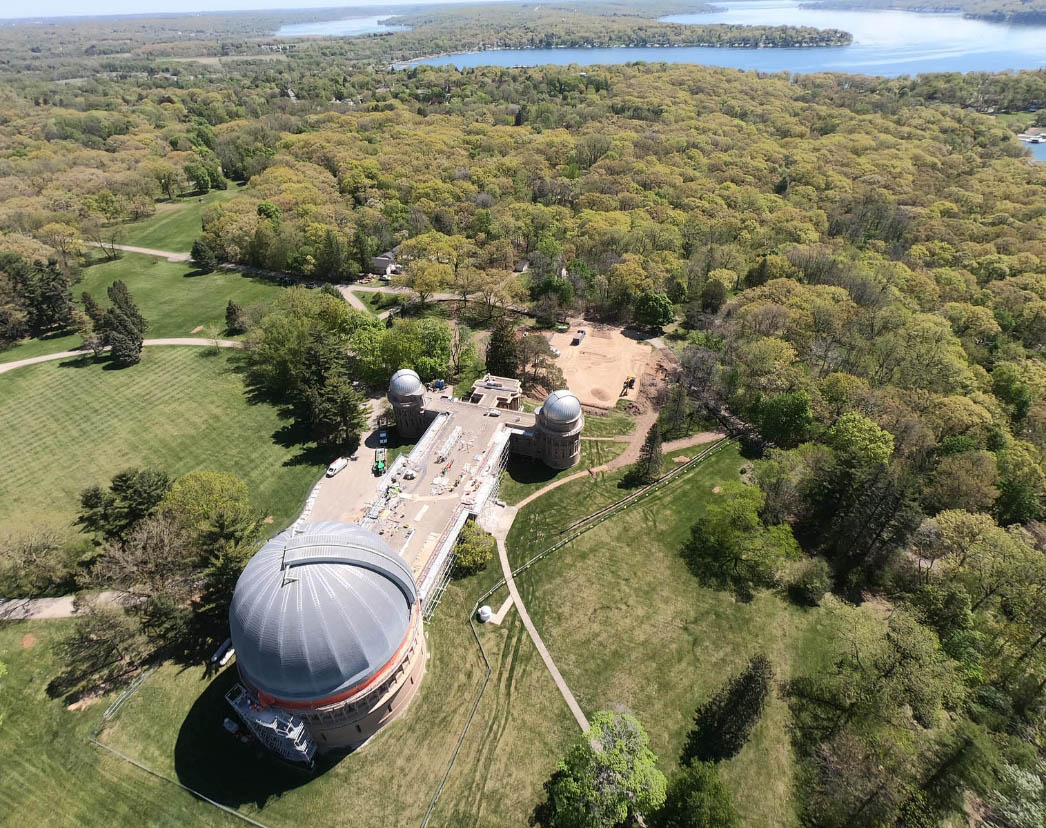
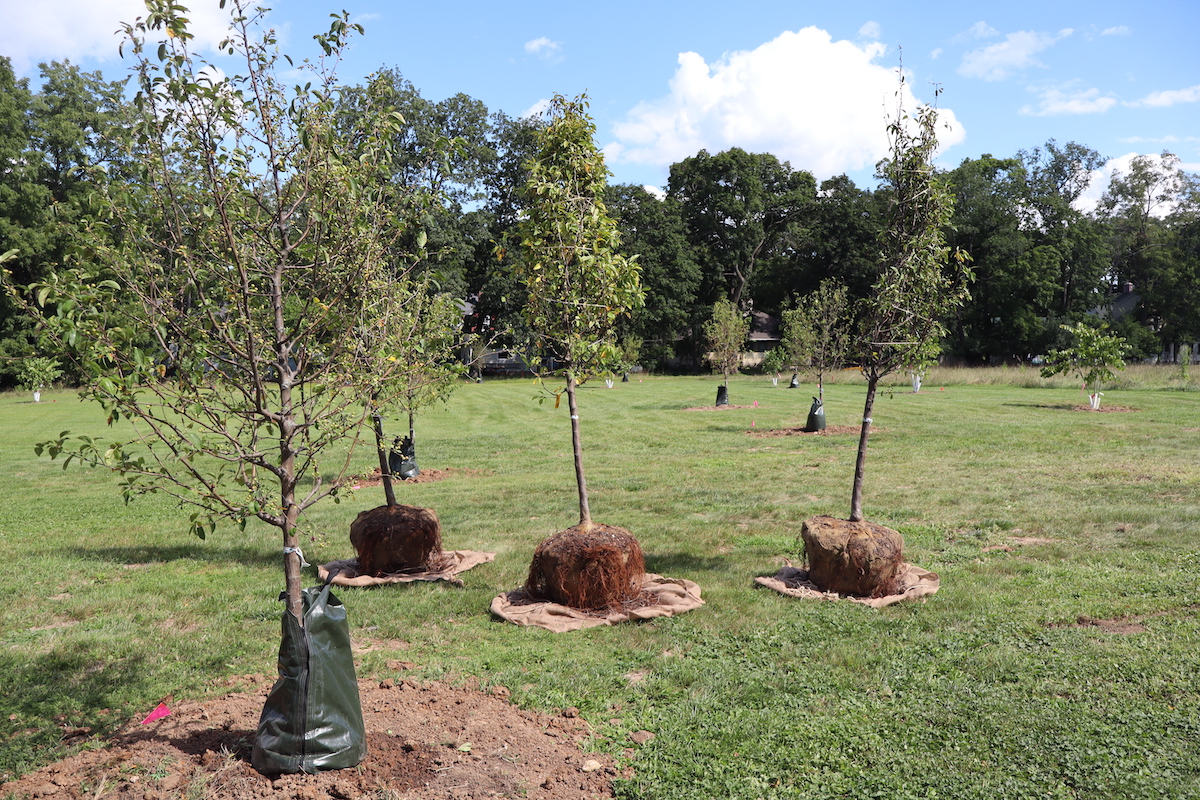
In May 2020, the University of Chicago generously transferred stewardship of the observatory, its surrounding buildings, and 48 acres to the Yerkes Future Foundation. After completing the first phase of the multimillion-dollar Brick by Brick, Tree by Tree Restoration Project, the foundation reopened Yerkes to the public in May 2022, as part of the Olmsted Bicentennial Celebration. The Yerkes Future Foundation continues to honor and advance the legacy of Yerkes Observatory, strengthening its role each year as a dynamic center where science, nature, history, and the arts come together to inspire all.
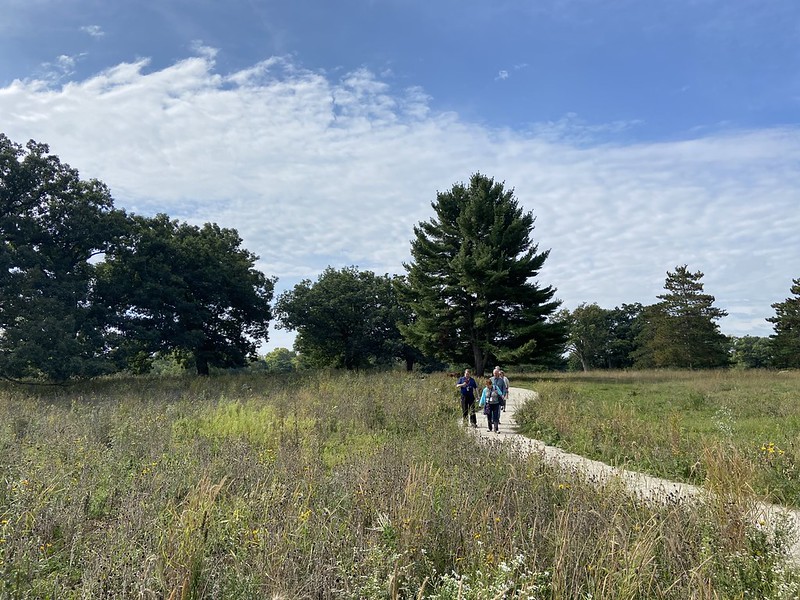
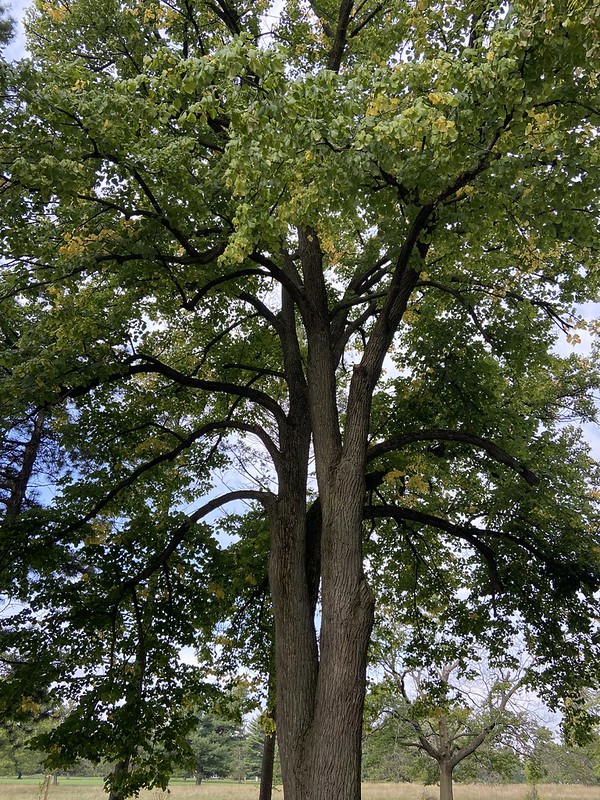
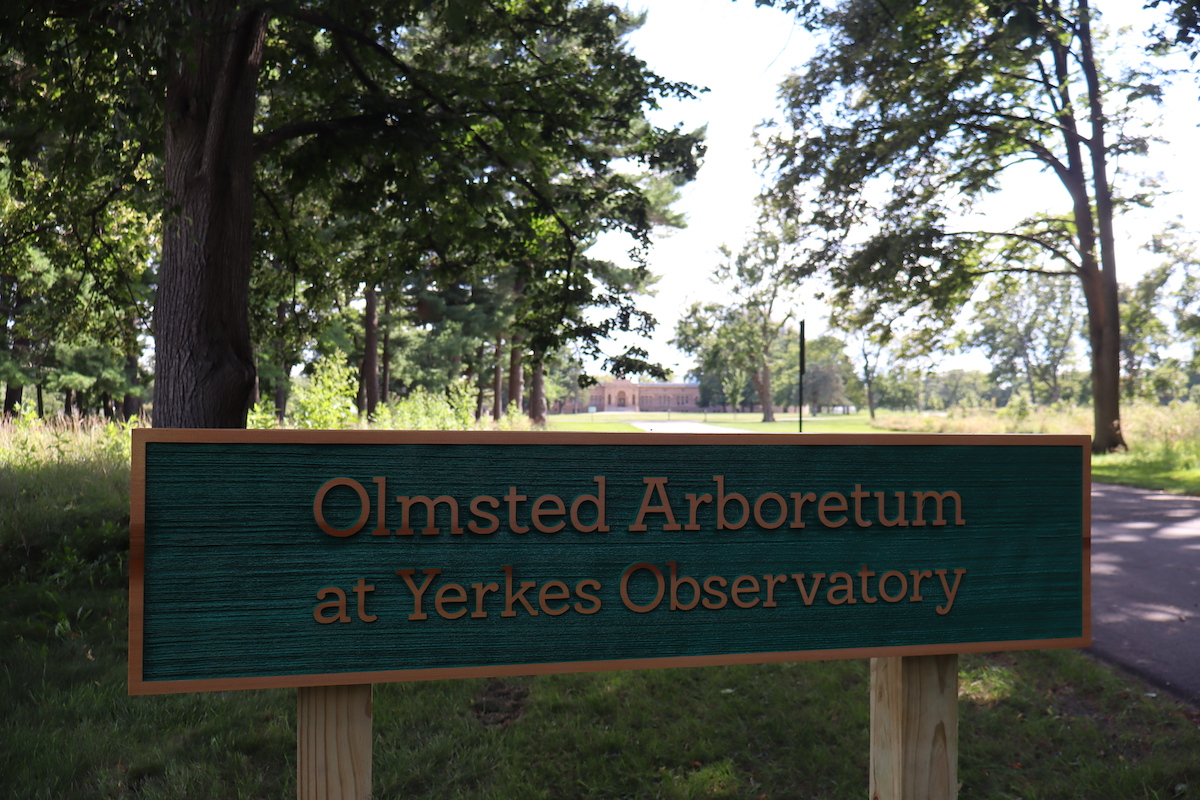
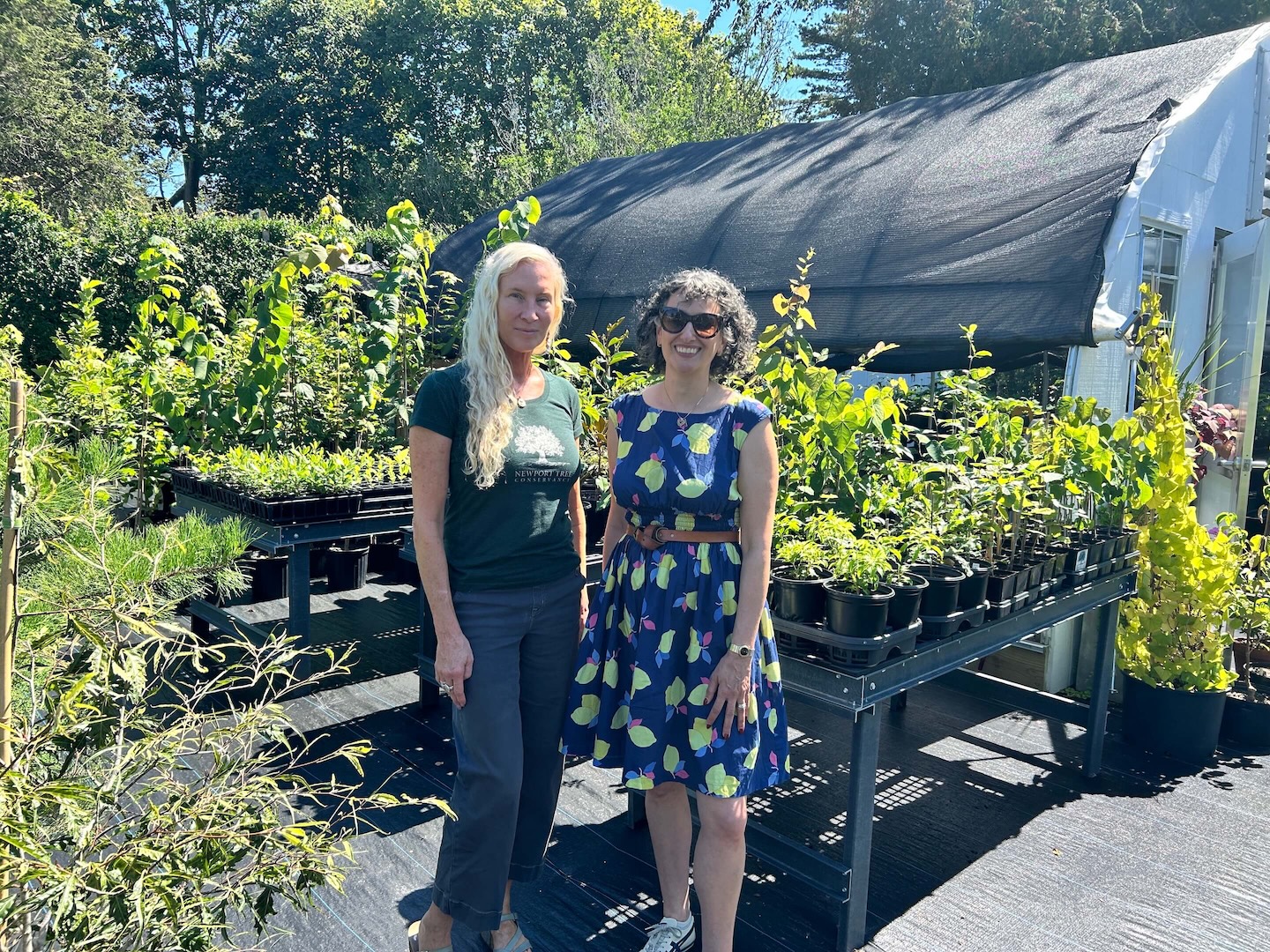
Since reopening, Yerkes has welcomed tens of thousands of visitors for a wide variety of programs. From daytime and evening tours to a wide range of programs such as open houses, school visits, speaker series, concerts, and student internships, there is truly something for everyone at Yerkes. The Yerkes Future Foundation also honors Yerkes’ historic integrity by preserving and building upon the original landscape design created by the Olmsted Brothers. The foundation has maintained defining features such as the elliptical drive while enhancing the ecological value of the observatory’s 48-acre grounds through native plantings, the addition of an active apiary, and the removal of invasive plant species.